
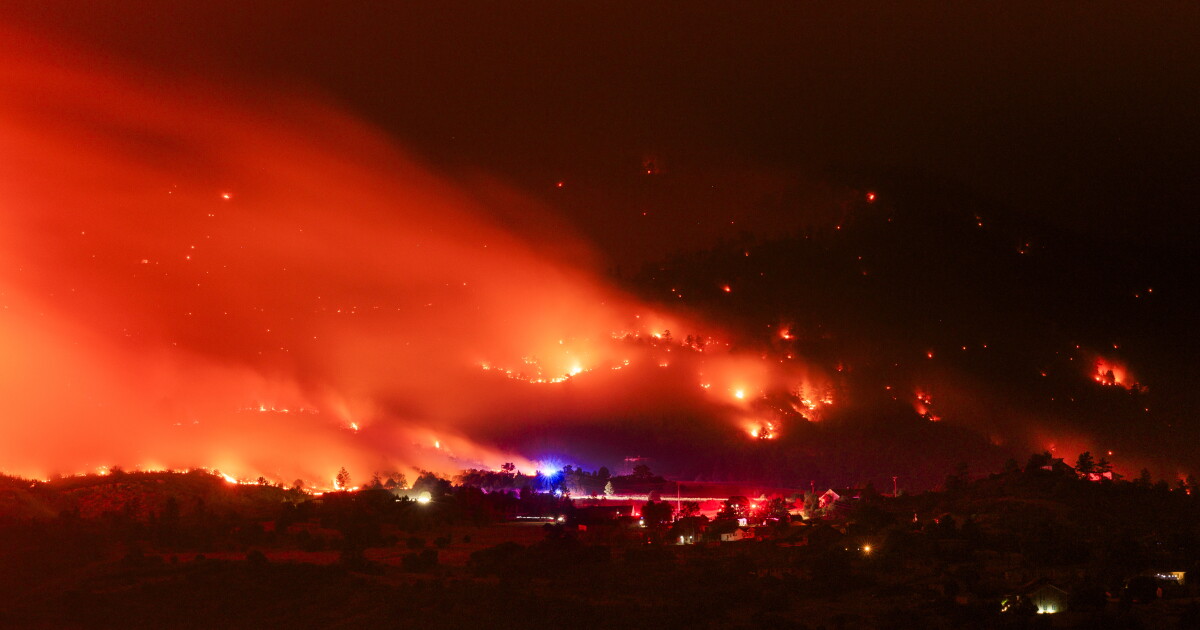
The Colorado wildfires remain a major emergency across southern portions of the state as firefighters battle multiple large blazes under rapidly changing weather conditions. Thunderstorms, strong wind gusts, lightning, and persistent heat are expected to complicate suppression efforts, while evacuation orders remain in effect for several communities.
The largest active wildfire, the Aspen Acres Fire, has expanded to more than 86,000 acres across Pueblo and Custer counties. Although firefighters have made progress establishing containment lines, officials continue to warn that changing weather patterns could quickly alter fire behavior and threaten additional areas.
Emergency management agencies are closely monitoring conditions as firefighting crews work to protect homes, infrastructure, and critical natural resources throughout the affected region.
Aspen Acres Fire Remains the Largest Active Wildfire
The Aspen Acres Fire began nearly one week ago and has become one of Colorado’s largest active wildfires. Fire crews continue constructing containment lines while aircraft and ground personnel work together to slow the fire’s expansion.
Evacuation orders and preparedness notices remain in place for portions of Pueblo, Custer, Huerfano, and Fremont counties as officials evaluate changing fire conditions. Residents have been encouraged to remain alert for updated evacuation instructions and to follow guidance issued by local emergency management agencies.
Meteorologists forecast scattered thunderstorms across southern Colorado, bringing the possibility of rainfall that could assist firefighters in some locations. However, emergency officials caution that storms may also generate dangerous lightning strikes, sudden wind shifts, flash flooding in recently burned areas, and damage to roads and infrastructure.
Multiple Wildfires and Smoke Continue to Affect Colorado
In addition to the Aspen Acres Fire, several other significant wildfires remain active throughout Colorado. The Ferris Fire in southwestern Colorado has expanded across tens of thousands of acres, while the Gold Mountain Fire continues burning under difficult conditions with minimal containment.
Smoke from these fires has prompted widespread air quality alerts across large portions of the state. Health officials advise residents, particularly older adults, children, and individuals with respiratory conditions, to reduce outdoor activity whenever heavy smoke is present.
Strong winds remain one of the greatest concerns for fire managers because they can rapidly spread flames, carry embers over containment lines, and create unpredictable fire behavior. Combined with dry vegetation and elevated temperatures, these conditions continue to increase wildfire risk throughout the region.
Firefighters Honored as Wildfire Season Continues
Colorado’s ongoing wildfire season has also brought renewed attention to the risks faced by emergency personnel. A memorial service was recently held to honor three firefighters who lost their lives while responding to a wildfire along the Colorado–Utah border during a burnover incident.
State officials recognized the firefighters’ service and sacrifice, while emergency agencies continue emphasizing firefighter safety as operations expand across multiple active incidents.
Meanwhile, wildfire activity extends beyond Colorado into neighboring Utah, where the Babylon Fire has also grown significantly under hot, dry weather conditions. Fire officials throughout the region continue preparing for additional challenges as forecasts indicate persistent heat, low humidity, and the potential for strong winds in the coming days.
With multiple large incidents burning simultaneously across the western United States, emergency managers stress the importance of staying informed through official evacuation notices, weather updates, and local emergency communications as wildfire conditions continue to evolve.