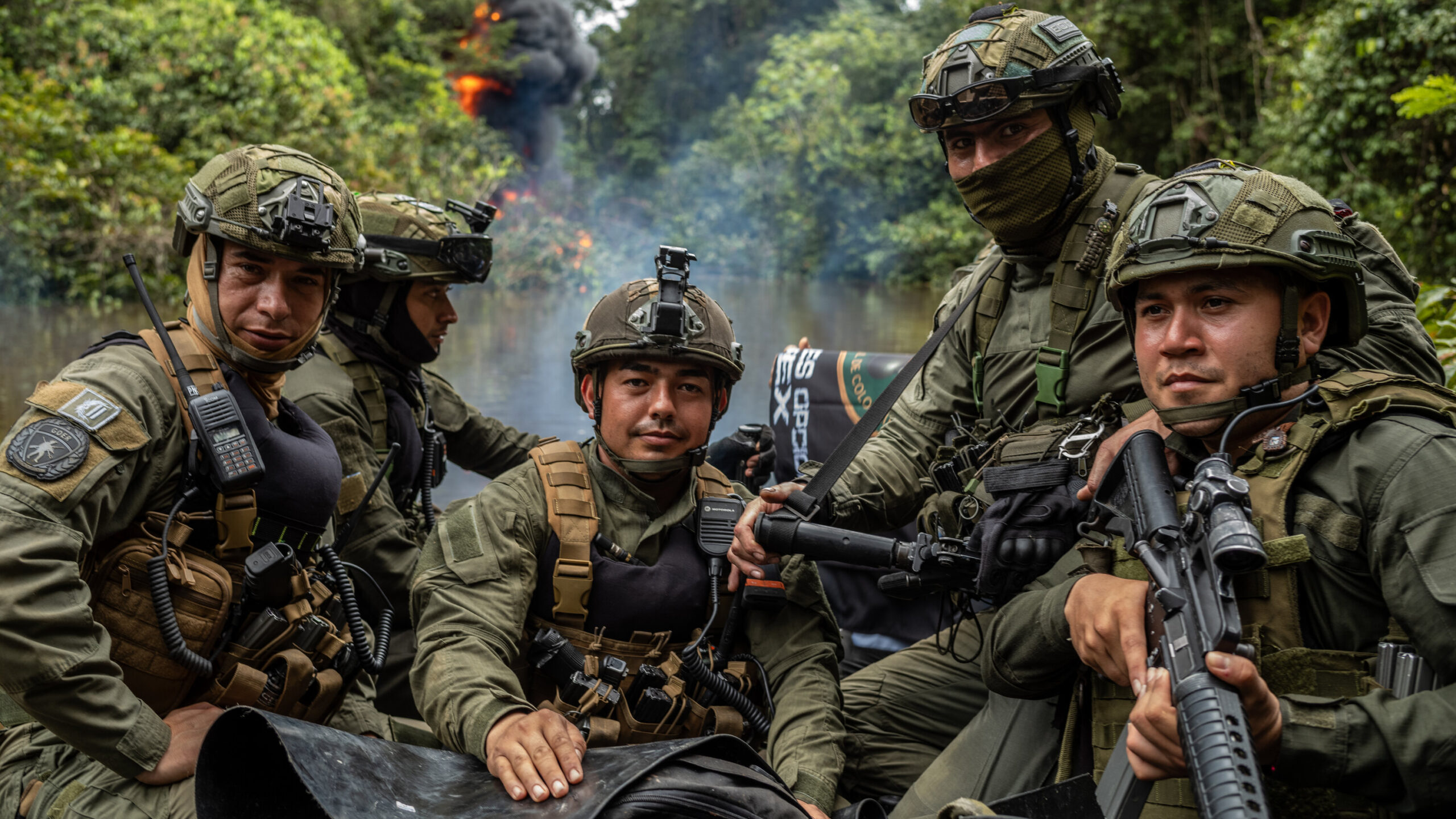
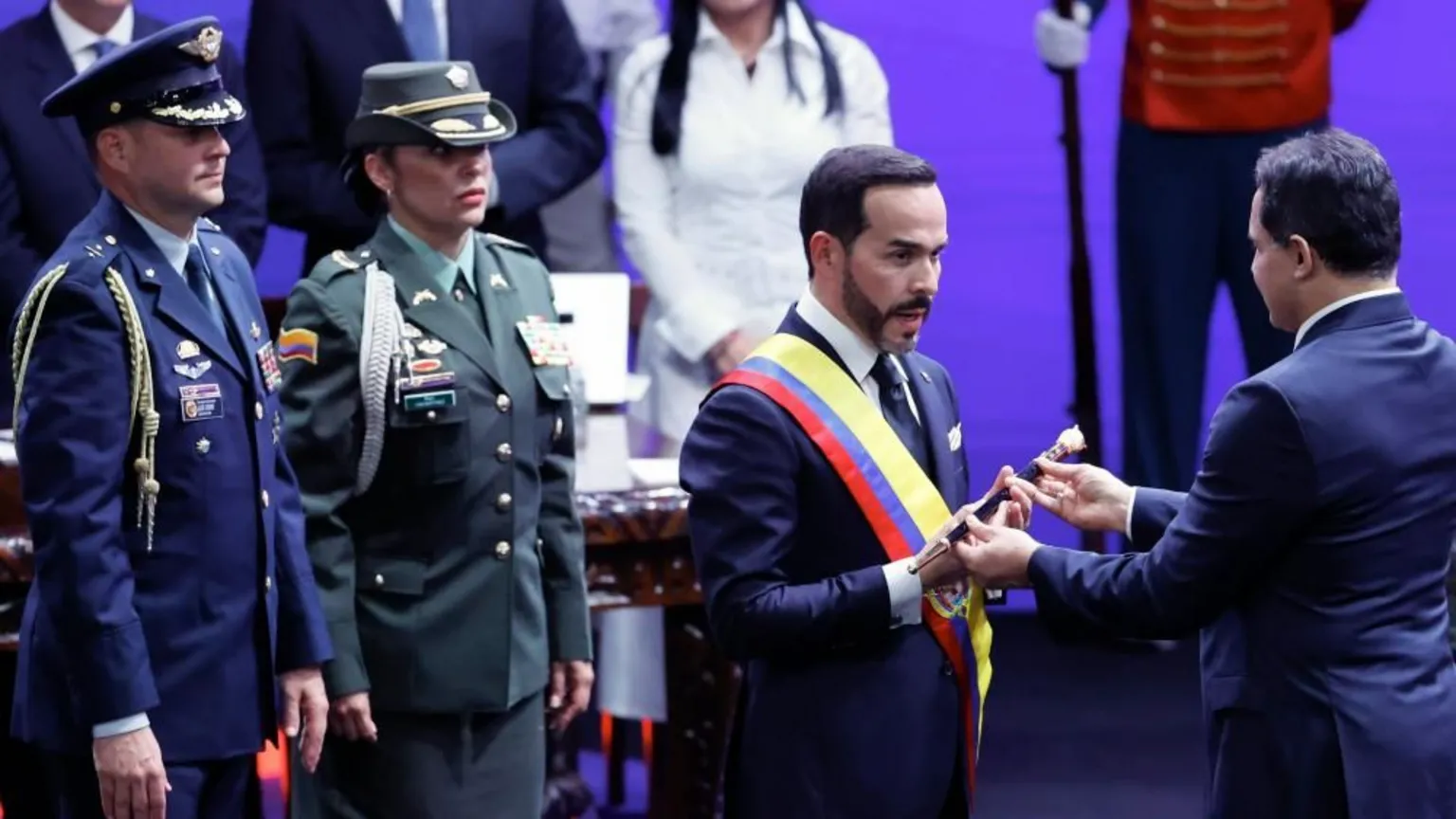
The United States is moving quickly to deepen its relationship with Colombia’s new government, pledging a $1 billion security package as President Abelardo de la Espriella takes office and signals a sharp break from the policies of his predecessor, Gustavo Petro.
The announcement places security, organized crime and migration at the center of the new bilateral agenda. It also gives Washington an early opportunity to rebuild a relationship that became increasingly strained during Petro’s presidency.
De la Espriella was sworn in on Friday in Cali rather than Bogotá, using the ceremony to underline the security-first approach that defined his campaign. The new president has promised a tougher military response to armed groups and drug trafficking organizations, while seeking closer cooperation with the United States and Israel. The Organization of American States had already congratulated de la Espriella after his election and said it expected to work with his administration on democracy, institutional stability and development. Organization of American States.
The reported U.S. package comes at a significant moment for both countries. Colombia remains a major U.S. partner in South America, while Washington under President Donald Trump has placed greater emphasis on counternarcotics, border enforcement and security cooperation across the region.
De la Espriella Opens His Presidency With a Hard-Line Security Message
The decision to hold the inauguration in Cali was itself a political statement. The city, one of Colombia’s largest, has faced years of security challenges linked to armed groups, organized crime and drug trafficking. The choice allowed the incoming administration to place its central campaign message — restoring state authority — at the heart of the transfer of power.
In his inaugural address, de la Espriella promised an aggressive campaign against what he describes as narco-terrorism. He presented the government as prepared to use the full force of the state against armed organizations and said criminals would not be allowed to establish areas where government authority could not reach.
The language marks a clear departure from Petro’s approach. During his four years in office, Petro promoted his “Total Peace” strategy, which relied heavily on negotiations with guerrilla groups and other armed organizations. The strategy produced agreements and temporary ceasefires in some areas, but violence and territorial disputes persisted in other parts of the country.
Colombia’s own government had prepared for the transition despite political tensions surrounding the election. The outgoing administration said in July that it would hand over power on August 7 and described the transition as a constitutional obligation. Colombian government transition statement.
De la Espriella has promised to replace negotiations with a more forceful security policy. His campaign proposals have included large-scale prison construction, expanded military operations and a stronger partnership with foreign governments involved in combating organized crime.
That approach is likely to become one of the defining tests of his presidency. Colombia has decades of experience with military campaigns against guerrillas, paramilitary structures and drug-trafficking organizations. The central question is whether a tougher strategy can produce lasting territorial control without generating another cycle of violence.
Washington Sees an Opening for a Broader Security Partnership
The reported $1 billion package would give the new administration substantial U.S. backing at the beginning of its term. The money is expected to be connected to security priorities, including efforts against organized crime and closer coordination on migration and border enforcement.
The timing is important. Relations between Washington and Bogotá became increasingly difficult under Petro, who frequently criticized Trump’s policies and objected to several U.S. positions on migration, drug policy and regional affairs.
De la Espriella offers a very different political orientation. He has openly aligned himself with Trump and has advocated stronger security cooperation with the United States. His government is also expected to seek closer military and intelligence ties with Washington as it confronts armed groups operating in Colombia’s rural regions and along its borders.
The U.S. government has continued to identify Colombia as an important partner in regional security, although Washington’s relationship with Bogotá has also been shaped by counternarcotics disputes and concerns over illegal armed groups. The current U.S. travel guidance continues to identify crime, kidnapping, unrest and terrorism as risks in parts of Colombia.U.S. Colombia Travel Advisory.
The new administration’s economic agenda could also influence the relationship. De la Espriella has promoted policies aimed at attracting investment and expanding economic activity, including a more business-friendly approach to regulation and natural resources.
For Washington, that creates an opportunity to combine security cooperation with trade and investment. For Bogotá, closer U.S. ties could bring additional resources and diplomatic support, but they may also generate domestic criticism if the relationship is perceived as giving Washington excessive influence over Colombian policy.
That tension is not new. Colombia has relied on U.S. support for decades in its fight against drug trafficking and armed groups, yet debates over sovereignty and the role of foreign military assistance have repeatedly surfaced in Colombian politics.
A Sharp Turn From Petro Could Reshape Colombia’s Foreign Policy
The change in government represents more than a shift in security policy. It also moves Colombia toward a different position on some of the region’s most contentious diplomatic issues.
Petro developed closer relations with governments on the Latin American left and became one of the region’s most vocal critics of Israel’s military campaign in Gaza. De la Espriella has instead described Israel as an important strategic partner and has indicated that Colombia will strengthen its relationship with both Israel and the United States.
The new government has also signaled support for Trump’s regional security initiatives. De la Espriella’s decision to join the “Shield of the Americas” partnership reflects an ambition to place Colombia more firmly inside a U.S.-led security framework.
That shift comes as Washington seeks stronger alliances across Latin America. Trump’s administration has backed political leaders who share its positions on migration, organized crime and economic policy, while relations with left-wing governments such as Brazil under President Luiz Inácio Lula da Silva have become more complicated.
Colombia’s position is particularly important because of its geography. The country borders Venezuela, Panama, Ecuador, Peru and Brazil and has access to both the Caribbean and Pacific. Its territory is therefore central to regional migration routes, drug trafficking networks and wider security operations.
The new government’s challenge will be turning political alignment into measurable results. A stronger U.S. relationship can provide intelligence, equipment, training and diplomatic support, but Colombia will still have to deal with armed groups that operate in difficult terrain and exploit weak state presence.
The administration also faces a fragmented political environment. De la Espriella enters office after a closely fought election and will need congressional support to implement major reforms. His security agenda may have broad public appeal, but expanding military operations, building large prison facilities and changing the country’s approach to armed groups will require money, legislation and sustained political backing.
The transition itself has already demonstrated how politically sensitive the change of government is. Petro’s administration publicly committed to transferring power, while government institutions prepared the formal handover to the incoming team. National Civil Registry of Colombia remains the country’s central electoral authority as the new administration begins its mandate.
The first months of de la Espriella’s presidency will therefore be closely watched not only in Bogotá but also in Washington. The proposed security package signals that the United States sees an opportunity for a much closer partnership. Whether that relationship produces lower levels of violence, stronger border controls and greater economic cooperation will depend on how the new government turns its campaign promises into policy.