Coca-Cola is expanding beyond traditional fountain soda as consumers and restaurants demand more customizable beverages. The company is testing new equipment and drink concepts that could automate dirty sodas, refreshers, iced coffee and energy drinks.
The projects are being developed at Coca-Cola innovation facilities near its Atlanta headquarters. They reflect a broader shift in the restaurant industry, where specialty beverages are becoming an increasingly important way to attract customers and increase sales.
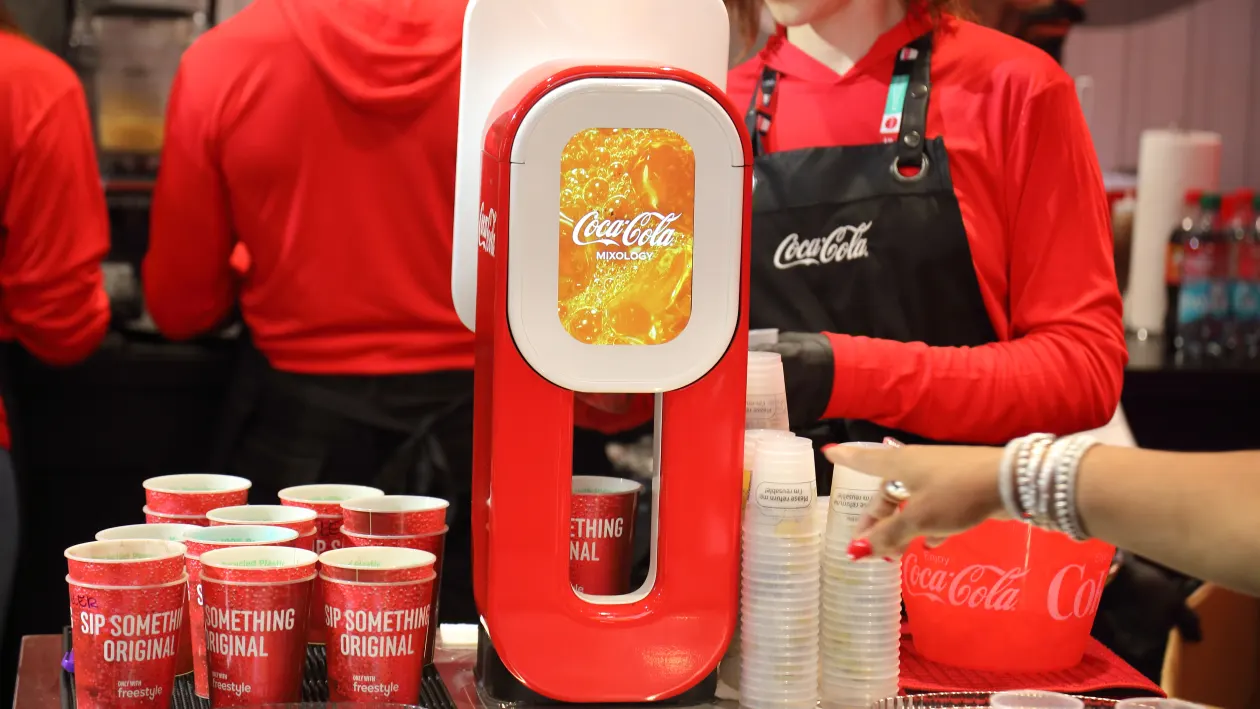
Coca-Cola says its Freestyle platform can now use real-time consumer data to help develop new drinks faster. The company recently said that Freestyle processes roughly 11 million servings per day and can turn consumer insights into market-ready beverages in as little as 90 days.
The strategy is also being shaped by changing consumer expectations. For younger customers, particularly Gen Z, a beverage can be a treat, an energy boost or a highly personalized product designed to be shared on social media.
That creates an opportunity for restaurants. A customized drink can command a higher price while requiring less food preparation than a traditional meal.
But it also creates a problem for Coca-Cola. If restaurants want more specialty beverages, the company needs to provide products and equipment that can deliver them quickly and consistently.
Coca-Cola Is Taking Freestyle Beyond Traditional Soda
Coca-Cola Freestyle has been built around customization since its introduction. The machines allow customers to combine different Coca-Cola beverages and flavors instead of choosing from a limited selection of fountain drinks.
Now Coca-Cola wants to take that concept further.
The company is developing equipment that can prepare drinks requiring ingredients beyond traditional soda. One prototype adds a dairy module to a Freestyle machine, allowing it to create dirty sodas.
Dirty sodas typically combine carbonated soft drinks with flavored syrups, cream or other ingredients. The trend has grown rapidly across the U.S., turning ordinary soda into something that looks and feels more like a handcrafted beverage.
Coca-Cola’s prototype is designed to automate the process. A preprogrammed recipe can control the ingredients while still preserving the visual appearance associated with dirty sodas.
That could be valuable for restaurant operators.
A manually prepared specialty drink requires employees to measure ingredients and assemble the beverage. An automated system can reduce those steps and produce a more consistent result.
The approach also fits with Coca-Cola’s broader effort to make its dispensing equipment more flexible.
In May 2026, the company unveiled its latest generation of beverage-dispensing technology. Coca-Cola said its new systems are designed to be modular, connected and capable of adapting to different beverage categories and restaurant environments.
The company is also expanding Freestyle into smaller locations.
Freestyle Mini is designed for bars, cafes and restaurants where counter space is limited. The system can hold up to 16 cartridges and brings Freestyle-style customization to locations that previously relied on traditional soda guns.
That expansion is strategically important.
Large restaurants can accommodate substantial dispensing equipment. Smaller businesses often cannot. By reducing the footprint, Coca-Cola can potentially place its technology in more types of food-service locations.
The company is also using data from its existing machines to identify beverage trends.
Freestyle machines provide information about what consumers choose, when they make those choices and where the purchases occur. Coca-Cola says that data can help it identify successful flavor combinations and move new products from concept to launch more quickly.
The result is a feedback loop.
Consumers choose drinks. The machines collect data. Coca-Cola analyzes those choices. The company then develops new beverages based on what people are actually buying.
That makes Freestyle more than a vending system. It becomes a large-scale consumer testing platform.
Refreshers and Energy Drinks Create New Opportunities
Coca-Cola is also testing dispensing technology for beverages that sit outside its traditional soda portfolio.
The company is working with Micro Matic on a non-alcoholic mixology dispenser designed to combine beverages such as sodas, lemonades, teas and coffees with syrups and dairy or alternative dairy ingredients.
The objective is straightforward: give restaurant employees the ability to create more complex beverages without turning every drink into a labor-intensive process.
Refreshers are an important part of that strategy.
Starbucks introduced its Refreshers platform in 2012, creating a beverage option for consumers who wanted an alternative to traditional coffee. The category has since spread across the restaurant industry.
Coca-Cola now wants to establish its own position in the category.
The company is testing colorful, customizable drinks that can provide an energy boost without relying on a conventional coffee base. Some concepts use green tea or natural coffee extracts instead.
The visual component is also important.
A refresher is not simply a functional beverage. Its color, ingredients and presentation can become part of the product’s appeal.
That trend is already visible at major restaurant chains.
McDonald’s launched its first national lineup of Refreshers and crafted sodas in May 2026. The offering included fruit flavors, cold foam and popping boba, showing how far traditional fast-food beverages have moved toward customization.
McDonald’s specialty beverage menu
Coca-Cola is also developing a new customizable energy drink for food-service operators.
The beverage is designed to be relatively colorless and lightly flavored. Restaurants could then customize its color and flavor, creating a drink that fits their own menu and branding.
Coca-Cola expects the product to launch with food-service operators during the first half of 2027.
The company says a 12-ounce serving will contain 106 milligrams of caffeine. That is roughly comparable to a 12-ounce Red Bull and substantially less than the caffeine in a comparable Celsius serving.
Caffeine, however, creates another challenge for restaurant operators.
The controversy surrounding Panera Bread’s Charged Lemonade demonstrated the potential liability associated with highly caffeinated beverages. As restaurants expand their energy drink selections, portion control and clear product information are likely to remain important considerations.
Coca-Cola’s approach is therefore less about creating another canned energy drink and more about creating a platform for customizable energy beverages.
Restaurants could use the same basic product to create different flavors, colors and presentations.
That flexibility could help Coca-Cola compete in a beverage market where customization is becoming increasingly important.
Inside Coca-Cola’s “The Vault”
Coca-Cola’s innovation strategy is not limited to machines.
Near its equipment development facilities in Atlanta is a testing space known as “The Vault.” The company uses the facility to develop beverages and collaborate with restaurant customers.
The goal is to bring customers into the development process.
Whataburger, for example, worked with Coca-Cola for approximately 18 months to develop its Whatafreshers, which launched in July.
This type of partnership gives Coca-Cola an opportunity to test products in real restaurant environments before expanding them.
The company also has experience supplying beverages that consumers may not immediately identify as Coca-Cola products.
Its lemonade business is one example. Coca-Cola says more than 40,000 bubbler dispensers carry its lemonade products. Wendy’s sells one version under the name Dave’s Craft Lemonade.
This white-label approach allows restaurant chains to create their own beverage identity while relying on Coca-Cola’s production and distribution capabilities.
That could become increasingly important as restaurants build their own specialty drink programs.
The company is also paying close attention to Sprite.
Sprite has become a useful base for customized drinks because its flavor profile works well with fruit syrups and other additions. The same principle applies to lemonade, tea and other relatively neutral beverage bases.
Coca-Cola’s objective is to make those ingredients easier to combine.
The company’s newest Micro Matic system is designed around that idea. Instead of asking employees to manually assemble every specialty drink, the equipment can combine multiple components through a controlled dispensing system.
That could reduce preparation time while improving consistency.
For restaurant operators, the attraction is obvious. Specialty drinks can generate higher prices, but they can also create more labor.
Automation attempts to solve that contradiction.
The Beverage Race Is Becoming a Restaurant Strategy
Coca-Cola’s innovation push comes as restaurants increasingly treat beverages as an important part of their overall business strategy.
McDonald’s provides a clear example.
The company introduced Refreshers and crafted sodas across its U.S. restaurants in May. It later expanded its beverage lineup again with a Red Bull Dragonberry Energizer, marking McDonald’s entry into energy drinks.
McDonald’s 2026 beverage expansion
The development is notable because Coca-Cola has been McDonald’s primary beverage partner for decades.
McDonald’s decision to use Red Bull for its new energy drink shows that restaurant chains are increasingly willing to work across beverage suppliers when they see an opportunity to expand their menus.
For Coca-Cola, that raises the stakes.
The company cannot assume that its existing relationships will automatically guarantee every beverage category. It has to give restaurants new reasons to keep Coca-Cola products at the center of their menus.
Coca-Cola’s second-quarter 2026 results show that the company is already emphasizing consumer-led innovation as a growth strategy. The company said innovation contributed to volume growth and that it is establishing innovation hubs to translate consumer insights into new products more quickly.
Coca-Cola’s 2026 innovation strategy
The larger question is whether specialty beverages generate genuinely incremental sales.
A customer who buys a $7 refresher instead of a $3 soda may increase the value of the transaction. But that does not necessarily mean the restaurant has gained a new customer or generated an additional purchase.
Coca-Cola therefore tracks metrics such as incremental volume when testing new drinks with restaurant partners.
The distinction matters.
If specialty beverages simply replace existing soda purchases, their impact may be limited. If they encourage additional visits, higher checks or new consumption occasions, they could become a much more powerful growth engine.
That is the bet behind Coca-Cola’s innovation labs.
The company is not abandoning soda. Instead, it is trying to transform soda and other beverages into a more flexible platform.
Freestyle provides the hardware and consumer data. New dispensing systems provide additional customization. Restaurant partnerships provide testing environments. And new beverages expand the categories Coca-Cola can serve.
The strategy could help Coca-Cola remain relevant as consumers move toward more personalized drinks.
It could also help restaurants offer specialty beverages without creating an operational nightmare behind the counter.
The biggest test will be whether consumers continue paying premium prices for these drinks and whether those purchases generate sales beyond simple substitution.
For Coca-Cola, the future of the fountain may therefore look less like a traditional soda machine and more like an automated beverage laboratory.