
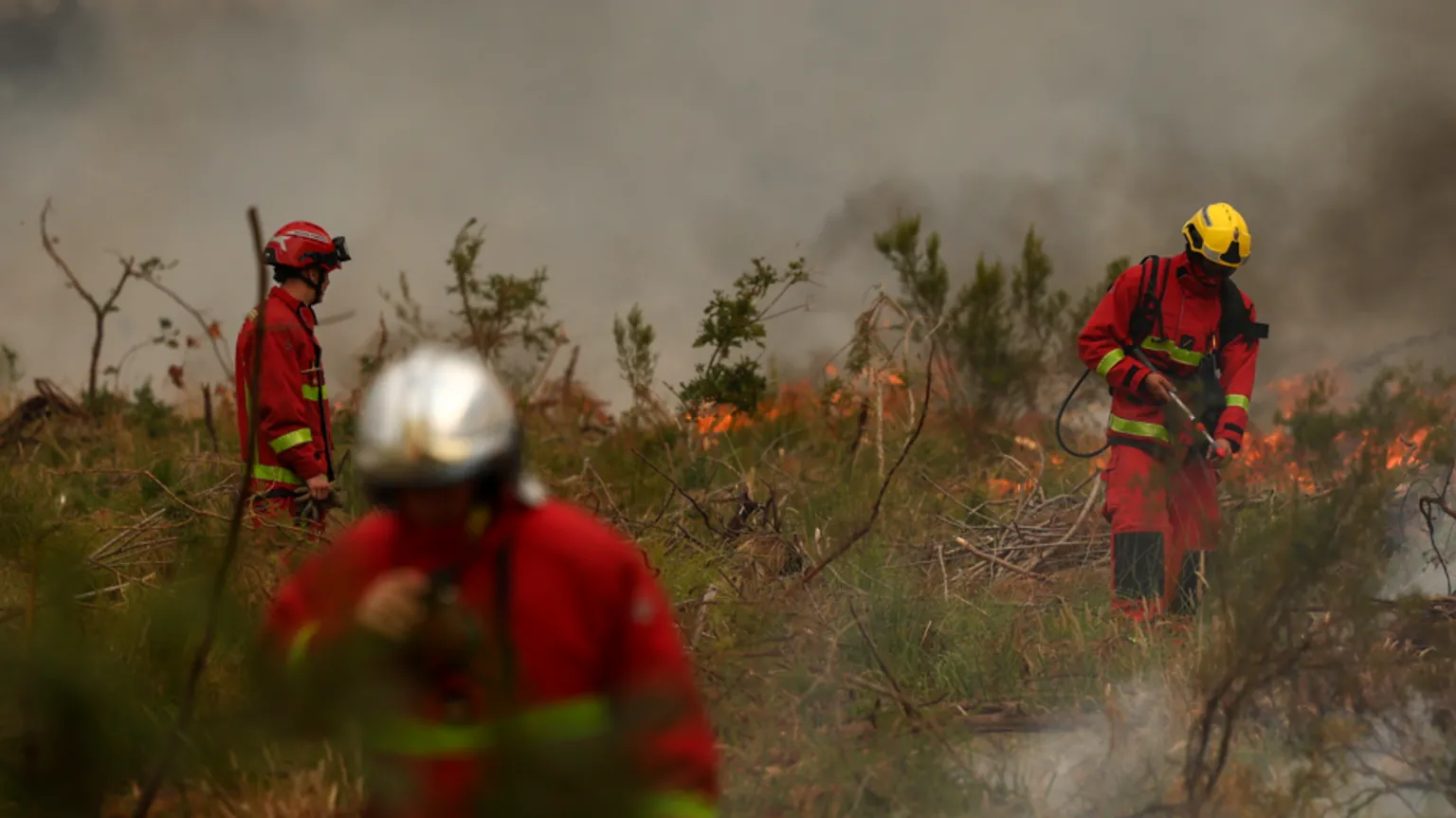
Thousands of residents across southwestern France spent another day away from their homes as emergency crews battled a fast-moving wildfire threatening communities south of Bordeaux. Authorities ordered large-scale evacuations after flames advanced through dry forests. Moreover, extreme heat, powerful winds, and prolonged drought continued to complicate containment efforts.
Emergency officials described the situation as highly dynamic, with changing weather conditions repeatedly altering the fire’s direction. Although Bordeaux itself remained outside the immediate danger zone, authorities warned that smoke, road closures, and disruptions to transportation could continue. As a result, firefighting operations expanded.
Emergency Response Expands as Fire Conditions Worsen
More than two thousand firefighters, supported by military personnel, police officers, and specialized aerial resources, have been deployed across the affected region. Their priority has been protecting residential areas. They are also focused on preventing new ignition points and creating defensive firebreaks before flames reach populated zones.
Meteorologists noted that strong winds and exceptionally dry vegetation have created ideal conditions for rapid fire growth. These factors have forced authorities to continuously reassess evacuation zones while asking residents to follow official emergency instructions without delay.
Transportation has also been affected. Several highways connecting southwestern France with neighboring regions have experienced temporary closures. While restrictions on air traffic have caused delays and cancellations at Bordeaux Airport, updated travel information remains available through BordeauxAirport. This information is important as emergency operations continue.
Local vineyards, agricultural land, and protected woodland areas remain under close surveillance. Crews are attempting to prevent additional damage to one of France’s most economically important regions.
Europe Faces Another Challenging Wildfire Season
The wildfire near Bordeaux is part of a broader pattern affecting several European countries during another difficult summer fire season. France, Spain and other Mediterranean nations have experienced multiple large-scale blazes fueled by prolonged heatwaves and below-average rainfall.
Environmental specialists have warned that forests stressed by months of dry weather become significantly more vulnerable to ignition and rapid fire spread. Current wildfire monitoring published by the European Forest Fire Information System (EFFIS) continues to show elevated fire activity across several parts of southern Europe.
Spanish authorities have also been responding to major fires affecting communities near Madrid and the eastern Mediterranean coast. Thousands of residents have been relocated as firefighters work to contain multiple active fronts under difficult weather conditions.
Scientists increasingly point to the interaction between extreme weather events and changing climate patterns as a major factor. These factors are contributing to longer, more destructive wildfire seasons across Europe.
Recovery Efforts Begin While Firefighters Remain on Alert
French officials have pledged continued support for affected communities as damage assessments begin in areas where the fire has already passed. Emergency services are focusing on restoring essential infrastructure. In addition, they must ensure evacuated residents can return safely once authorities declare conditions stable.
Experts caution that even after visible flames are controlled, hidden hot spots can reignite under windy conditions. Therefore, continuous monitoring is required for several days. Fire prevention agencies are urging the public to avoid activities that could accidentally spark new fires during periods of extreme fire danger.
Authorities are also encouraging residents and travelers to monitor official emergency updates from France’s Ministry of the Interior. Moreover, weather forecasts issued by Météo-France are important as firefighters continue working to contain one of the region’s most challenging wildfires of the summer.