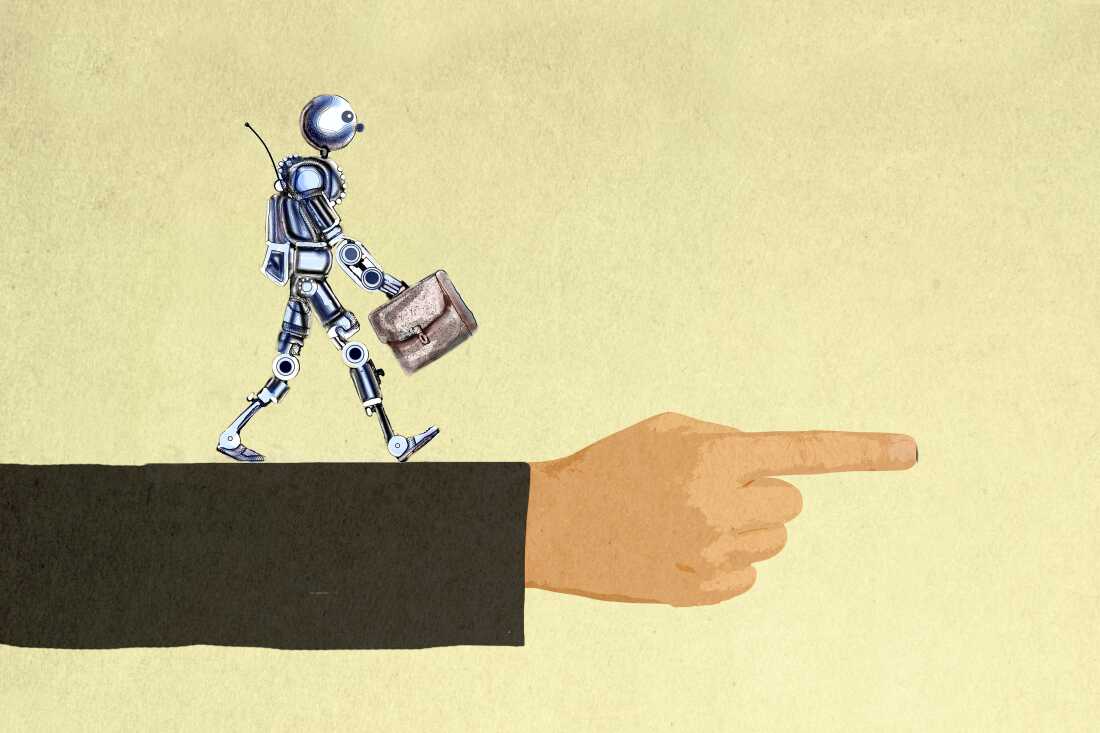
AI and the job market have become closely connected in the minds of many recent college graduates. Many of these graduates are struggling to secure their first professional positions.
Across the United States, a growing number of graduates believe artificial intelligence is reducing opportunities in entry-level fields. This is especially true in industries such as technology, communications, marketing and data analysis.
Recent graduates report submitting hundreds of applications, participating in multiple interviews and still receiving few or no job offers.
At the same time, economists continue to debate whether artificial intelligence is truly responsible for the changing employment landscape. They also wonder whether other factors are playing a more significant role.
Researchers Say AI May Be Reshaping the Entry-Level Job Market
Some economists believe that artificial intelligence is already influencing hiring decisions.
Researchers have observed noticeable declines in employment among younger workers in occupations that are highly exposed to automation. Generative AI technologies are also affecting these occupations.
A recent Stanford University study examining payroll data identified a decline in employment among workers between the ages of 22 and 25. This decline was seen in professions such as software development, data analysis and marketing.
One explanation is that many entry-level positions rely heavily on structured knowledge. This includes information that can easily be documented, standardized and incorporated into large language models.
Artificial intelligence systems can quickly perform many tasks traditionally assigned to junior employees. For instance, these include data organization, content generation, basic coding and document analysis.
Meanwhile, experienced professionals often rely on practical knowledge developed through years of hands-on work. This makes their roles less vulnerable to immediate automation.
As a result, recent graduates may face increasing competition not only from other job candidates but also from rapidly evolving AI systems.
Some Economists Believe Remote Work Is the Real Cause of Hiring Challenges
Not every expert agrees that artificial intelligence is the primary factor behind declining entry-level hiring.
Some economists argue that remote work has fundamentally changed how companies recruit and train new employees.
Research suggests that unemployment among younger college graduates began increasing before generative AI became widely available.
Training entry-level employees often requires significant supervision, mentorship and direct collaboration.
In traditional office environments, experienced employees can provide immediate feedback and guidance. However, remote workplaces frequently make those interactions more difficult.
Many employers now prefer to recruit experienced professionals who require less supervision and can immediately contribute while working remotely.
This shift has created additional challenges for younger workers attempting to enter the workforce for the first time.
AI and the Job Market Will Continue to Evolve in the Coming Years
Although economists disagree about the current impact of artificial intelligence on employment, they largely agree that significant changes are approaching.
Research examining more than 21,000 companies found that organizations making the largest investments in artificial intelligence actually increased their hiring activity. They did this rather than reducing it.
Many experts believe artificial intelligence will transform jobs rather than simply eliminate them.
Future workers will likely need to develop skills that complement AI technologies instead of competing directly against them.
Adaptability, critical thinking, creativity, communication and problem-solving are expected to become increasingly valuable across multiple industries.
For recent graduates, the current labor market remains highly competitive. However, economists continue to emphasize that today’s employment challenges should not automatically be interpreted as evidence that artificial intelligence is replacing an entire generation of workers.