
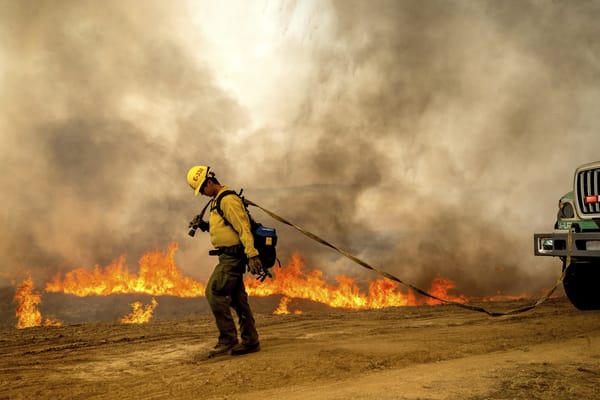
US Wildfire Prevention Efforts Decline as Severe Fire Season Looms
The United States is entering what experts warn could be an extreme wildfire season, but with significantly reduced preparation compared to previous years. A sharp decline in vegetation management and prescribed burns has raised alarms among fire scientists and land management professionals, who argue that current conditions could intensify wildfire behavior across multiple regions.
Recent data shows that the U.S. Forest Service treated approximately 2.6 million acres of hazardous vegetation in 2025, a substantial drop from over 4 million acres the previous year. The reduction highlights a growing gap between wildfire risk and mitigation efforts at a time when drought, heat, and fuel accumulation are converging.
Decline in Prescribed Burns Raises Risk Levels
One of the most concerning trends is the significant reduction in prescribed burns, a critical tool used to manage forest ecosystems and reduce wildfire intensity. In 2025, only about 900,000 acres were treated with controlled fire, roughly half the levels recorded in 2023 and 2024.
Prescribed burns play a key role in removing dry underbrush and preventing the buildup of flammable materials. Without them, forests become increasingly dense, creating conditions that allow wildfires to spread rapidly and burn at higher temperatures.
This approach is rooted in both ecological science and traditional land management practices. Indigenous communities have long used controlled burns to maintain healthy ecosystems, a method now being revisited as climate conditions worsen. More information on fire ecology and land management practices can be found at https://www.fs.usda.gov, which outlines the Forest Service’s approach to wildfire mitigation.
Experts warn that the continued decline in prescribed burning creates a dangerous cycle: fewer preventative measures lead to more intense fires, which in turn consume agency resources and limit future prevention efforts.
Staff Reductions and Operational Challenges Impact Preparedness
A major factor contributing to the decline in wildfire prevention efforts is the reduction in workforce within the Forest Service. The agency lost approximately 16% of its personnel in 2025, with thousands of employees departing as part of broader federal cost-cutting measures.
While the agency has increased the number of frontline firefighters, experts emphasize that wildfire prevention depends on a broader network of support staff, including planners, environmental analysts, and contracting specialists. Without these roles, large-scale vegetation management projects become difficult to implement.
The strain on resources has also been compounded by ongoing wildfire activity, which has required personnel to prioritize emergency response over preventative work. This shift in focus reduces the time available for fuel reduction efforts, further increasing long-term risk.
Detailed workforce and environmental policy data can be explored through https://www.usda.gov, which provides insights into federal land management and agency operations.
Case Study Highlights Consequences of Delayed Action
The consequences of insufficient wildfire preparation are already visible in regions like California’s Sierra Nevada. In one experimental forest long studied for its ecological value, plans for a prescribed burn were delayed due to administrative and environmental review processes.
Before mitigation efforts could be implemented, a wildfire ignited nearby and rapidly spread through the area under dry and unstable conditions. The fire burned at high intensity, destroying large sections of forest that had been identified as vulnerable due to dense vegetation and drought-related tree mortality.
This example underscores the risks associated with delayed action. When preventative measures are postponed, forests accumulate fuel that can turn manageable fires into large-scale disasters.
Climate data and wildfire trends can be further examined through https://www.noaa.gov, which tracks environmental conditions influencing fire behavior across the United States.
A Growing Gap Between Risk and Readiness
The current situation reflects a broader challenge in wildfire management: balancing immediate response needs with long-term prevention strategies. As fire seasons grow longer and more severe due to climate change, agencies face increasing pressure to allocate resources effectively.
Fire experts emphasize that prevention is not about eliminating wildfires entirely, but about reducing their intensity and improving the ability of firefighters to respond safely. Without adequate fuel management, suppression efforts become more dangerous and less effective.
Looking ahead, policymakers and land managers will need to address structural limitations within wildfire management systems, including staffing, funding, and regulatory processes. Additional research and policy analysis can be found at https://www.nifc.gov, which provides national-level coordination and data on wildfire activity.
As conditions continue to worsen, the gap between wildfire risk and preparedness may define the severity of future fire seasons, with implications not only for ecosystems but also for communities across the country.