
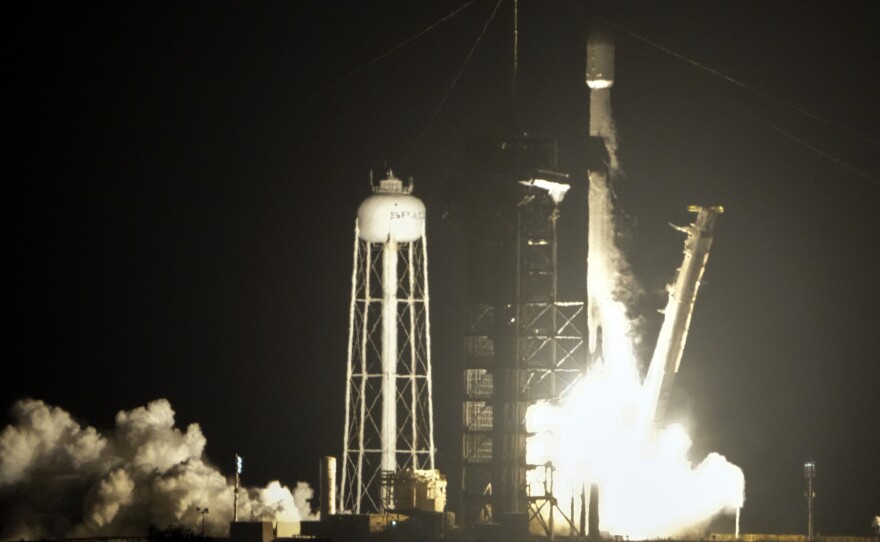
A discarded section of a SpaceX Falcon 9 rocket is expected to collide with the Moon. This event provides scientists with a rare opportunity to study the effects of a controlled high-speed impact on the lunar surface.
According to space tracking analyses, the rocket stage is projected to strike the Moon at approximately 2:35 a.m. ET while traveling at more than 5,000 miles per hour.
Rocket Stage Returning to the Moon
The object is the upper stage of a Falcon 9 rocket launched in January 2025. This rocket successfully delivered two lunar landers and scientific payloads toward the Moon.
After completing its mission, the rocket stage remained in space without sufficient fuel to return to Earth or maintain a stable orbit. As a result, it was eventually placed on a collision course with the Moon.
Scientists emphasize that the impact was not intentional.
Expected Impact Location
The rocket stage is roughly the size of a five-story building. It is expected to strike the Moon’s northwestern region, near Einstein Crater, on the side currently facing Earth.
Researchers estimate the collision could create a crater measuring at least 17 meters (56 feet) in diameter.
Although the impact will occur on the Moon’s sunlit surface, experts say it may be difficult to observe directly from Earth.
NASA Will Study the Collision
NASA plans to use its Lunar Reconnaissance Orbiter (LRO) to image the impact site before and after the collision.
Scientists hope to compare the images to determine:
- The exact impact location.
- The size and shape of the new crater.
- How lunar material is displaced during high-speed impacts.
- Changes to the surrounding terrain.
Additional observations are expected roughly one week after the impact. At that time, the spacecraft can obtain higher-resolution imagery of the affected area.
A Rare Scientific Opportunity
Natural meteorite impacts occur frequently on the Moon. However, collisions involving known human-made objects are relatively uncommon and provide valuable research opportunities.
Researchers hope the event will improve understanding of:
- Lunar geology.
- Impact crater formation.
- The behavior of debris ejected during collisions.
- Future spacecraft interactions with the lunar surface.
Some astronomers suggest that sensitive telescopes may detect a brief plume of dust or rock fragments immediately following the impact. However, the event is unlikely to be visible with binoculars or standard amateur equipment.
Growing Focus on Space Debris
The upcoming collision also highlights the increasing challenge of managing space debris created by decades of exploration.
As lunar missions become more frequent, scientists and space agencies continue exploring strategies to better track and manage spacecraft components after missions conclude. This will help reduce unintended impacts and improve long-term sustainability in space exploration.
While the Falcon 9 stage poses no danger to Earth, its lunar impact offers researchers a unique chance to observe a controlled collision. It will also help gather new data about the Moon’s surface.