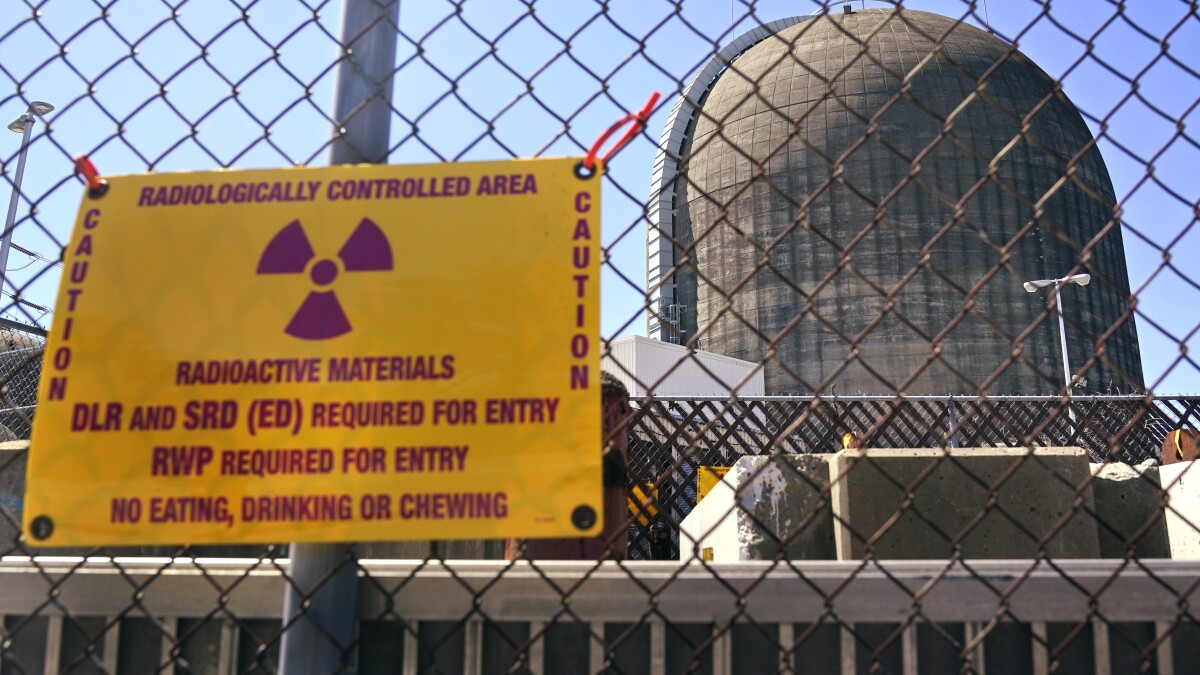
The U.S. Nuclear Regulatory Commission is preparing to eliminate a 50-year-old radiation safety standard as the Trump administration pushes to accelerate nuclear energy development to meet growing electricity demand from artificial intelligence, data centers and industrial expansion.
The NRC has proposed eliminating the “As Low As Reasonably Achievable” (ALARA) principle, a longstanding requirement that encourages nuclear facilities to keep radiation exposure for workers and the public as low as possible, even when exposure levels are already below regulatory limits.
The proposed rule would also create an exception allowing certain workers to receive higher radiation exposures under specific circumstances.
A major shift in nuclear safety policy
The change is part of the Trump administration’s broader effort to overhaul federal nuclear regulations and accelerate the construction and deployment of new reactors across the United States.
Supporters of eliminating ALARA argue that the standard has become unnecessarily complicated and can create uncertainty for companies designing and operating nuclear facilities. Radiation health physicist Emily Caffrey said the concept of keeping exposure “as low as reasonably achievable” can be difficult to apply consistently because what is considered reasonable can vary.
NRC Chairman Ho Nieh has similarly argued that ALARA can create regulatory uncertainty, comparing it to requiring drivers to travel “as slow as reasonably achievable” even when a speed limit already exists.
Critics warn of greater radiation exposure
Safety advocates, however, argue that removing ALARA could weaken an important incentive for nuclear companies to minimize radiation exposure.
Edwin Lyman of the Union of Concerned Scientists said eliminating the requirement could reduce pressure on companies to maintain practices that have historically protected workers and the public.
The debate comes against a backdrop of decades of scientific evidence linking significant radiation exposure to DNA damage, mutations and cancer. Scientists say the risks associated with very low doses are more difficult to measure because they must be distinguished from the much larger background rate of cancer in the population.
Nuclear power and the AI boom
The proposed change reflects the administration’s broader push to expand nuclear power as the United States faces rapidly increasing electricity demand.
The growth of artificial intelligence and data centers has created pressure for reliable, large-scale electricity generation, while companies are also pursuing new reactor technologies that could reshape the nuclear industry.
The NRC has maintained its existing scientific model for assessing radiation risk, known as the Linear No-Threshold model, but is proposing to remove ALARA as a separate regulatory requirement.
What happens next?
The public comment period on the proposed rule ends August 31, with the regulation potentially taking effect early next year.
The decision could become a significant turning point in U.S. nuclear policy, balancing the administration’s goal of rapidly expanding nuclear energy against concerns from scientists and safety advocates that faster development should not come at the expense of radiation protections.
At the heart of the debate is a fundamental question: how much regulatory flexibility should the nuclear industry receive as America races to build the energy infrastructure needed for the AI era?