
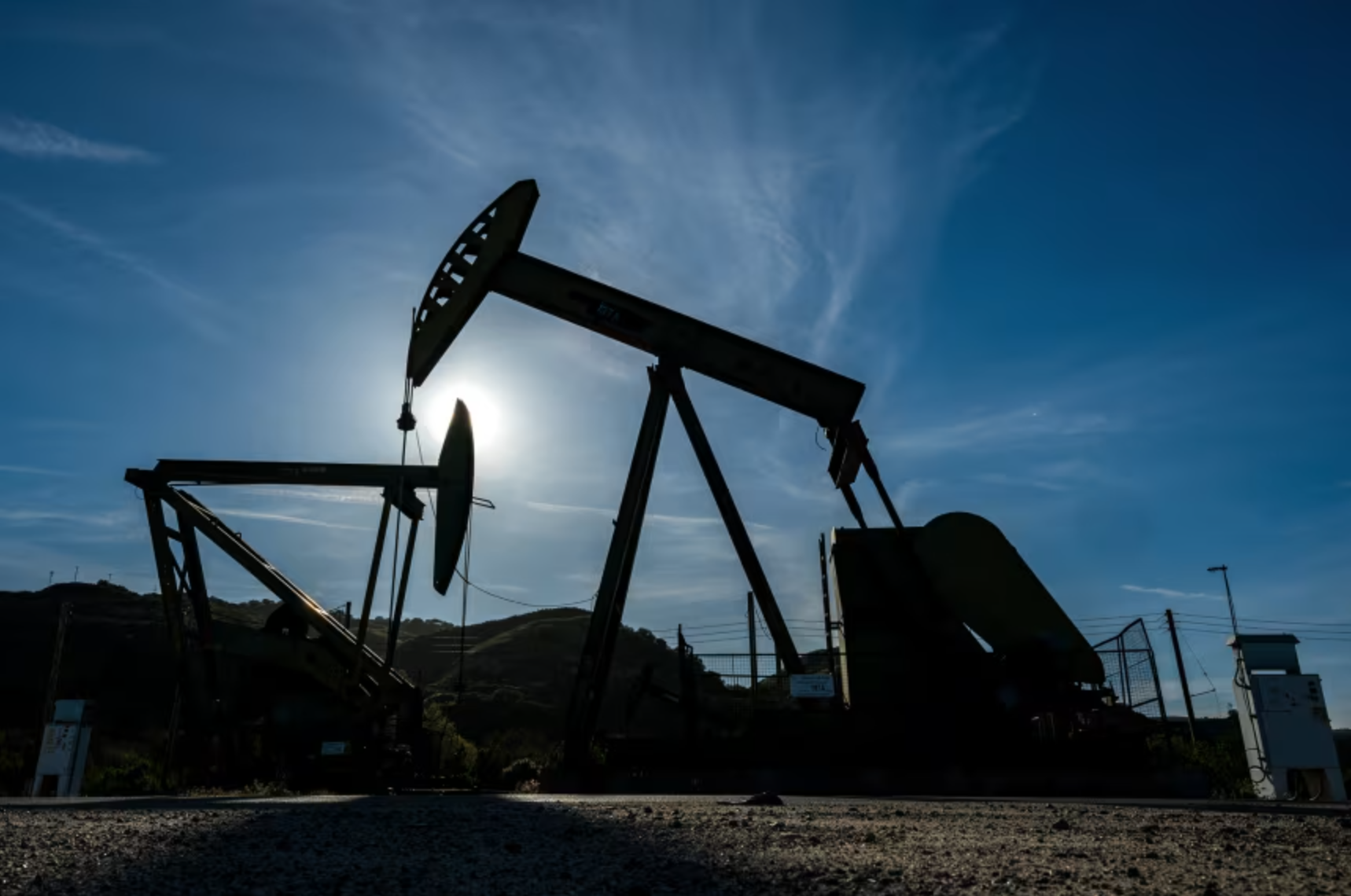
Global oil prices climbed back above $100 per barrel on Wednesday as escalating conflict involving the United States and Iran intensified concerns about prolonged disruptions to energy supplies. Brent crude, the global benchmark, settled at $101.21 per barrel after rising 3.36%, while U.S. crude gained 3.25% to close at $96.05. Brent’s settlement was its highest since May and marked its return above the $100 threshold.
The latest surge reflects renewed fears surrounding tanker traffic through the Strait of Hormuz, a critical route for global energy shipments. Military attacks involving oil tankers, continued fighting and new strikes against energy infrastructure have made the outlook for regional supplies increasingly uncertain.
The move in crude prices is already reaching consumers and businesses. U.S. gasoline prices have climbed sharply, while diesel has reached a record national average. AAA listed regular gasoline at about $4.22 per gallon on September 9, while diesel stood near $5.94 per gallon.
The combination of higher crude prices, expensive refined fuels and uncertainty over future supplies is also putting inflation back at the center of financial-market concerns. Investors are increasingly assessing whether sustained energy costs could influence interest-rate decisions by central banks.
Middle East Conflict Pushes Global Oil Prices Higher
The latest rise in global oil prices followed a series of developments that increased concerns about the security of energy infrastructure and shipping routes across the Middle East.
The United States struck Iranian oil tankers in the Gulf of Oman and near Kharg Island after attempted ballistic missile attacks on a U.S. Navy warship, according to U.S. Central Command. Kharg Island is a major Iranian oil-export hub, making activity around the area particularly important for energy markets.
At the same time, Iran-backed Houthi forces attacked Saudi Arabia, including infrastructure connected to the country’s energy sector. The attacks have expanded the geographic risks facing oil production and transportation beyond the immediate U.S.-Iran confrontation.
The Strait of Hormuz remains central to the market’s concerns. Disruptions in the waterway can affect the movement of crude oil, refined fuels and liquefied natural gas, creating consequences that extend well beyond the Persian Gulf.
Reuters reported that renewed attacks involving tankers have increased fears over shipments through the waterway, while additional Houthi activity around Saudi Arabia has raised concerns about the security of alternative regional energy routes.
Reuters coverage of the latest Brent crude surge provides further detail on the oil-market reaction and the growing risks surrounding Middle Eastern shipping.
Higher crude prices are also feeding into transportation costs. Diesel is particularly important because trucking, shipping and other freight operations depend heavily on the fuel. As those costs rise, businesses can face higher expenses throughout their supply chains.
The pressure is occurring at a time when gasoline prices would normally begin easing after the summer driving season. Instead, the disruption in energy markets has kept fuel prices elevated. AAA’s latest figures show the national average for regular gasoline at $4.2245 per gallon and diesel at $5.9424 per gallon on September 9.
Oil Prices Face a Volatile Path as Supply Risks Persist
The latest move above $100 is part of a much broader oil-price rollercoaster this year. Brent first settled above $100 in March, later climbed sharply in April and May, and then dropped as low as $72 per barrel in June after the United States and Iran reached an agreement aimed at reopening the Strait of Hormuz.
Prices subsequently recovered as conflict continued. Brent moved above $100 again in July before retreating and eventually returning to the three-digit level on Wednesday.
The market is now closely watching the volume of oil moving through the Middle East. Traders must determine whether current disruptions remain temporary or develop into a prolonged reduction in global supply.
Transportation data has become particularly important because even when oil production continues, attacks or restrictions affecting tankers can prevent crude from reaching refineries and international buyers. That distinction has become increasingly significant as fighting spreads across the Red Sea, the Gulf of Oman and the approaches to the Strait of Hormuz.
The market is also watching China. As the world’s largest oil importer, changes in Chinese purchasing can materially influence global demand. Lower imports have helped limit some upward pressure on prices, while a stronger recovery in Chinese demand could add another factor pushing crude higher.
The U.S. Energy Information Administration has already adjusted its expectations for energy prices. Its September outlook projects Brent crude will average $91 per barrel in 2026 and $74 in 2027, while U.S. retail gasoline is expected to average $3.84 per gallon this year and $3.35 next year. The agency also expects most Middle Eastern crude production to return close to pre-conflict levels by the second quarter of 2027.
<a href=”https://www.eia.gov/pressroom/releases/press592.php” target=”_blank” rel=”noopener noreferrer”>U.S. Energy Information Administration’s September energy outlook</a> shows how the prolonged disruption has altered expectations for the recovery of Middle Eastern production.
The updated outlook is notably different from the previous forecast because the expected recovery in regional oil flows has been pushed further into the future. The EIA now expects some constraints to persist through the end of 2026, while inventories are also expected to remain under pressure.
That combination leaves the oil market highly sensitive to developments around shipping routes, production facilities and military activity. Even relatively small changes in transportation volumes can produce significant price movements when traders are already concerned about available supply.
Higher Oil Prices Put Markets and Central Banks on Alert
The oil shock is also affecting financial markets. The S&P 500 fell 0.5% on Wednesday after declining 0.6% the previous day, as investors assessed the implications of higher energy prices for inflation, corporate costs and monetary policy.
<a href=”https://apnews.com/article/d1284eb72934a3b076c14449bc087fbd” target=”_blank” rel=”noopener noreferrer”>Associated Press market coverage</a> reported that the rise in crude prices coincided with declines across major U.S. stock indexes and renewed pressure from higher Treasury yields.
The concern extends beyond equities. Higher oil prices can increase the cost of transportation, manufacturing and other energy-intensive activities. If those increases persist, they can make it more difficult for inflation to return to central-bank targets.
That creates a difficult environment for monetary policymakers. Central banks that had been considering stable or lower interest rates may have to account for the possibility that a sustained energy shock could keep inflation elevated for longer.
The U.S. 10-year Treasury yield traded near 4.84% on Wednesday, its highest level since 2023, according to the supplied market data. Rising yields indicate that investors are reassessing the outlook for inflation and interest rates as the energy shock develops. AP separately reported the 10-year Treasury yield at 4.85% during Wednesday trading.
<a href=”https://gasprices.aaa.com/” target=”_blank” rel=”noopener noreferrer”>AAA’s national fuel-price data</a> shows how the pressure is already reaching consumers, with gasoline above $4 per gallon nationally and diesel approaching $6 per gallon.
The stock market remains close to record territory despite the recent decline, but the combination of geopolitical conflict, higher oil prices and renewed inflation concerns has created a more difficult environment for investors. The next direction for energy prices will depend heavily on the security of Middle Eastern shipping routes, the ability of oil producers to maintain exports and whether the conflict continues to restrict regional supply.