
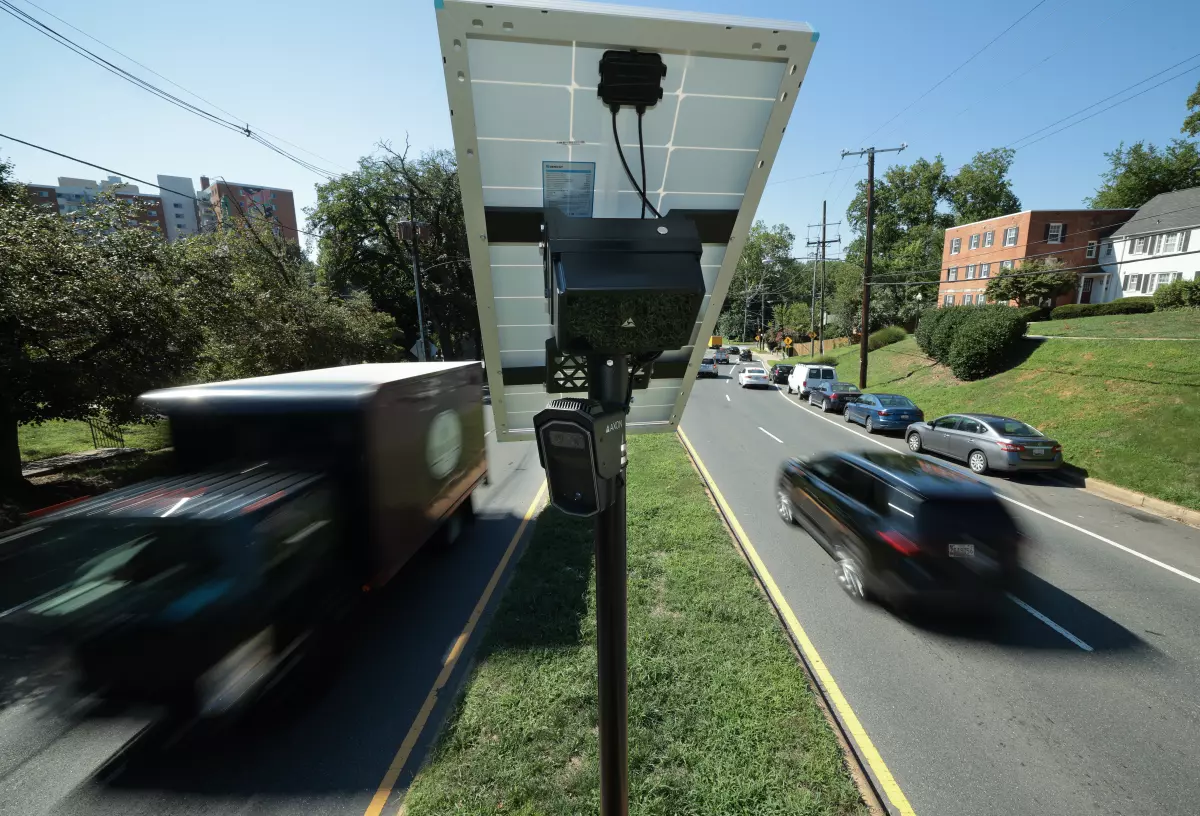
Flock Safety surveillance technology is facing growing scrutiny across the United States as communities question the privacy implications of automated license plate readers and reconsider contracts with the company.
While Flock has become the primary target of a nationwide backlash against automated license plate reader technology, competitors such as Axon, Motorola Solutions and Verkada are positioning themselves to benefit as law enforcement agencies look for alternatives.
The controversy highlights a larger debate over the expansion of police surveillance technology and how governments should balance public safety with privacy and civil liberties.
Why Flock Safety Is Facing Growing Opposition
Automated license plate readers, commonly known as ALPRs, have become increasingly common across American communities.
The cameras photograph vehicles and can use artificial intelligence to identify characteristics such as a vehicle’s make, model and color. Law enforcement agencies can then use the information to investigate crimes and locate vehicles.
According to the crowdsourced DeFlock database, more than 130,000 automated license plate readers are operating across cities and towns in the United States.
Flock Safety has attracted particular attention because its technology can connect information across jurisdictions through a broader network of vehicle images.
Privacy advocates argue that this creates a surveillance infrastructure that can allow law enforcement agencies to obtain information about people’s movements far beyond their own communities.
Andrew Ferguson, a law professor at George Washington University, said Flock’s technology has helped bring public attention to the broader question of whether people should be continuously monitored as they move through their communities.
The Flock Safety Controversy and Privacy Concerns
Criticism of Flock has intensified following several controversies involving the use and sharing of its data.
Privacy advocates have raised concerns about law enforcement officers using surveillance systems to monitor individuals for reasons unrelated to legitimate investigations. There have also been concerns about information being shared with federal immigration authorities.
In Texas, for example, Flock data was reportedly used in an investigation involving a woman suspected of traveling to obtain an abortion.
Other cases have involved allegations that police officers misused license plate reader technology to monitor women.
The controversy has placed Flock’s national data-sharing network at the center of the privacy debate.
Matthew Guariglia, a senior policy analyst at the Electronic Frontier Foundation, argues that the broader network is one of the most significant concerns because information collected in one community can potentially become relevant to investigations elsewhere.
Flock has responded by announcing changes intended to strengthen privacy protections, including reducing data retention and emphasizing safeguards around local searches.
Civil liberties organizations, however, have argued that the changes do not sufficiently address their concerns.
Cities Are Reconsidering Flock Contracts
The backlash has already resulted in changes across multiple communities.
According to DeFlock’s database, approximately 100 cities have deactivated cameras, rejected agreements or canceled Flock contracts.
Some communities have gone a step further by replacing Flock systems with products from competing surveillance technology companies.
Denver and Longmont, Colorado, are among the communities that have moved toward Axon license plate reader technology after reconsidering their relationships with Flock.
The changes demonstrate that the debate is no longer simply about whether cities should use automated license plate readers.
Instead, some communities are now deciding which surveillance technology companies they are willing to work with and what privacy protections those companies should provide.
Axon Sees an Opportunity as Flock Faces Backlash
The growing Flock Safety controversy has created an opportunity for competitors.
Axon, best known for its police body cameras and other law enforcement technology, has reported increasing interest from agencies seeking to replace existing automated license plate reader systems.
During the company’s latest earnings call, CEO Rick Smith told investors that a significant number of law enforcement agencies were interested in moving their license plate reader business to Axon.
The company attributed its appeal in part to its privacy controls and data-management systems.
Axon has not disclosed how much additional business it has gained specifically from canceled Flock contracts.
The company already maintains major government contracts and provides a broad range of law enforcement technologies, creating an opportunity to integrate license plate readers with other tools used by police departments.
Flock Says It Is Not Concerned About Competitors
Despite the loss of contracts in some communities, Flock CEO Garrett Langley says the company remains confident in its growth.
Langley told NPR that Flock expects to add substantially more customers than the number of agencies that have left the company this year.
He also questioned the decision by some communities to replace Flock technology with competing products.
Regarding Denver’s decision to work with Axon, Langley pointed to Axon’s relationships with federal agencies, including U.S. Immigration and Customs Enforcement, and questioned whether switching providers necessarily resolves the privacy concerns that prompted communities to reconsider Flock.
Axon, meanwhile, says its technology is designed to provide law enforcement agencies with tools that protect both public safety and data privacy.
The Bigger Issue Goes Beyond Flock Safety
Privacy advocates argue that replacing Flock with another company does not necessarily resolve the underlying concerns surrounding automated license plate readers.
License plate readers represent only one component of a much larger police surveillance ecosystem.
Law enforcement agencies increasingly use technologies including:
- Facial recognition
- Automated license plate readers
- Drones
- Gunshot detection systems
- Predictive policing tools
- Real-time crime centers
- Integrated data platforms
These systems can combine information from multiple sources, creating increasingly comprehensive surveillance capabilities.
Andrew Ferguson has argued that integrated police technology systems may present even greater privacy risks than individual surveillance tools because they allow investigators to combine multiple forms of data.
For privacy advocates, therefore, the central issue is not simply whether a city uses Flock, Axon or another provider.
The larger question is how much surveillance should law enforcement agencies be allowed to conduct, what information they can collect, how long they can retain it and who can access it.
The Future of Police Surveillance Technology
The growing opposition to Flock Safety demonstrates that public scrutiny of police surveillance technology is increasing.
At the same time, the demand for tools that help law enforcement investigate crimes remains strong, creating a rapidly expanding market for companies such as Axon, Motorola Solutions and other technology providers.
As cities reconsider their surveillance contracts, privacy regulations, transparency requirements and data-sharing policies are likely to become increasingly important.
The Flock controversy may therefore represent more than a dispute involving one company. It could become a turning point in the broader national debate over automated license plate readers, police surveillance and the future of privacy in public spaces.