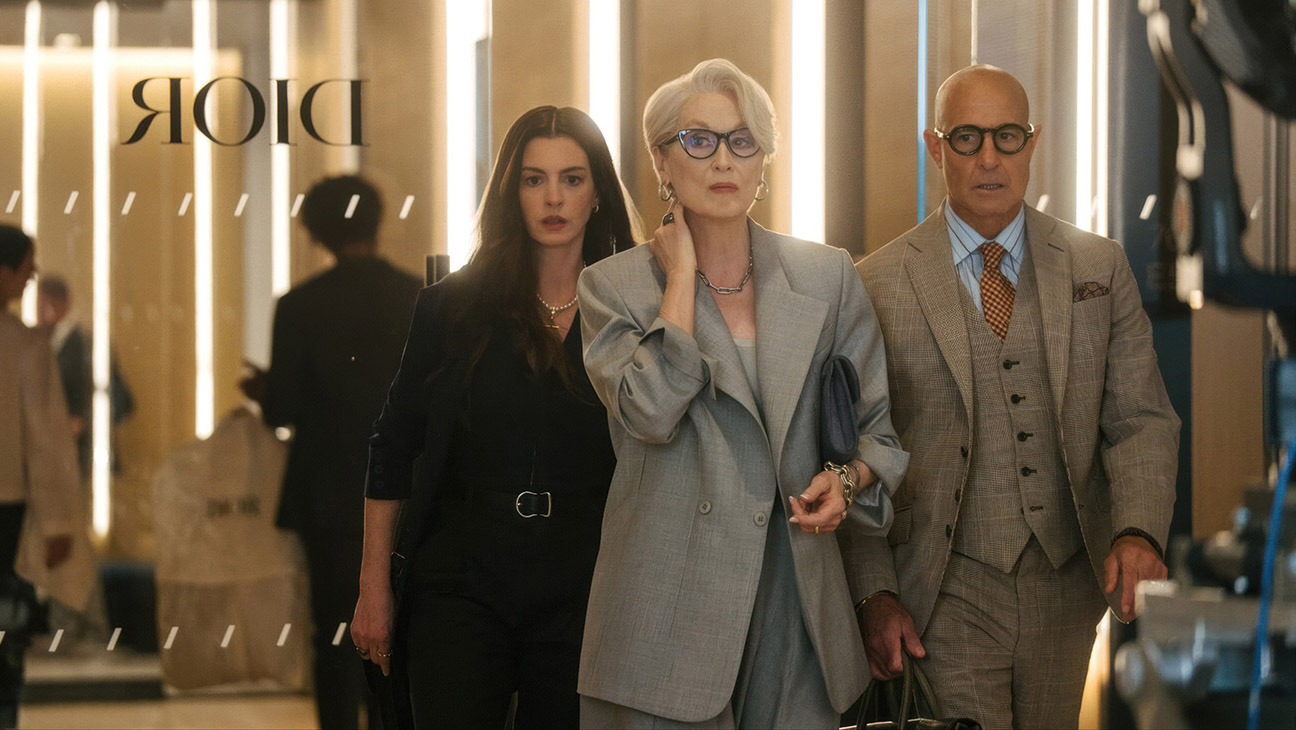
The Devil Wears Prada 2 Shifts Focus From Fashion to the Struggle to Save Journalism
What began as a sharp critique of toxic workplace culture in the fashion industry has evolved into a broader commentary on the collapse of traditional media. The Devil Wears Prada 2 reimagines its central conflict, moving beyond personal ambition and into the uncertain future of journalism, where layoffs, corporate restructuring, and digital disruption define the landscape.
The sequel reflects a reality far removed from the glossy magazine world that once symbolized prestige and aspiration. Instead of portraying the excess and allure of print media, the story confronts its decline, offering a narrative shaped by economic pressure and shifting audience behavior.
From Fashion Power to Media Survival
The original story, first introduced in the novel by Lauren Weisberger and later adapted into a successful film, centered on the demanding world of high fashion publishing. It followed a young assistant navigating the pressures of working under a powerful editor, ultimately choosing personal integrity over professional advancement.
In contrast, the sequel reframes the narrative entirely. The central character, now an accomplished journalist, faces sudden job loss—an increasingly common reality in the media industry. Her return to the publishing world is no longer driven by ambition but by necessity, reflecting broader workforce instability.
The fictional publishing company at the center of the story mirrors real-world media conglomerates that have struggled to adapt to digital transformation. Many traditional outlets have shifted toward online-first strategies, often accompanied by cost-cutting measures that impact newsroom staffing and editorial quality. Industry trends and data on newsroom employment can be explored through https://www.pewresearch.org, which tracks the ongoing decline in journalism jobs and changing consumption habits.
Corporate Restructuring and the Reality of Layoffs
A key theme in the film is the influence of corporate leadership on editorial direction. As new executives take control, decisions prioritize profitability over legacy, leading to layoffs and structural changes that threaten the identity of long-standing publications.
This dynamic reflects real-world developments, where media organizations have faced increasing pressure to generate revenue in a competitive digital environment. Advertising shifts, declining print subscriptions, and the dominance of technology platforms have forced publishers to rethink traditional business models.
The portrayal of layoffs in the film aligns with broader economic patterns affecting the media sector. Reports from https://www.niemanlab.org highlight how newsroom cuts have accelerated in recent years, reshaping the profession and raising concerns about the sustainability of investigative journalism.
At the same time, the film introduces the idea that journalism still holds cultural and democratic value. The protagonist’s defense of credible reporting resonates in an era marked by misinformation and fragmented media ecosystems, reinforcing the importance of maintaining editorial standards despite financial pressures.
A Changing Industry and Questions of Authenticity
While the film attempts to position its central figures as defenders of journalism, it also raises questions about authenticity and representation. The struggles depicted on screen—particularly those of high-ranking executives—do not fully reflect the realities faced by many journalists working under precarious conditions.
The contrast between personal loss of status and genuine economic insecurity becomes a central tension in the narrative. For many media workers, layoffs carry immediate financial consequences, including loss of income, benefits, and job stability. Insights into labor trends and economic impacts can be found through https://www.bls.gov, which provides data on employment shifts across industries, including journalism.
Additionally, the film touches on the emotional dimension of career disruption—the loss of identity and purpose that often accompanies job displacement. However, it stops short of fully addressing the structural challenges that have contributed to the decline of traditional media.
The Evolution of a Cultural Narrative
The transformation of The Devil Wears Prada into a story about saving journalism reflects a broader cultural shift. The glamorous image of print magazines has given way to a more complex and uncertain reality, where survival depends on innovation, adaptability, and audience trust.
By revisiting familiar characters in a dramatically different context, the sequel highlights how industries—and the people within them—must evolve in response to changing conditions. The film ultimately suggests that while the medium may change, the core mission of storytelling and truth-seeking remains essential.
As the media landscape continues to evolve, the questions raised in the film—about power, responsibility, and the future of journalism—are likely to remain relevant, both within the industry and in the wider public conversation.