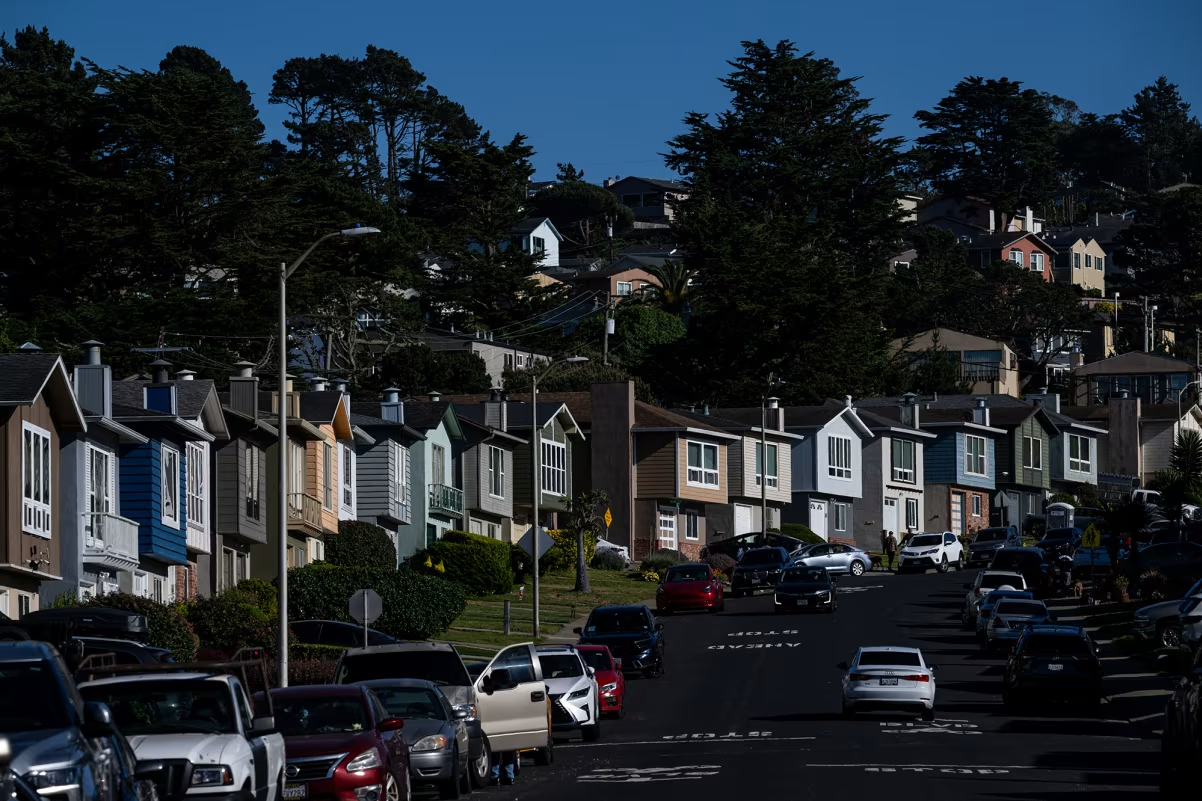
Rising Rates and Global Tensions Weigh on Buyers
The spring homebuying season, typically marked by heightened activity and competitive bidding, is facing an unexpected slowdown this year. A combination of elevated mortgage rates and geopolitical uncertainty has led many prospective buyers to delay major purchasing decisions, creating a more cautious market environment.
Recent data from the National Association of Realtors shows that existing home sales have dropped to their lowest level in nine months, signaling a notable shift in momentum. Analysts point to declining consumer confidence and uneven job growth as key factors influencing buyer hesitation. At the same time, ongoing instability in global markets has contributed to fluctuations in borrowing costs, further complicating affordability.
Mortgage rates, closely tied to Treasury yields, have experienced volatility in recent weeks. According to Freddie Mac, the average rate for a 30-year fixed mortgage climbed to 6.30%, up from earlier lows near 5.98%. While still below last year’s peak of 6.83%, the increase has been enough to push some buyers out of the market or force them to reconsider their budgets.
For many households, the uncertainty extends beyond financing. Concerns about long-term economic stability and the potential for further rate hikes have made buyers more selective, reducing the urgency that typically defines the spring season.
Sellers Adjust Expectations in a Changing Market
As buyer demand softens, sellers are beginning to recalibrate their expectations. Homeowners who anticipated quick sales and competitive offers are now encountering fewer inquiries and, in some cases, price reductions.
In several regions, properties are staying on the market longer, and bidding wars have become less common. Sellers who need to move quickly—whether due to job relocations or personal circumstances—are increasingly willing to accept offers below their initial asking prices.
This shift is particularly evident in markets where inventory has started to rise. However, the overall supply of homes remains constrained compared to historical levels, partly because many homeowners are reluctant to give up the low mortgage rates they secured in previous years.
Market insights from platforms like Zillow indicate that while price growth continues nationally, it is doing so at a slower pace. The median home price reached $408,800 in March, setting a record for the month, but the rate of increase has moderated.
Despite these challenges, some areas continue to experience strong demand, particularly in regions where housing supply remains tight. In such markets, well-priced homes can still attract multiple offers, especially from first-time buyers seeking entry into homeownership.
Market Signals Point to Uncertain Months Ahead
Economic indicators suggest that the housing market may remain subdued in the near term. Data tracked by the Bureau of Labor Statistics highlights mixed signals in employment growth, which can directly influence consumer confidence and purchasing power.
Financial markets have shown sensitivity to geopolitical developments, with shifts in investor sentiment affecting interest rates and lending conditions. Even temporary easing in global tensions has led to brief improvements in market stability, but these have not yet translated into sustained momentum in housing.
For buyers, the current environment presents a complex landscape. While higher rates reduce affordability, they may also lead to less competition and more negotiating power. For sellers, patience and strategic pricing have become increasingly important as the market adjusts to new conditions.
Real estate professionals are closely monitoring how these dynamics evolve, particularly as the peak buying season progresses. The interplay between economic uncertainty, borrowing costs, and housing supply will continue to shape the trajectory of the market in the months ahead.