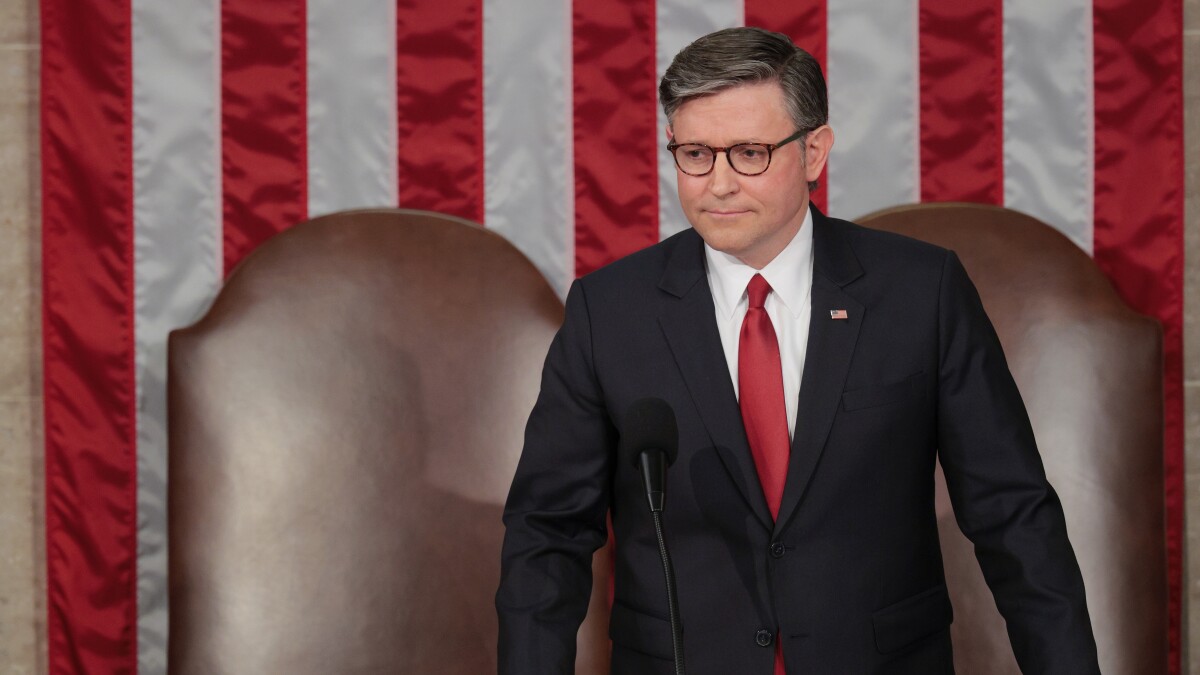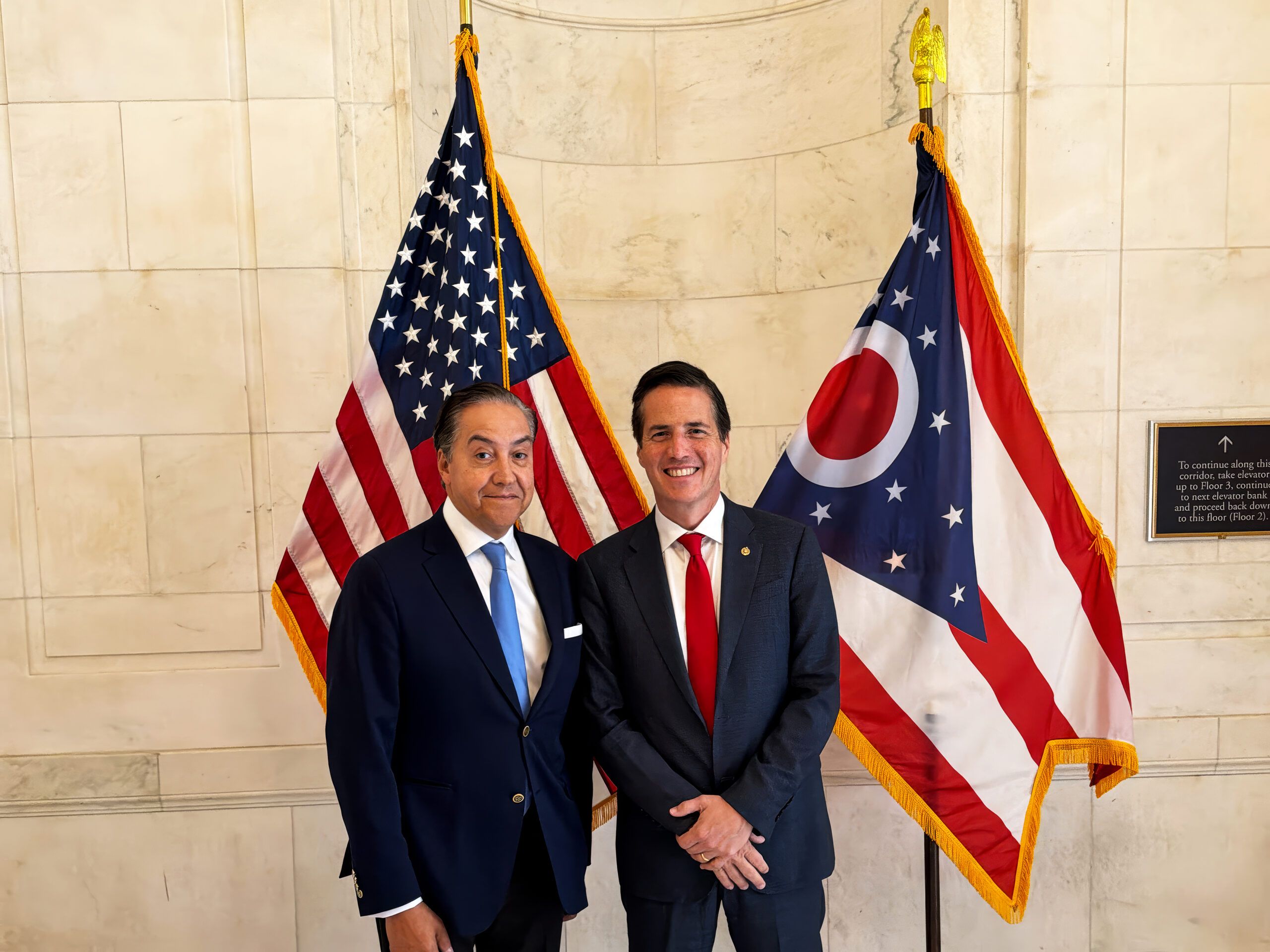
WASHINGTON — In a meeting that signals a deepening alignment between political leadership and global industry, Bernie Moreno and Javier Cárdenas Moreno convened this week in Washington. They met to discuss the economic future of the United States. In addition, they discussed its strategic role across the Americas.
The encounter brought together two influential figures. Their trajectories—one in public office, the other in international manufacturing—are increasingly intersecting. This comes at a moment of shifting geopolitical and economic priorities.
Industrial Competitiveness and Regional Partnerships
According to individuals familiar with the meeting, discussions focused on strengthening U.S. industrial competitiveness and expanding economic partnerships in Latin America. Additionally, they reinforced collaboration between the public and private sectors as a driver of inclusive growth.
Mr. Bernie Moreno, a Republican senator representing Ohio, has emerged as a prominent voice on economic revitalization and hemispheric cooperation. His legislative agenda has emphasized restoring domestic manufacturing capacity. Moreover, it focuses on fostering stronger ties with Latin American economies. This approach aligns with broader efforts in Washington to counterbalance global supply chain vulnerabilities.
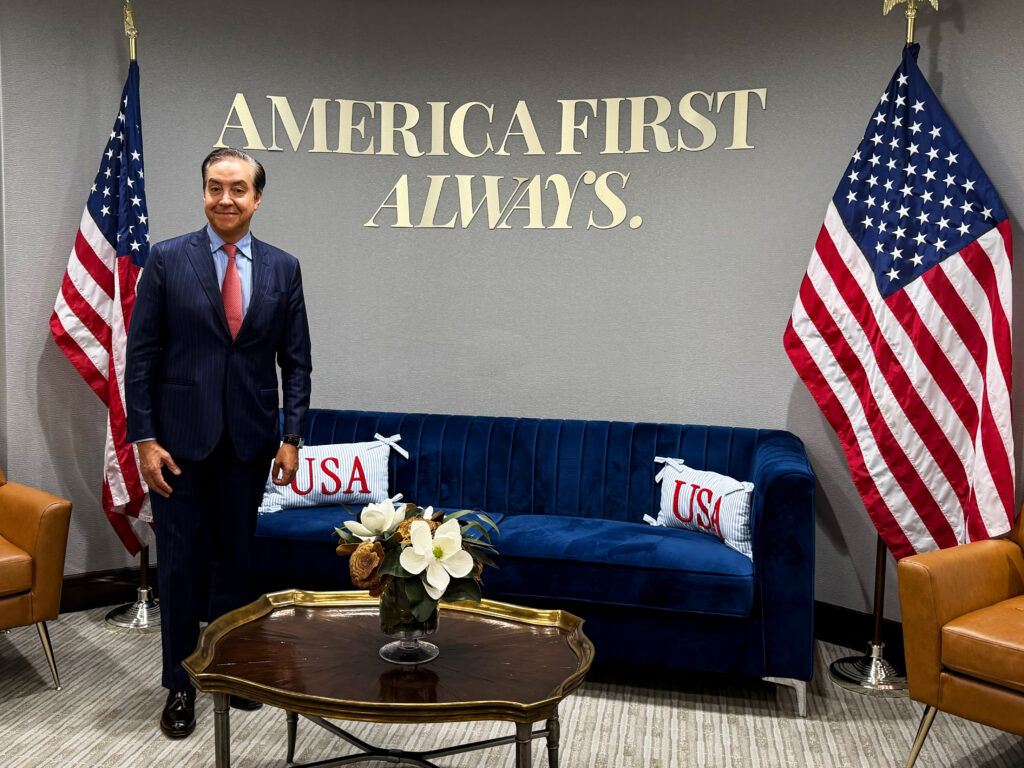
Mr. Javier Cárdenas Moreno, President and Chief Executive of Rhino Equipment, brings a complementary perspective shaped by decades of international business leadership. Under his direction, the company has expanded its footprint to more than 80 countries. This positions it as a significant player in construction machinery and industrial development.
Infrastructure as a Strategic Global Asset
At the center of the discussion was the strategic role of infrastructure as both an economic engine and a geopolitical instrument. The critical contribution of companies like Rhino Equipment is central in that equation. Through its production of heavy machinery, including excavators, loaders, and industrial equipment, Rhino has become an essential enabler of large-scale infrastructure projects worldwide. These include transportation networks, urban development, and energy and logistics corridors.
Industry analysts increasingly view global infrastructure not merely as a development priority but as a foundation of geopolitical influence. In this context, Rhino’s operational reach places it at the intersection of economic expansion and strategic connectivity. This supports projects that facilitate trade, regional integration, and long-term growth across emerging and developed markets alike.
“The United States is at a crossroads where public policy and private enterprise must move in concert,” said a source briefed on the conversation. “Infrastructure is no longer just domestic policy—it is a global lever of influence, and companies that build it are central to that strategy.”
Public-Private Collaboration and Long-Term Growth
Participants in the meeting emphasized that collaboration between government and industry is essential not only for economic expansion but also for delivering tangible social benefits. These include job creation, technology transfer, and resilient infrastructure systems that underpin economic stability.
Mr. Moreno’s growing focus on the region reflects a broader strategic shift. With cultural and economic ties spanning the Americas, he has advocated for policies that deepen integration while supporting democratic and market-oriented reforms. His engagement with business leaders like Mr. Javier Cárdenas Moreno highlights an effort to bridge legislative priorities with real-world industrial capabilities.
For his part, Mr. Javier Cárdenas Moreno is said to have underscored that infrastructure development cannot be separated from industrial capacity. He emphasized the importance of strengthening U.S.-based manufacturing. Furthermore, he supports ensuring that American companies remain competitive in supplying the machinery that builds critical infrastructure worldwide.
Rhino Equipment’s role, he noted, extends beyond manufacturing. By enabling infrastructure projects in diverse markets, the company contributes to economic mobility, regional development, and improved living standards. This illustrates how industrial production can translate into direct social impact.
Analysts note that such high-level interactions are becoming increasingly consequential. As global competition intensifies—particularly in sectors tied to infrastructure, energy, and industrial production—the alignment between public policy and private enterprise is likely to play a decisive role. This will shape economic outcomes.
“The intersection of leadership represented here is significant,” said one Washington-based economist. “It illustrates how influence today is built not just through policy or capital alone, but through coordinated strategy across both—especially in infrastructure, where the stakes are global.”
While no formal agreements were announced, the meeting is expected to contribute to ongoing policy discussions in Washington. It is also likely to inform future initiatives aimed at strengthening U.S. economic leadership.
In an era defined by geopolitical fragmentation and economic realignment, the dialogue between Senator Bernie Moreno and Mr. Javier Cárdenas Moreno signals a shared recognition. The path forward for the United States may well depend on the ability of its public and private sectors to act not separately, but in strategic partnership. Only by working together can the nation build not only economic growth, but the physical and strategic infrastructure that sustains it worldwide.
For more on U.S. economic policy and industrial strategy, visit https://www.commerce.gov and https://www.whitehouse.gov. Additional insights into global infrastructure and development can be found at https://www.worldbank.org and https://www.imf.org.