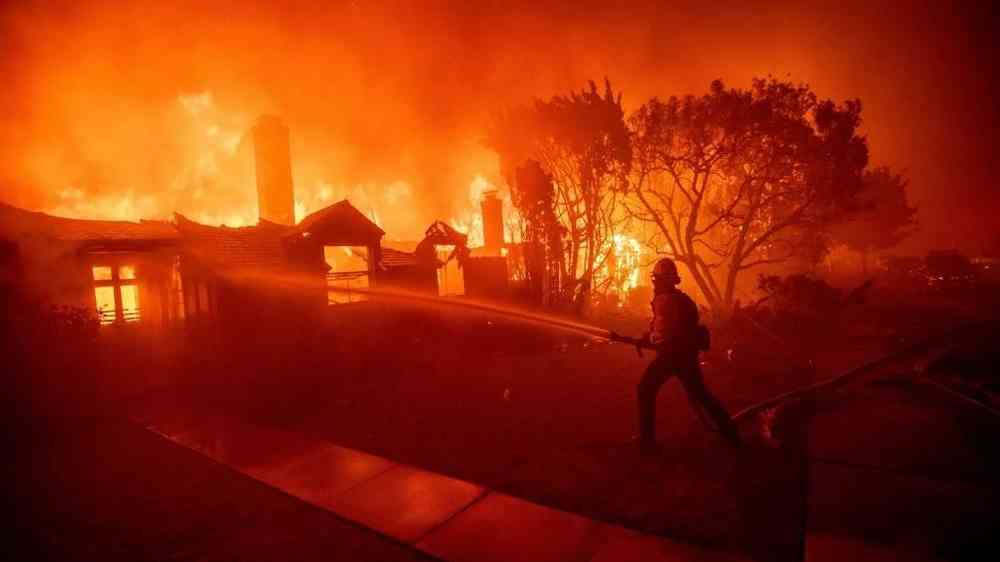
Communities across California continue investing heavily in wildfire resilience. They are building stronger protections against extreme fire behavior. They face an unpredictable insurance market that affects homeowners, real estate buyers, and local governments. In Lake County, neighborhoods in Kelseyville are undergoing extensive home upgrades designed to reduce ignition risks. They use strategies based on ember resistance and home-hardening standards. These enhancements include new gutter guards, gravel fire breaks around exterior walls, metal gates, and upgraded attic vent coverings. Although these changes may appear simple, wildfire scientists emphasize that embers are responsible for the majority of structure losses. Reducing this vulnerability across multiple homes at once substantially strengthens overall resistance.
Community-Wide Home Hardening Efforts Gain Momentum
Lake County, one of the regions most affected by catastrophic wildfire activity, has seen nearly 70% of its land burn in the past decade. The large-scale impacts encouraged local leaders to implement mitigation programs under the California Wildfire Mitigation Program. These efforts are supported by state funding and federal grants. The Lake County Home Hardening initiative now offers homeowners up to $40,000 dollars in upgrades, providing inspections, contractor services, and materials. The county’s goal is not only to make individual homes safer but to create clusters of reinforced neighborhoods. This reduces the likelihood of home-to-home ignition. More than 30 homes in Kelseyville have been completed, with a target of reaching 350 over the next stages of the program.
These projects have given residents a sense of security after years of evacuations and devastating fire seasons. Many homeowners, especially those living alone or on fixed incomes, could not have afforded structural improvements without this assistance. Local officials highlight that when multiple properties adopt similar protections, the area benefits from a measurable “resiliency effect.” This reduces the likelihood of fire spread across residential blocks. Programs like these are increasingly referenced in statewide fire prevention strategies. They are used alongside broader guidance available on platforms such as Ready.gov for emergency preparation and FEMA for mitigation resources.
Insurance Premiums Continue to Rise Despite Local Investments
Even as communities strengthen their defenses, insurance remains a mounting concern. Residents in Lake County report steep premium increases and non-renewals. These reflect broader national patterns affecting states with high exposure to wildfires, hurricanes, and severe storms. Some homeowners receive discounts—typically between 5% and 10%—after retrofitting their homes. Yet, these reductions often fail to offset the rapid rise in annual premiums. In certain cases, homeowners lose private coverage entirely and must rely on state-backed insurance programs instead.
Real estate professionals in Lake County say the insurance crisis has reached a point where buyers’ decisions are heavily influenced by the availability and cost of coverage. Quotes exceeding $10,000 dollars per year have made some mortgages impossible to secure. This forces deals to collapse even when buyers are otherwise qualified. Insurance accessibility has become a defining factor in the region’s housing market. It affects affordability, investment confidence, and long-term growth.
The disconnect between local wildfire mitigation efforts and insurer decisions continues to frustrate both residents and county officials. Without reliable pathways for insurance companies to verify community-wide improvements, large-scale fire mitigation often goes unrecognized. This has renewed discussions around creating a comprehensive wildfire data commons, a system intended to document local projects so insurers can accurately assess regional risk. Organizations focused on environmental data, such as Climate.gov and USGS, already provide related hazard mapping and scientific insights. These insights could support such systems as they develop.
Calls for Recognition From Insurers and Long-Term Solutions
Local leaders argue that widespread mitigation can only reach its full potential if insurance companies acknowledge the reduced risk these communities are achieving. After experiencing nine major wildfires in recent years, Lake County continues to upgrade evacuation routes, clear hazardous vegetation, and strengthen local infrastructure. Officials believe these combined efforts significantly lower the probability of home losses. Yet, premiums often continue to climb at rates that outpace improvements.
Residents want assurance that the work being done today will affect financial outcomes tomorrow, especially as climate conditions intensify. The hope is that once insurers have access to standardized, verifiable data reflecting neighborhood-level resilience, they will adjust premiums more fairly and encourage broader participation in mitigation programs. Until then, communities striving to safeguard their homes remain uncertain whether their efforts will translate into tangible insurance relief.