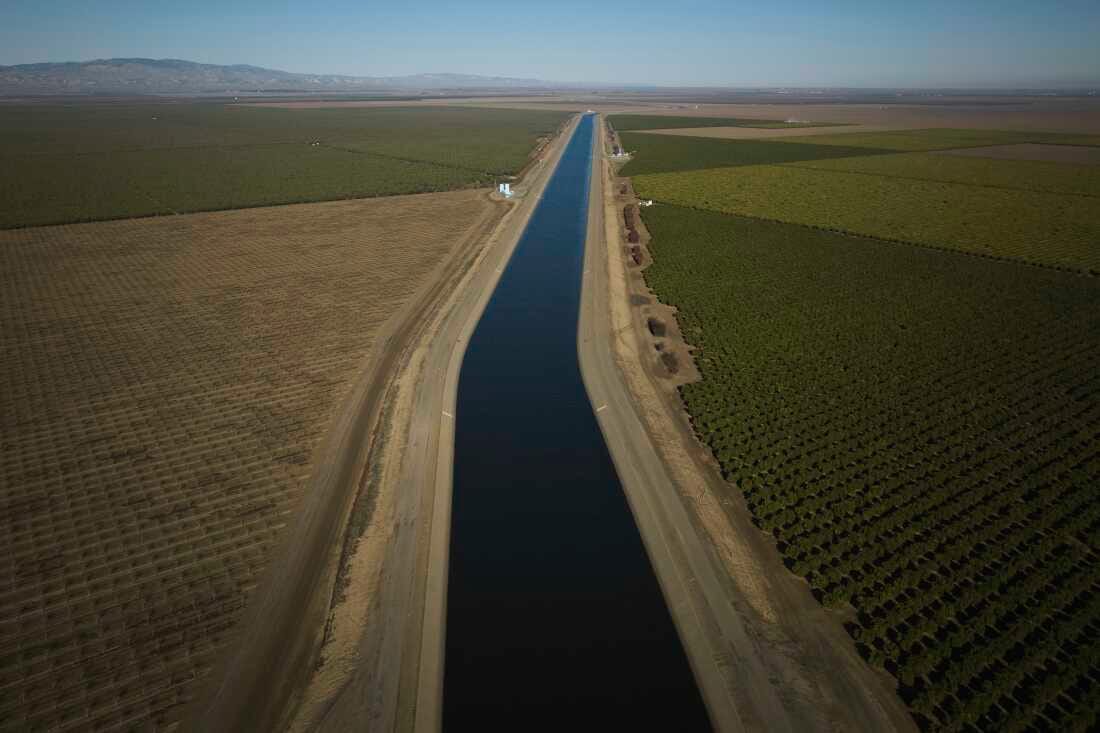
A massive solar farm project is gaining momentum in California’s Central Valley, with strong backing from farmers who are facing long-term water shortages and shifting agricultural realities. If completed, the project could span roughly 200 square miles and generate up to 21,000 megawatts of electricity, positioning it among the largest solar developments ever proposed in the United States. Supporters say the project reflects a fundamental transformation in land use as climate pressures reshape farming economics across the region.
The proposed development includes not only solar arrays but also large-scale battery storage systems designed to hold electricity until peak demand periods. This approach could help stabilize energy supply across major urban centers while providing a new economic lifeline for landowners who are struggling to sustain traditional farming operations.
Water Scarcity Is Reshaping Farming Decisions
Farmers in the western San Joaquin Valley have increasingly been forced to leave land unplanted due to chronic water shortages. Years of drought and tightening groundwater regulations have limited access to irrigation supplies, making it difficult to maintain crop production on large portions of farmland. Policies aimed at protecting underground aquifers, such as those overseen by the <a href=”https://water.ca.gov”>California Department of Water Resources</a>, have accelerated the shift away from water-intensive agriculture.
Many growers historically relied on groundwater pumping during dry years and replenished aquifers when river flows returned. But stricter groundwater sustainability laws now restrict this cycle, leaving farmers with fewer options. As a result, some landowners are exploring alternative uses for acreage that can no longer be farmed economically.
Agricultural leaders say the decision is driven by necessity rather than preference. For generations, families in the region cultivated crops ranging from almonds to tomatoes, but declining water reliability has forced a reevaluation of what is financially viable. In some areas, irrigation challenges are compounded by soil conditions that can release harmful minerals if water is applied, further discouraging cultivation.
Solar Developers See Opportunity in Scale
The solar initiative has been spearheaded by Golden State Clean Energy, which presented a master plan involving multiple interconnected solar installations across underutilized farmland. Developers argue that the project’s enormous scale is key to making it financially viable. According to planning frameworks similar to those reviewed by the <a href=”https://www.energy.gov”>U.S. Department of Energy</a>, projects of this magnitude can justify new high-voltage transmission lines capable of delivering power to distant metropolitan markets.
One of the main economic arguments behind the development is the need for new transmission infrastructure. Smaller solar proposals have struggled to advance because they lack the capacity to justify multibillion-dollar grid upgrades. By contrast, a mega-project generating tens of thousands of megawatts could support major new transmission corridors linking inland solar resources with demand centers such as Los Angeles and Silicon Valley.
Developers also highlight the integration of battery storage as a defining feature. By pairing solar generation with large batteries, the project aims to address one of renewable energy’s biggest challenges: intermittency. Stored electricity can be released during evening hours when demand rises but solar production falls, improving grid reliability and reducing reliance on fossil fuels.
Farmers and Energy Transition Find Common Ground
Support for the project among farmers reflects a broader shift in how rural communities are engaging with the energy transition. Organizations representing growers, including water districts and agricultural coalitions, have taken active roles in negotiations with regulators and developers. These discussions often involve balancing land use, environmental impact, and economic sustainability, with oversight frameworks influenced by agencies such as the <a href=”https://www.epa.gov”>Environmental Protection Agency</a>.
For some farming districts, solar development offers a practical solution to longstanding land management challenges. Portions of land that cannot be irrigated without environmental risk—such as areas prone to mineral contamination—may be repurposed for energy generation. Leasing land for solar arrays can provide stable income streams that help offset declining agricultural returns.
However, the project still faces regulatory and logistical hurdles. Approval of new transmission lines remains one of the biggest challenges, as grid operators must evaluate costs, environmental impacts, and long-term benefits. The planning process will likely involve coordination with grid authorities and oversight bodies like the <a href=”https://www.caiso.com”>California Independent System Operator</a>, which manages the state’s electricity network.
If the project proceeds as expected, construction could take up to a decade, gradually transforming vast stretches of farmland into renewable energy hubs. While debates continue over land use and electricity costs, the growing alignment between farmers and solar developers underscores how climate pressures are reshaping both agriculture and energy policy in California.
For many growers, backing the solar farm is less about abandoning agriculture and more about adapting to new realities. With water scarcity unlikely to ease in the near future, renewable energy projects are emerging as one of the most viable paths forward for preserving land value while contributing to a cleaner energy future.