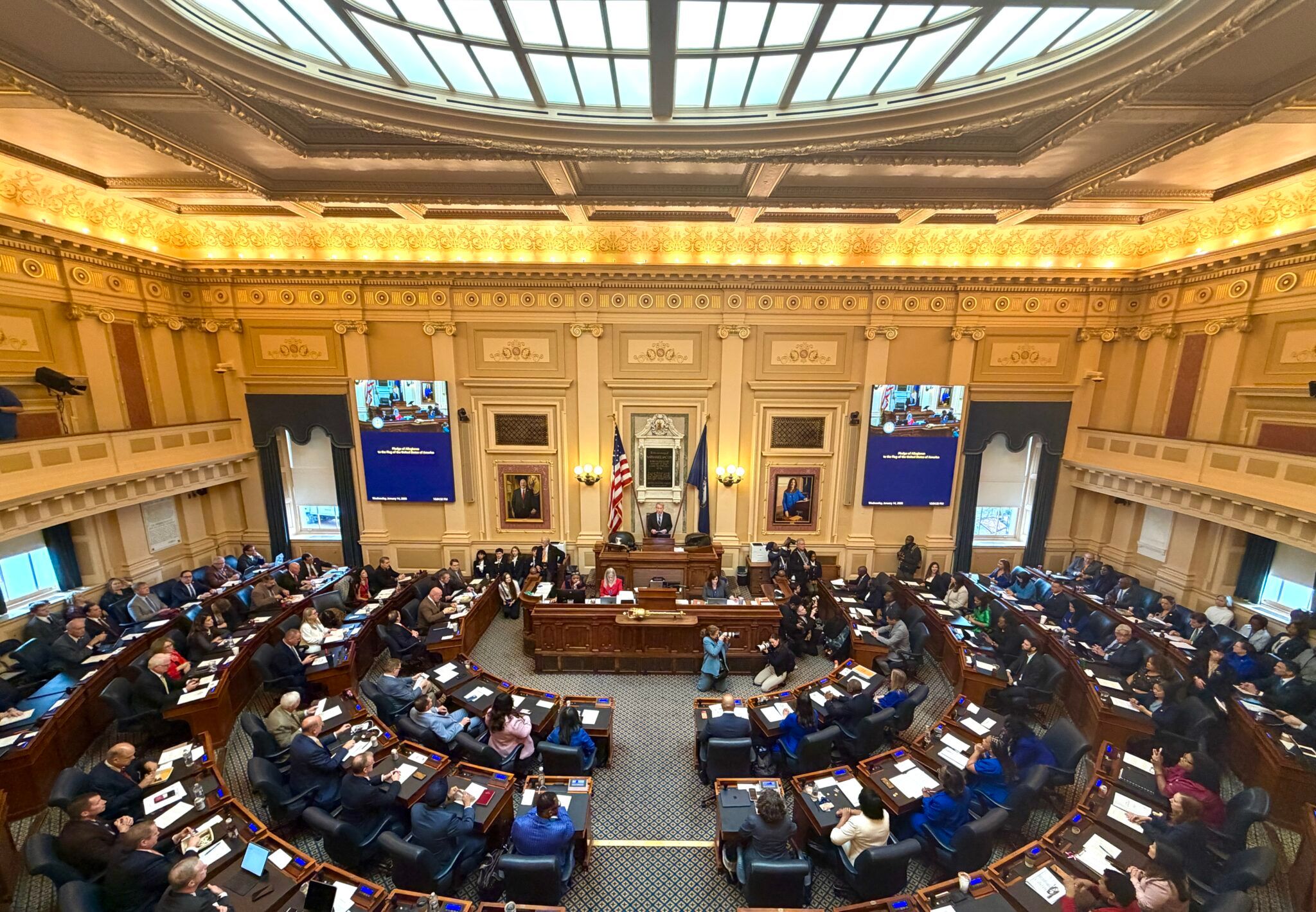
The Virginia Supreme Court has cleared the way for an April 21 special election that could significantly reshape the state’s congressional map ahead of the November elections, delivering a procedural victory to Democrats seeking to counter Republican-led redistricting efforts linked to President Donald Trump.
Although the high court did not formally grant Democrats’ appeal of a lower court ruling, it stated that its decision would have “no effect on the referendum scheduled for April 21.” The court also established deadlines for post-election legal arguments, signaling that while the broader legal dispute remains unresolved, voters will still have the opportunity to weigh in on whether congressional districts should be redrawn before November.
The ruling injects new urgency into an already high-stakes redistricting battle that could alter party control in the closely divided U.S. House of Representatives.
Court Ruling Keeps Referendum on Track
The dispute began after Virginia Republicans sued to block the special election, arguing that Democratic lawmakers failed to follow proper procedures when authorizing the referendum. In January, a circuit court judge sided with Republicans and ruled that the special election could not proceed under the process established by Democrats in the state legislature.
Democrats appealed the decision to the Virginia Supreme Court, contending that delaying the referendum would undermine voters’ ability to determine district boundaries before November’s congressional races. While the state’s highest court did not immediately overturn the lower court’s findings, it clarified that the pending legal review would not halt the April 21 vote.
Democratic leaders interpreted the court’s stance as a sign that the referendum has judicial backing to move forward. Republican lawmakers, however, emphasized that the litigation continues and pledged to challenge the outcome both at the ballot box and in court.
Democrats Frame Move as Response to National Redistricting Efforts
The Virginia proposal comes amid a broader national redistricting fight triggered in part by Republican efforts in states such as Texas, Missouri, and North Carolina. Last summer, Texas Republicans redrew congressional lines after encouragement from President Trump, aiming to secure five additional GOP seats. Similar actions in Missouri and North Carolina sought to tilt individual districts toward Republican control.
Democrats argue that Virginia’s referendum is a defensive response designed to counterbalance Republican gains elsewhere. Under the proposed new map, Virginia’s current delegation of six Democrats and five Republicans could shift to 10 Democrats and one Republican, a dramatic realignment in a state that has trended Democratic in recent federal elections.
In California, voters approved a comparable process allowing lawmakers to revise congressional boundaries in response to changes in Texas, a move Democrats say demonstrates the escalating national stakes of the redistricting cycle.
Political analysts note that Republicans currently maintain a narrow majority in the U.S. House of Representatives, making even a small shift in seats potentially decisive for legislative control in 2026.
National Implications for Congressional Control
The outcome of Virginia’s April 21 vote could have ripple effects beyond the state’s borders. If voters approve redistricting and courts ultimately uphold the new map, Democrats could gain up to four additional seats in the House. That shift would narrow or potentially erase the Republican majority, depending on results in other battleground states.
At the same time, Republican leaders point to potential redistricting efforts in Florida that could tilt several seats in their favor later this year, underscoring how fluid the national map remains. Overall, Republicans currently retain a slight edge in the broader redistricting contest heading into the 2026 cycle.
Control of the House carries substantial consequences for President Trump’s policy agenda during the final two years of his term. A sustained Republican majority would provide a legislative pathway for advancing economic, immigration, and regulatory priorities. Conversely, a Democratic-controlled House could initiate investigations into the administration and block key elements of the president’s proposals.
With early voting preparations underway and legal arguments continuing in parallel, Virginia’s redistricting referendum has become one of the most closely watched political developments of the year. The April 21 decision will not only determine the state’s congressional boundaries but could also influence the balance of power in Washington as the 2026 elections approach.