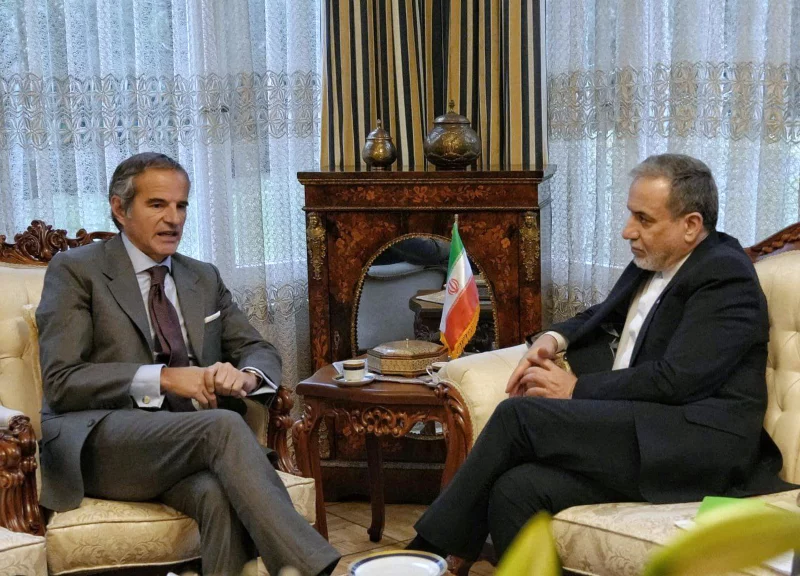
Diplomats from Washington and Tehran are preparing for a second round of nuclear negotiations in Geneva, reviving a fragile diplomatic channel at a moment of rising regional tension. The talks follow an initial indirect meeting earlier this month in Oman, where delegations avoided direct contact and relied on intermediaries to relay positions. This time, expectations remain cautious as both sides signal willingness to explore a deal while simultaneously reinforcing their leverage.
The renewed dialogue unfolds against a backdrop of increased U.S. military deployments in the Middle East and large-scale Iranian naval exercises in strategic waterways. President Donald Trump has repeatedly warned that failure to constrain Iran’s nuclear activities could trigger the use of force, while Iranian officials have insisted that threats will not produce concessions. Despite the rhetoric, senior officials continue to state that diplomacy remains preferable to confrontation.
Iran’s Foreign Minister Abbas Araghchi met in Geneva with representatives of the International Atomic Energy Agency, underscoring the central role of inspections and technical oversight in any potential agreement. Monitoring uranium enrichment levels and ensuring compliance with safeguards are expected to be key pillars of the negotiations.
Military Posturing and Regional Risks
The diplomatic push coincides with heightened military signaling. Iran’s Revolutionary Guard has conducted exercises in the Strait of Hormuz and surrounding waters, areas critical to global energy flows. According to the U.S. Energy Information Administration, roughly 20% of the world’s oil supply transits through the narrow maritime corridor each day, making stability there a global economic concern.
At the same time, Washington has bolstered its regional presence, deploying additional naval assets and reinforcing air capabilities. The dual-track strategy—talks paired with deterrence—reflects deep mistrust on both sides. U.S. officials argue that visible strength supports diplomatic credibility. Iranian leaders counter that military pressure undermines good-faith negotiations.
The risk of escalation remains palpable. Gulf states have expressed concern that any miscalculation could widen into a broader conflict, particularly in a region already strained by ongoing hostilities and shifting alliances. The symbolism of parallel exercises and negotiations illustrates how diplomacy and deterrence are unfolding simultaneously.
Sanctions, Enrichment, and Political Stakes
At the heart of the discussions lies a familiar dispute: uranium enrichment and economic sanctions. The U.S. Department of State has made clear that Washington seeks verifiable limits preventing Iran from approaching weapons-grade enrichment levels. Prior to last year’s hostilities with Israel, Iran had enriched uranium to 60% purity, a technical threshold close to weapons capability.
Tehran maintains that its nuclear program is intended for civilian energy and research purposes. However, Iranian officials have signaled that any agreement must include meaningful relief from U.S.-led sanctions that have sharply constrained the country’s economy. The White House has indicated openness to a negotiated solution but insists that compliance must precede economic easing.
Domestic political pressures further complicate the equation. In Iran, authorities are marking the 40-day mourning period following one of the deadliest phases of recent protest crackdowns, an event that has intensified international scrutiny. In Washington, the administration faces competing demands from lawmakers advocating either maximum pressure or diplomatic restraint.
As negotiators reconvene in Geneva, both sides are navigating not only technical nuclear details but also broader strategic calculations about deterrence, economic stability, and regional influence.