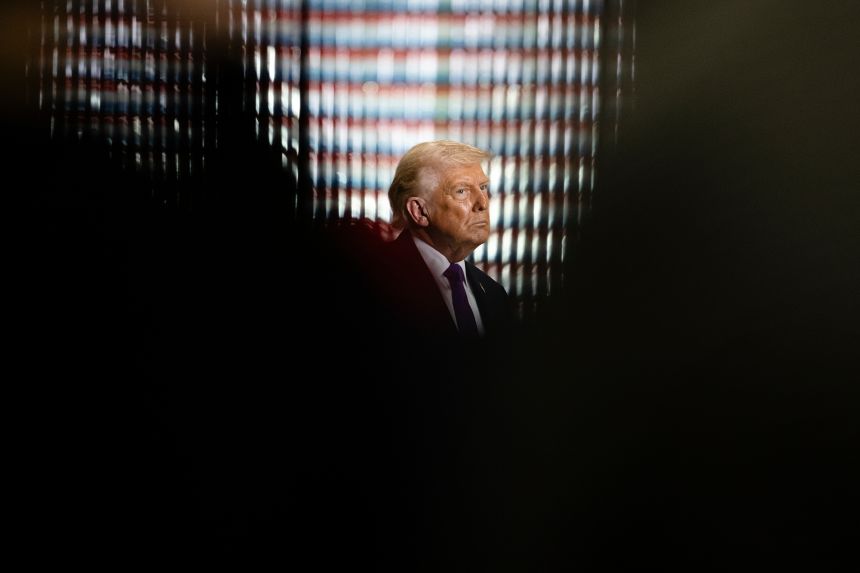
Recent global assessments are raising concerns about the state of democracy in the United States, pointing to what researchers describe as a rapid institutional decline during the presidency of Donald Trump. Multiple independent analyses published this month suggest that the country’s democratic standing has weakened significantly compared to previous years, sparking debate both domestically and internationally.
One of the most prominent findings comes from the V-Dem Institute, which evaluates political systems worldwide. Its latest report indicates a sharp drop in the U.S. ranking, placing it notably lower among global democracies and highlighting concerns about governance, institutional balance, and civil liberties.
Global Reports Signal Rapid Democratic Backsliding
According to the V-Dem analysis, the United States has experienced one of the fastest declines in democratic indicators in its modern history. Researchers attribute this shift to a combination of factors, including increased concentration of executive power and tensions between branches of government.
Additional findings from Freedom House reinforce these concerns, noting declines in political rights and civil liberties. The organization’s annual review places the U.S. among countries experiencing notable setbacks, alongside several European nations facing their own governance challenges.
Meanwhile, academic survey group Bright Line Watch has reported that expert assessments of American democracy now fall closer to the midpoint between a liberal democracy and a more authoritarian system. These evaluations are based on input from hundreds of scholars specializing in political institutions and democratic norms.
Together, these reports paint a picture of a system under pressure, where long-standing democratic practices are being tested in new and significant ways.
Institutional Tensions and Checks on Power
Central to the debate is the balance of power within the U.S. government. Critics cited in these reports argue that actions taken during the Trump administration have challenged traditional limits on executive authority, raising questions about the resilience of institutional safeguards.
However, some analysts point to the continued role of the judiciary as evidence that checks and balances remain active. Decisions involving the Supreme Court of the United States have demonstrated that key institutions can still act independently, even amid heightened political tension.
Political scientists often emphasize that democratic systems are defined not only by elections but also by the strength of their institutions. In this context, the interaction between the executive branch, Congress, and the courts becomes a critical factor in determining long-term stability.
Comparisons have also been drawn to international cases, including leaders such as Viktor Orbán, Recep Tayyip Erdoğan, and Narendra Modi, where scholars have studied how elected governments can gradually reshape institutional frameworks over time.
Domestic and Global Implications
Beyond internal governance, the perceived decline in democratic standards may have implications for the United States’ role on the global stage. Analysts suggest that shifts in foreign policy messaging and engagement could influence how the country is viewed as a promoter of democratic values internationally.
Organizations like <a href=”https://www.v-dem.net/”>V-Dem Institute</a> and <a href=”https://freedomhouse.org/”>Freedom House</a> emphasize that democratic credibility abroad often depends on domestic performance. Similarly, academic insights available through <a href=”https://brightlinewatch.org/”>Bright Line Watch</a> highlight the importance of maintaining institutional norms to sustain international influence.
Policy discussions tracked by the <a href=”https://www.state.gov/”>U.S. Department of State</a> also reflect evolving approaches to global democracy promotion, particularly in how the U.S. engages with elections and governance issues in other countries.
Despite the concerns outlined in recent reports, many experts caution that democratic systems can be resilient. The long-term trajectory of the United States will likely depend on institutional responses, electoral outcomes, and broader public engagement in the political process.
As debates continue, the findings underscore a central question facing the country: how to maintain and strengthen democratic institutions in a period of heightened political polarization and global uncertainty.