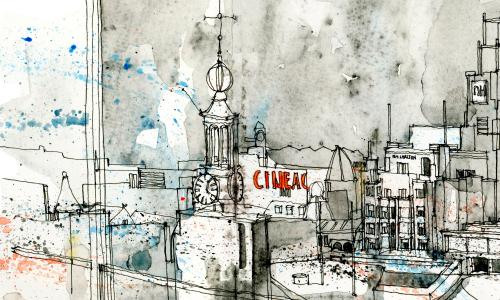
Urban sketchers around the world are redefining how people experience cities, turning ordinary sidewalks, train stations, and street corners into compelling works of art. What began as a small personal project has grown into a global creative movement that invites people of all skill levels to slow down and rediscover the visual richness of everyday urban life.
Unlike traditional landscape art that often celebrates mountains, rivers, or rural serenity, urban sketching focuses on the architecture and rhythms of city living. From towering skyscrapers to aging storefronts, the movement encourages artists to look closely at places they might otherwise pass without notice. Today, urban sketching is both a personal creative practice and a global social phenomenon, connecting thousands of artists through shared experiences and sketchbooks.
From Personal Practice to Global Community
The urban sketching movement traces its origins to a simple idea: drawing daily life as it unfolds. Early practitioners began by sketching during commutes, in cafes, or while exploring new neighborhoods. What started as an individual habit quickly gained momentum when artists began sharing their drawings online and inviting others to do the same.
Online communities played a major role in shaping the movement’s growth. Platforms like Flickr helped artists share work, exchange ideas, and build friendships across continents. Eventually, informal digital connections evolved into real-world gatherings, giving rise to local sketching chapters in cities worldwide.
Today, the international community continues to expand through organizations like Urban Sketchers, which promotes on-location drawing and storytelling through art. With hundreds of chapters across dozens of countries, the movement demonstrates how creativity can transcend language and cultural barriers. Artists who travel often find they can join sketching meetups in unfamiliar cities and still feel immediately connected through their shared visual language.
Capturing the Soul of Everyday Places
One of the defining features of urban sketching is its focus on ordinary scenes. Instead of seeking dramatic natural landscapes, sketchers often gather in places like train stations, public squares, markets, or quiet residential streets. These locations offer a mix of structure, movement, and atmosphere that challenges artists to capture life as it unfolds in real time.
Historic urban spaces are particularly popular subjects. Locations such as Portland Union Station attract sketchers who are drawn to architectural details like brickwork, clock towers, and the interplay of light and shadow. The act of sketching these environments encourages participants to observe carefully, noticing textures, proportions, and subtle changes in color that might otherwise go unnoticed.
This attentive observation often leads to a deeper emotional connection with the environment. Many sketchers say the process helps them rediscover familiar places with fresh eyes, revealing layers of beauty hidden within everyday surroundings. By translating the built environment into sketches, artists create visual diaries that capture not only structures but also moments in time.
A Movement That Welcomes Everyone
Urban sketching stands out for its accessibility. Unlike traditional art scenes that can feel exclusive, the movement embraces beginners and experienced artists alike. Sketching meetups typically bring together people from diverse backgrounds—writers, architects, designers, students, and hobbyists—all united by a shared curiosity about the visual world.
The relaxed atmosphere of group sketching sessions often removes the pressure associated with formal art training. Participants are encouraged to experiment with materials ranging from watercolor and ink to colored pencils and digital tablets. The emphasis is less on technical perfection and more on personal expression and observation.
The influence of art history remains present, but urban sketchers reinterpret those traditions in contemporary settings. While classic painters captured rural tranquility or dramatic natural vistas, today’s sketchers reinterpret similar artistic curiosity within dense cityscapes. Museums and collections that celebrate landscape traditions, such as those highlighted by institutions like The Museum of Modern Art, provide historical context that underscores how artistic focus evolves with time.
Ultimately, urban sketching has become more than a hobby—it is a way of seeing. By encouraging people to pause, observe, and document the world around them, the movement fosters mindfulness and creativity in everyday life. Whether sketching alone on a morning commute or joining a bustling group in a public square, urban sketchers are proving that beauty doesn’t require sweeping landscapes. Sometimes, it’s waiting right outside the front door, hidden in the geometry of buildings, the rhythm of streets, and the fleeting details of city life.