Ukraine Confronts Internal Crisis as Yermak Steps Down
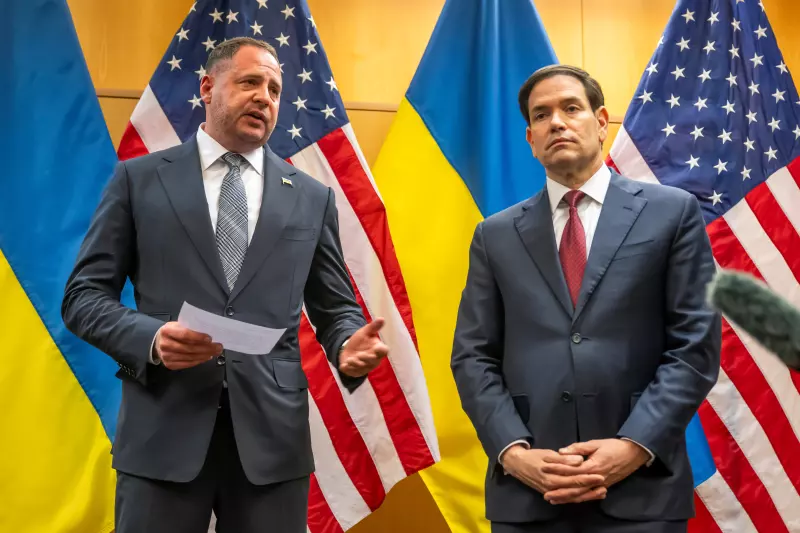
Ukraine is facing a moment of profound political instability following the resignation of Andrii Yermak, the long-standing chief of staff to President Volodymyr Zelenskyy. This is further exacerbated by the ongoing Ukraine political turmoil and corruption scandal. The departure of one of the administration’s most influential figures comes at a time when Washington is increasing pressure on Kyiv. They aim to advance negotiations toward a peace agreement nearly four years into the conflict with Russia. The unexpected searches conducted at Yermak’s residence are part of Ukraine’s larger political turmoil involving a corruption scandal. This raises questions about internal policies and impacts Ukraine’s relations with international partners.
To provide broader context on Eastern European political dynamics, related updates can be found through services like BBC News, which frequently cover the evolving situation in Kyiv.
Yermak, who has long been recognized as a central figure in Ukraine’s diplomatic strategy, confirmed that investigators searched his apartment within the presidential compound. He emphasized his cooperation with authorities, stressing that he had not received any notice identifying him as a suspect. Despite this uncertainty, which is part of Ukraine’s broader political turmoil, his statement underscored his willingness to comply. The anti-corruption agencies are operating under heightened national and international scrutiny.
The searches were viewed not only as an administrative action but also as a symbolic moment marking the intensification of Ukraine’s fight against longstanding corruption. This effort is closely monitored by international organizations, including Transparency International, which consistently evaluates global anti-corruption progress.
Energy Sector Scandal Widens as Investigations Intensify
The investigation gaining momentum centers around a $100 million corruption scandal in Ukraine’s energy sector, amid Ukraine political turmoil. Top officials are suspected of engaging in fraudulent schemes that have shaped national headlines. This has shaken public confidence. Authorities believe Tymur Mindich, previously associated with President Zelenskyy through business ties, played a crucial role in orchestrating the alleged plot. Having fled the country, Mindich now faces potential legal proceedings in absentia. Two high-ranking government ministers have already resigned in connection to the affair.
The response from European institutions has been firm. European Union representatives have reiterated that genuine progress in combating corruption remains essential for Ukraine’s long-term goal of EU membership. Background on EU accession requirements can be explored through the official European Union portal. It outlines the legislative and governance standards candidates must meet.
Several members of Zelenskyy’s team have previously faced legal scrutiny. Former deputy chiefs Oleh Tatarov, Rostyslav Shurma, and Andrii Smyrnov each encountered separate accusations of financial misconduct, with mixed outcomes. These repeated investigations have fueled public debate regarding internal oversight. They probe the president’s commitment to enforcing accountability even at the highest levels of government. The escalation of anti-corruption measures demonstrates Ukraine’s intention to maintain credibility with its Western allies. Their continued support remains vital both financially and militarily.
Informed analysis of Ukraine’s energy infrastructure challenges and reform efforts is also frequently discussed by institutions such as the Council on Foreign Relations. They provide deeper context for understanding the significance of corruption within key national sectors affected by the Ukraine political turmoil.
Political Fallout Tests Zelenskyy’s Authority
The widening scandal has sparked significant unrest within the president’s parliamentary bloc. It generates internal divisions amid Ukraine’s ongoing political turmoil. This further aggravates the Ukraine political turmoil corruption scandal, threatening the cohesion of Ukraine’s governing structure. Some lawmakers have argued that although Yermak has not been accused of wrongdoing, the political cost of the scandal is too high for the administration to ignore. They insist his resignation is necessary to restore public confidence. This could prevent further erosion of the president’s authority. Members of Zelenskyy’s party have warned that failure to act decisively could trigger a political split. This potentially undermines the government’s parliamentary majority.
President Zelenskyy has responded by urging unity. He emphasizes that political infighting risks weakening Ukraine’s negotiating position at a crucial moment when U.S. diplomatic pressure is at its peak. His appeal attempts to refocus national attention on the broader strategic consequences of instability. This is particularly important as Ukraine seeks to maintain strong ties with allies and secure continued financial support, military aid, and economic partnerships.
Government restructuring and domestic political transitions in the region are often examined by organizations like Carnegie Endowment for International Peace. They evaluate geopolitical impacts of internal crises in countries facing conflict.
Domestically, Yermak has long played the role of Zelenskyy’s closest advisor, often referred to as the president’s gatekeeper. His influence spanned diplomatic negotiations, key government appointments, and international engagement strategy. His departure marks a significant turning point within Ukraine’s political turmoil. The administration relied heavily on his strategic insight since the early days of Zelenskyy’s presidency.
As public pressure grows and investigations continue, Ukraine’s leadership faces the dual challenge of preserving institutional stability while navigating one of the most pivotal geopolitical moments in its modern history. The outcome of this Ukraine political turmoil corruption scandal and legal developments will shape the country’s trajectory as it seeks security, democratic resilience, and global support.