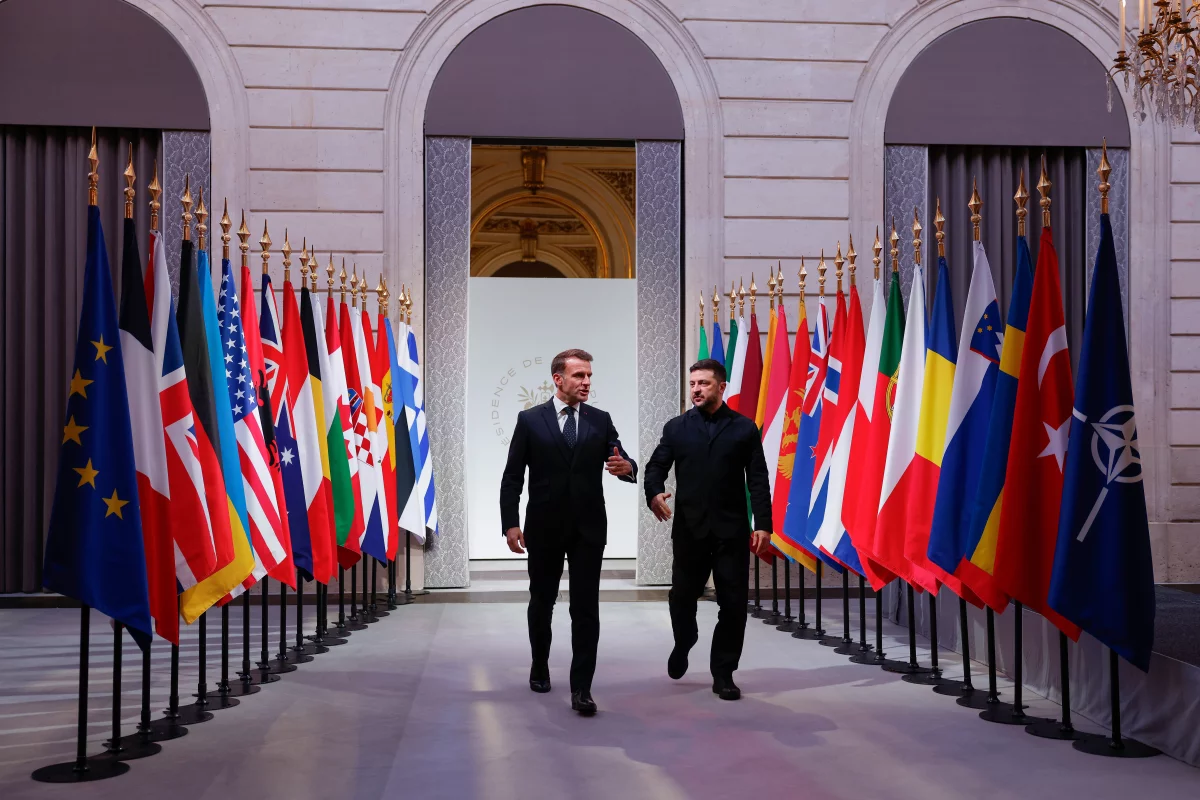
European allies are accelerating plans to reshape Ukraine’s long-term security architecture. The United Kingdom and France propose the installation of military hubs across Ukrainian territory. This is part of a broader postwar stabilization framework. The initiative reflects growing momentum among European governments. They aim to move beyond ad hoc military aid. Instead, they seek structured, multilayered defense guarantees designed to deter any renewed Russian aggression after a potential ceasefire.
The proposal emerged from high-level coordination in Paris involving European leaders, North American partners, and representatives from key multilateral institutions. While precise troop numbers and deployment timelines remain undisclosed, the strategic intent is clear. This aims to ensure that Ukraine’s armed forces remain supported by permanent logistical, operational, and defensive infrastructure. These should sustain deterrence over the long term.
This approach aligns with ongoing security planning within NATO. Allied officials have emphasized the need for credible forward support mechanisms. These are to reinforce Ukraine’s ability to defend itself without triggering direct escalation. According to defense planning principles outlined by https://www.nato.int, layered deterrence combining land, air, and maritime capabilities is increasingly viewed as essential in modern conflict environments.
Military hubs and the evolution of European deterrence
Under the emerging plan, the proposed military hubs would function as protected facilities for weapons storage, equipment maintenance, training coordination, and rapid deployment logistics. British and French officials frame these hubs not as occupation forces. Instead, they are stabilizing anchors that allow Ukraine to respond swiftly to any future security threats.
The UK’s defense posture, as articulated through policy frameworks published at https://www.gov.uk, has increasingly emphasized forward defense and alliance-based deterrence. Establishing infrastructure inside Ukraine would mark a significant evolution of that doctrine. It extends practical support beyond weapons deliveries toward sustained operational readiness.
France, meanwhile, has signaled that its participation reflects a broader European responsibility. This is to underpin continental security. Strategic thinking within Paris increasingly links Ukraine’s stability to the integrity of Europe’s eastern frontier. This position is echoed in defense cooperation initiatives promoted through https://www.defense.gouv.fr. French officials have underscored that any peace arrangement lacking enforceable security mechanisms risks creating a temporary pause rather than lasting stability.
Crucially, the military hubs concept is being designed to operate alongside U.S.-led monitoring and verification mechanisms. This ensures interoperability while allowing Europe to assume greater ownership of Ukraine’s postwar security environment.
Political constraints and the challenge of binding commitments
Despite diplomatic momentum, significant political and legal hurdles remain. Many participating governments face domestic requirements for parliamentary approval before committing troops or long-term military infrastructure abroad. As a result, while political leaders have endorsed the framework in principle, binding commitments must still be ratified at the national level.
This complexity reflects a broader European debate about strategic autonomy and burden-sharing. Institutions within the European Union, including those coordinating defense cooperation through https://www.consilium.europa.eu, have increasingly acknowledged that Europe must be prepared to act decisively. This is even as U.S. strategic priorities fluctuate.
At the same time, the United States remains a pivotal actor. European planners recognize that American intelligence, air power, and strategic deterrence capabilities remain indispensable to the credibility of any security guarantees. Balancing European leadership with continued U.S. engagement has therefore become a central diplomatic objective.
Ukraine’s leadership has welcomed progress while cautioning about unresolved detail. These could undermine effectiveness. Key questions remain over force size, financing, command structures, and the precise scope of engagement in the event of renewed hostilities. Ukrainian officials have stressed that deterrence must be visible and credible. This helps to prevent future aggression rather than merely respond to it.
Regional tensions and the broader geopolitical backdrop
The push to formalize security guarantees comes amid a volatile geopolitical landscape. Ongoing military activity, diplomatic friction, and shifting global priorities complicate efforts to finalize a comprehensive peace framework. European leaders are acutely aware that any ambiguity could be exploited by adversaries seeking to test alliance resolve.
Concerns also extend beyond Ukraine’s borders. Statements and actions affecting Arctic security, energy corridors, and transatlantic relations have reinforced the perception. Europe must prepare for a more uncertain strategic environment. This reality has accelerated discussions around long-term defense cooperation, industrial capacity, and integrated command structures.
Within this context, the proposed UK and France military hubs represent more than a tactical measure. They signal a strategic recalibration. Europe positions itself as an active guarantor of regional security rather than a reactive partner. For Ukraine, the initiative offers the prospect of sustained protection anchored not only in promises, but in physical infrastructure and operational readiness on the ground.
As negotiations continue, the success of the plan will depend on whether political resolve can be translated into enforceable commitments. The credibility of Europe’s security guarantees, and the durability of any future peace settlement, may ultimately rest on the ability of allies to move from declarations to deployment.