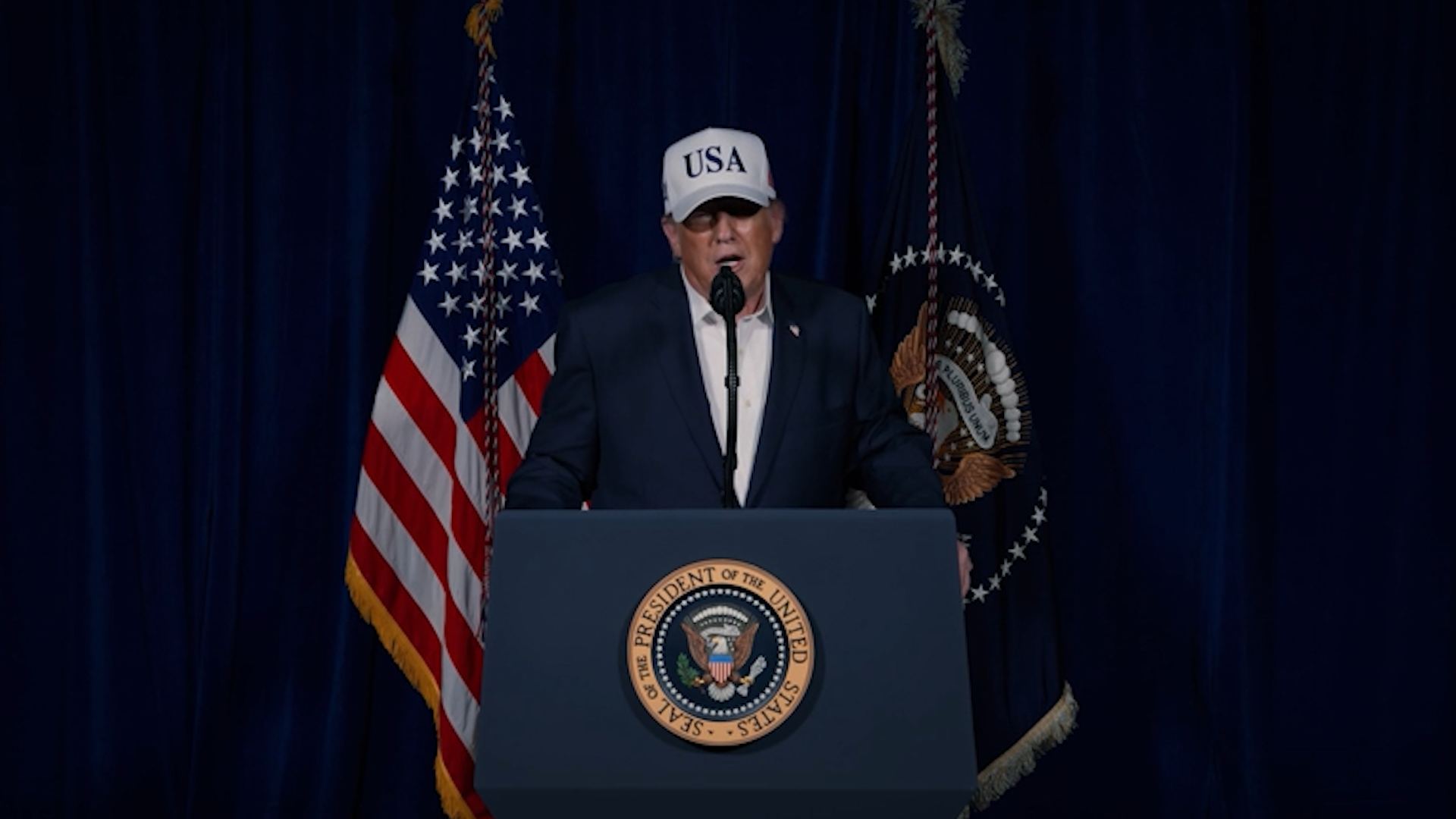
The United States and Israel have launched a coordinated military operation against Iran, dramatically escalating tensions across the Middle East and raising concerns of a broader regional conflict. The offensive, named “Operation Epic Fury,” was announced by President Donald Trump and Israeli Prime Minister Benjamin Netanyahu, who described the mission as a joint effort to dismantle what they characterized as an existential threat posed by Iran’s leadership and missile capabilities.
In a recorded address released online, Trump said the objective of the operation was to prevent Iran’s government from advancing its nuclear and missile programs, arguing that diplomatic efforts had failed. Netanyahu echoed the message, stating that the coordinated strikes were intended to neutralize military infrastructure and create conditions for long-term regional security.
Iranian authorities condemned the operation as a violation of national sovereignty, while retaliatory missile launches targeted Israeli territory and military installations hosting U.S. troops in several Gulf states. The confrontation marks one of the most direct military engagements between Washington and Tehran in decades.
Escalation After Failed Nuclear Diplomacy
The launch of Operation Epic Fury follows weeks of mounting friction tied to stalled negotiations over Iran’s nuclear program. Diplomatic channels aimed at limiting uranium enrichment and missile development reportedly collapsed after repeated disagreements over verification measures and sanctions relief.
The U.S. Department of Defense, detailed at https://www.defense.gov, had previously confirmed a significant military buildup in the region, including naval assets and air defense systems. Officials described the deployments as precautionary, though analysts noted that the scale of preparation suggested contingency planning for potential strikes.
Israel’s military, whose operations and security updates can be found at https://www.idf.il, stated that fighter jets targeted dozens of strategic sites associated with missile production and storage facilities. According to Israeli officials, months of intelligence coordination preceded the offensive, with the primary focus on degrading Iran’s long-range strike capabilities.
Iran’s Foreign Ministry issued a statement condemning the attack and warning that American and Israeli interests throughout the region would be considered legitimate targets. Missile launches were reported toward Israeli cities and U.S.-linked facilities in Qatar, Kuwait, Bahrain and the United Arab Emirates, intensifying fears of a multi-front escalation.
Regional Fallout and Security Measures
The immediate aftermath of the strikes saw heightened security protocols across Israel. Authorities closed national airspace to passenger flights and declared a 48-hour state of emergency. Civil defense systems were activated, and residents were instructed to remain near bomb shelters as interception systems engaged incoming missiles.
Smoke trails were visible over major metropolitan areas, including Tel Aviv, as air defense batteries intercepted projectiles. Hospitals began relocating critical departments to fortified underground areas designed to withstand missile impacts.
In the Gulf region, governments reinforced base perimeters and increased surveillance. The United States Central Command, which oversees American military operations in the Middle East and publishes regional updates at https://www.centcom.mil, confirmed that defensive systems had intercepted several missiles targeting facilities housing U.S. personnel.
One reported casualty involved a foreign civilian worker killed by falling debris after a missile interception near Abu Dhabi. Officials in the United Arab Emirates stated that investigations were ongoing.
Strategic Objectives and Global Implications
President Trump framed the operation as a decisive move to eliminate what he described as imminent threats posed by Iran’s missile industry and nuclear ambitions. He stated that the strikes were intended to dismantle production capabilities and weaken the Iranian Revolutionary Guard Corps’ operational reach.
Netanyahu described the campaign as necessary to remove a long-standing strategic threat, emphasizing close coordination between Israeli and American forces. Both leaders suggested that the operation could extend over several days, depending on battlefield assessments and Iranian responses.
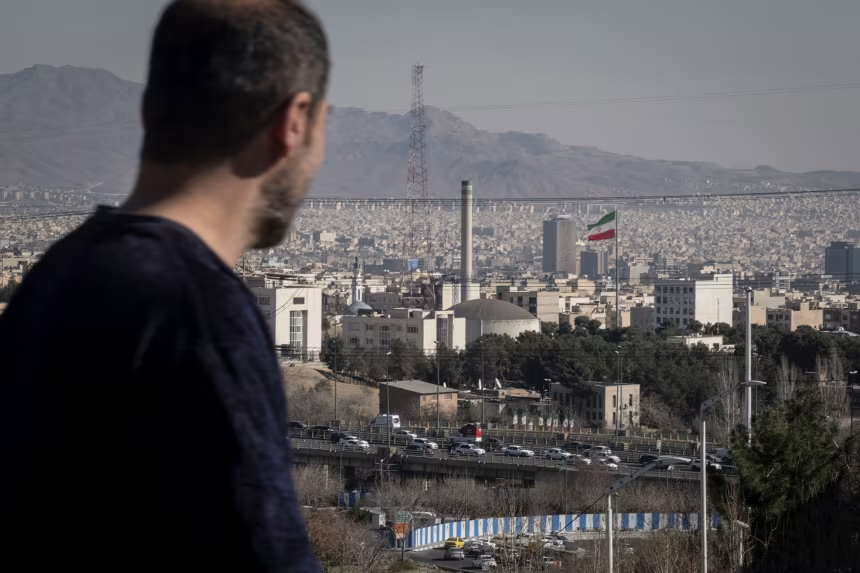
Iranian state media reported explosions in parts of Tehran, though the extent of damage and potential casualties remains unclear. International observers warn that sustained exchanges could disrupt global energy markets and shipping routes, particularly through the Strait of Hormuz.
The broader geopolitical consequences are still unfolding. The United Nations, whose diplomatic initiatives can be tracked at https://www.un.org, has called for restraint and urged all parties to avoid actions that could destabilize the wider region.
Operation Epic Fury represents a pivotal moment in Middle East geopolitics, with potential ripple effects on global security, oil prices, and diplomatic alliances. As military activity continues and retaliatory threats intensify, the region faces a period of heightened uncertainty that could redefine strategic alignments for years to come.