Trump’s Name Added to the Institute of Peace Amid Escalating Control Dispute
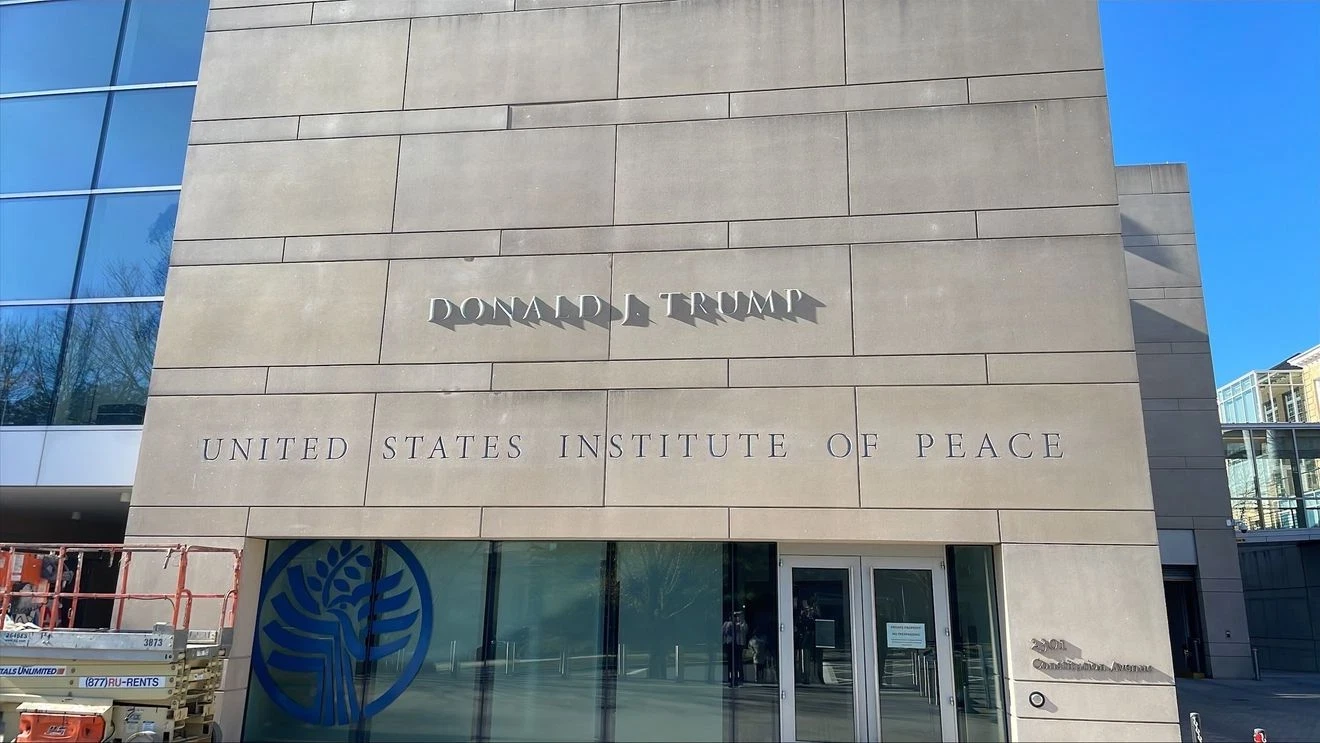
The decision by the administration to rename the U.S. Institute of Peace as the Donald J. Trump Institute of Peace marks a significant escalation in the ongoing battle for control over the organization. Despite being embroiled in a legal conflict concerning governance and independence, the administration moved forward by placing the president’s name directly on the building, located near the State Department, raising new tensions around executive authority and the future of federally funded institutions.
The administration described the renaming as a reflection of the president’s legacy in global negotiations and conflict management, while critics argue that the move undermines decades of congressional intent. References to Trump’s pursuit of international recognition, including his ongoing campaign for a Nobel Peace Prize, have intensified scrutiny of the decision. Meanwhile, his administration has simultaneously escalated operations abroad, including ordering maritime strikes targeting suspected drug operations off the coast of Venezuela. These contrasting actions have fueled debate about how the administration defines peace efforts and how those definitions align with previous U.S. commitments.
Further complicating matters, the takeover of the Institute was marked by abrupt removals of its board, forced evacuations of staff, and a rapid transfer of the physical building into the custody of the General Services Administration. Legal challenges mounted quickly, leading to dramatic swings in control as federal courts issued temporary rulings that shifted oversight between government agencies and the institute’s former leadership. The dispute now awaits a final decision in federal appeals court, leaving the organization’s future status uncertain.
Court Rulings, Staff Dismissals and the Institute’s Uncertain Future
The Institute of Peace, established by Congress in the 1980s as an independent organization operating outside traditional diplomatic structures, has long prided itself on initiatives in conflict prevention and resolution. Before the takeover, it worked in more than two dozen conflict zones, including Pakistan, Afghanistan, Mali and Burkina Faso, providing research, training and strategic guidance. With the administrative intervention, those operations were halted and staff experienced multiple waves of firings, leaving programs suspended and communities without ongoing support.
Legal representatives for the former leadership argue that the armed federal takeover violates statutory protections and congressional authority. A federal district court initially agreed, ruling the intervention unlawful, yet the decision was stayed during appeal, enabling the administration to maintain control. The building, now held by the General Services Administration, remains a centerpiece of the legal battle as advocates for institutional independence insist that the Institute of Peace is not part of the executive branch.
References to executive authority have prompted renewed interest among governance experts and policymakers, with many emphasizing the need to clarify boundaries between congressional agencies and presidential power. Public institutions and resources typically managed through statutory frameworks—such as those described on Congress.gov—have become focal points in the discourse. These discussions extend to broader questions about federal governance, including the role of diplomatic resources outlined on State.gov.
Peace Agreement Event Highlights Global Attention Amid Controversy
Amid the legal and political turmoil, the building is scheduled to serve as the backdrop for a major peace agreement signing between Congo’s President Felix Tshisekedi and Rwanda’s President Paul Kagame. High-profile delegates from the African Union and multiple nations—including Angola, Burundi, Kenya, Togo, Qatar, Uganda and the United Arab Emirates—are expected to participate. The event is set to advance ongoing regional stabilization efforts and underscores the building’s symbolic significance, regardless of the name affixed to its façade.
The Institute’s website continued operating under its previous identity even as the administration advanced its renaming efforts. Its leading announcement, focusing on the peace agreement and the presence of U.S. officials, emphasized continuity in its longstanding mission. Observers have noted that the event may also serve as a stage for ongoing attempts by the administration to reinforce its global peace narrative. Public programs like those of USAID are frequently referenced to contrast independent humanitarian work with executive-led initiatives, further expanding the debate over the Institute’s future.
Speculation has also grown that Trump may be honored with a new peace-related award on the sidelines of the upcoming World Cup draw in Washington. Although unconfirmed, the discussions reflect a broader pattern of efforts to elevate the administration’s diplomatic image. With global attention focused on Washington during the World Cup events, official institutions such as WhiteHouse.gov continue to shape messaging around leadership, diplomacy and national priorities.
As the federal appeals court prepares to issue a final decision, political tension, legal uncertainty and international attention keep the renamed institute at the center of national debate. The ultimate ruling will determine not only the future of the organization but also the boundaries of executive power over congressionally established institutions.