Trump Escalates Criticism of NATO Alliance
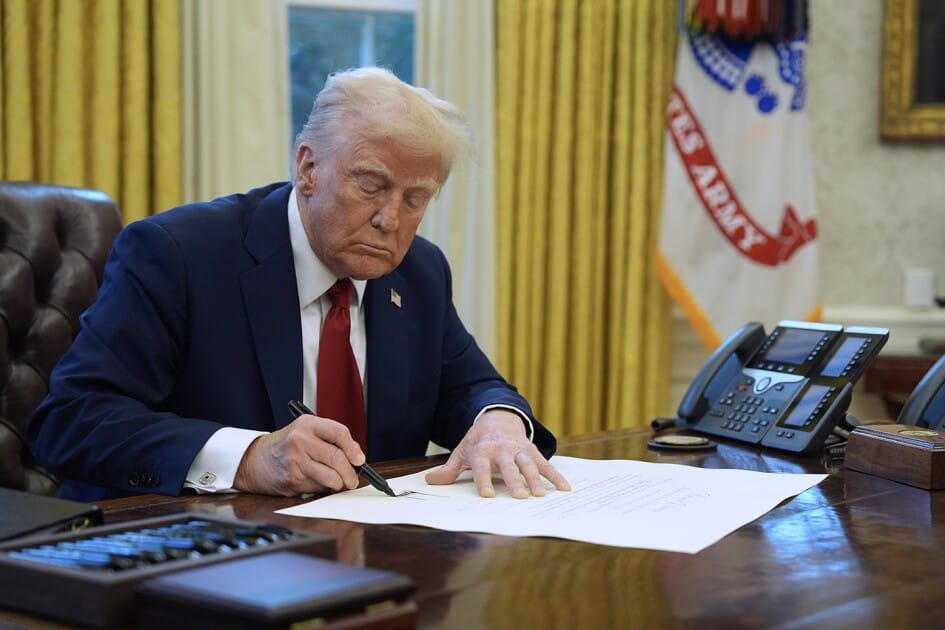
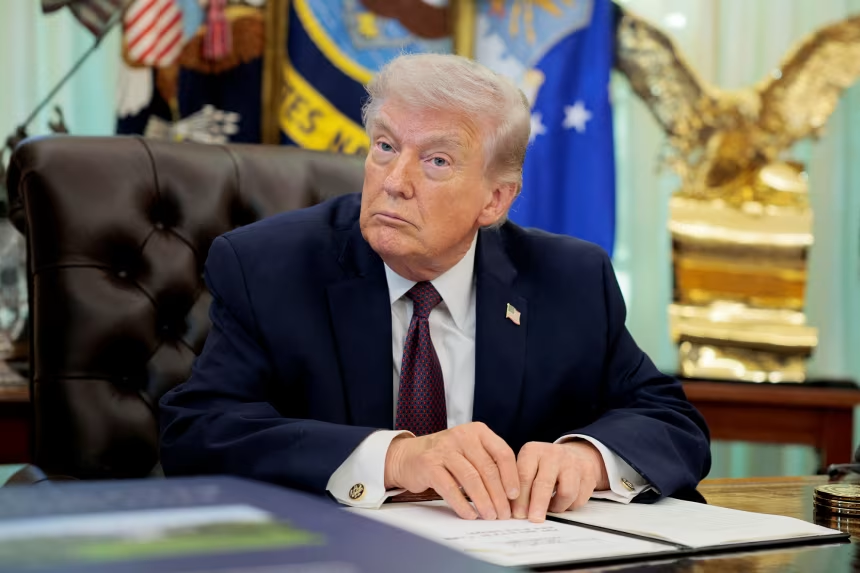
President Donald Trump has intensified his criticism of the <a href=”https://www.nato.int/”>North Atlantic Treaty Organization</a>, signaling that he is seriously considering withdrawing the United States from the long-standing military alliance. In recent remarks, he described NATO as ineffective and questioned its reliability, particularly in light of limited support from member countries during the ongoing conflict involving Iran.
Trump’s statements reflect growing frustration within his administration over what he perceives as unequal burden-sharing among allies. He has repeatedly argued that the United States has carried a disproportionate share of military and financial responsibilities while receiving insufficient backing in return.
The latest comments follow disagreements over the Strait of Hormuz, a strategic maritime route where several allied nations have been reluctant to deploy military assets despite rising tensions. The president has suggested that countries affected by disruptions in energy supplies should take independent action rather than relying on U.S. intervention.
His rhetoric has also extended to direct criticism of individual allies, further straining diplomatic relations. The remarks have prompted renewed debate about the future of transatlantic cooperation and the role of NATO in a rapidly shifting geopolitical environment.
Legal and Political Barriers to Withdrawal
Despite the president’s assertions, the process of withdrawing the United States from NATO is far from straightforward. Legal experts point to legislation passed in 2023 that requires congressional approval before any such move can be finalized. This law mandates either Senate consent or a formal act of Congress, limiting the executive branch’s unilateral authority.
Analyses from institutions such as the <a href=”https://crsreports.congress.gov/”>Congressional Research Service</a> highlight the complexity of treaty obligations and the potential constitutional challenges involved. While some legal interpretations suggest the president holds significant power over international agreements, others argue that NATO’s foundational treaty commitments cannot be dissolved without legislative participation.
Members of Congress from both parties have pushed back against the idea of withdrawal, emphasizing the alliance’s strategic importance. Lawmakers have also warned that even signaling an intent to leave could weaken NATO’s cohesion and undermine its deterrence capabilities.
At the same time, legal opinions from entities like the <a href=”https://www.justice.gov/olc”>Office of Legal Counsel</a> suggest that executive authority over foreign policy could play a role in shaping the outcome. This ongoing debate underscores the uncertainty surrounding any potential decision.
Strategic Impact on Global Security
The implications of a U.S. withdrawal from NATO would extend far beyond legal considerations, potentially reshaping global security dynamics. The alliance, built on the principle of collective defense, has long served as a cornerstone of Western military cooperation.
Under Article 5 of the NATO treaty, an attack on one member is considered an attack on all—a clause invoked only once after the September 11 attacks in the United States. In subsequent operations, including the conflict in Afghanistan, allied nations contributed troops and resources alongside U.S. forces.
Institutions like the <a href=”https://www.cfr.org/”>Council on Foreign Relations</a> have noted that NATO’s strength lies in its ability to coordinate multinational responses to security threats. A shift in U.S. participation could alter that balance, influencing defense strategies across Europe and beyond.
Recent tensions linked to the Middle East conflict have already exposed divisions within the alliance. Some member states have resisted deeper involvement, citing legal, political, and strategic concerns. These differences have fueled broader questions about the alliance’s future role and adaptability in addressing modern conflicts.
Trump’s continued skepticism toward NATO, combined with his emphasis on national self-reliance, signals a potential turning point in U.S. foreign policy—one that could redefine longstanding alliances and reshape the global order.