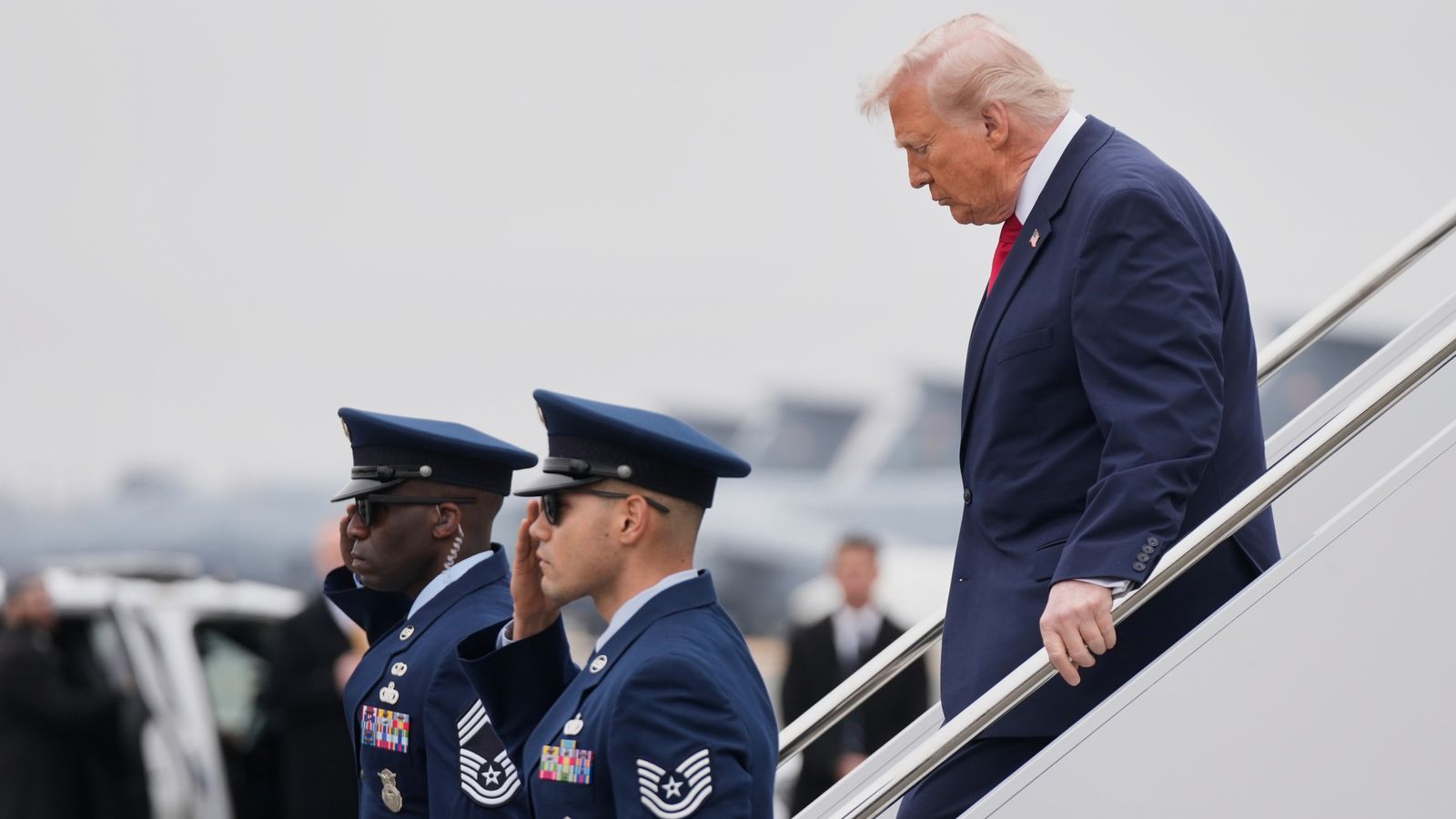
The military confrontation involving the United States, Israel, and Iran has escalated into a broader regional crisis, with leaders warning the conflict could intensify further in the coming days. What began as coordinated strikes against Iranian military targets has quickly expanded into a cycle of retaliatory attacks affecting several countries across the Middle East and beyond.
President Donald Trump signaled that additional military operations remain under consideration, warning that Iran could face significantly stronger strikes if hostilities continue. His remarks came as regional governments increased security measures and global powers monitored the situation closely.
According to estimates released by the Iranian Red Crescent Society, more than 1,300 people inside Iran have died since the fighting began. Several senior Iranian leaders were killed in earlier strikes, including top figures in the country’s military and political leadership.
At the same time, military officials claim that Iranian naval and air capabilities have been severely weakened following repeated attacks on strategic facilities and equipment.
Trump Signals Possible Expansion of Military Targets
President Trump intensified his rhetoric as the war entered its second week, warning that the United States is prepared to expand its list of targets if Iran continues military actions against American forces or regional allies.
In a statement shared publicly, Trump said Iran “will be hit very hard,” suggesting that additional locations and groups could be considered for future strikes. His comments were made shortly after Iran’s leadership attempted to ease tensions with neighboring states.
During a public appearance at an international security forum in Florida, the president emphasized the strength of American military capabilities and said several Iranian military systems had already been disabled.
Officials from the U.S. Department of Defense indicated that earlier operations had targeted key communication infrastructure and strategic assets believed to support Iran’s regional operations.
Meanwhile, Israel’s air force confirmed further attacks inside Tehran, including strikes on infrastructure connected to military logistics at Mehrabad Airport. Israeli authorities described the site as a critical hub for equipment distribution to allied militant groups operating across the Middle East.
The growing scale of the attacks has fueled uncertainty about how long the conflict might last or whether additional countries could become involved.
Iran Balances Apology With Warning of Self-Defense
Iran’s president, Masoud Pezeshkian, initially adopted a conciliatory tone by apologizing to neighboring nations that had been struck by Iranian missiles during the early days of the conflict. He emphasized that Iran did not intend to escalate hostilities with nearby countries.
The statement suggested Tehran wanted to limit the regional impact of the war while continuing to defend itself against direct attacks.
However, only hours later, the Iranian government released a stronger message asserting its right to respond militarily if further strikes occur. Officials stressed that Iran retains the authority to defend its sovereignty under international law, referencing principles recognized by the United Nations.
Missile alerts continued across several Gulf states, including the United Arab Emirates and Qatar, where air defense systems intercepted drones and projectiles believed to have been launched from Iranian territory.
Several countries in the region have increased military readiness while reinforcing air defense systems to prevent damage to critical infrastructure such as airports, energy facilities, and commercial ports.
Oil Markets and Global Powers React to Escalation
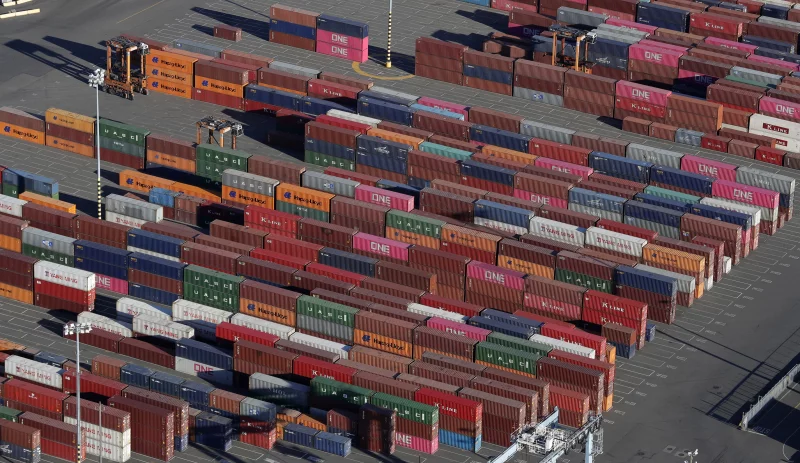
Beyond the battlefield, the war is beginning to affect global energy supplies and financial markets. One of the central concerns involves the Strait of Hormuz, a narrow waterway bordering Iran that serves as a major transit route for global oil shipments.
Energy analysts warn that disruptions in the strait could affect nearly one-fifth of the world’s oil supply. Iran recently declared restrictions on the passage of ships through the area, raising concerns among international traders and shipping companies monitored by the U.S. Energy Information Administration.
As tensions rose, global oil prices climbed above $90 per barrel, triggering fears of rising inflation and higher fuel costs in several economies.
Several Gulf states reported damage or operational disruptions at oil facilities during missile attacks earlier in the week. These incidents forced temporary shutdowns at some refineries and prompted governments to increase protections around energy infrastructure.
Major world powers are also becoming more involved diplomatically. European governments have increased their military presence in the region to protect their citizens and commercial interests. Meanwhile, China has dispatched a diplomatic envoy to encourage negotiations, reflecting concerns about how prolonged instability could affect international energy markets.
Russia, another key global player with strong ties to Iran, has remained cautious while monitoring the conflict. The Kremlin has issued statements expressing condolences following the deaths of Iranian officials but has not directly entered the military confrontation.
Across international markets and diplomatic circles, the expanding conflict continues to test alliances and reshape geopolitical calculations while governments attempt to prevent the situation from escalating into a wider global crisis.