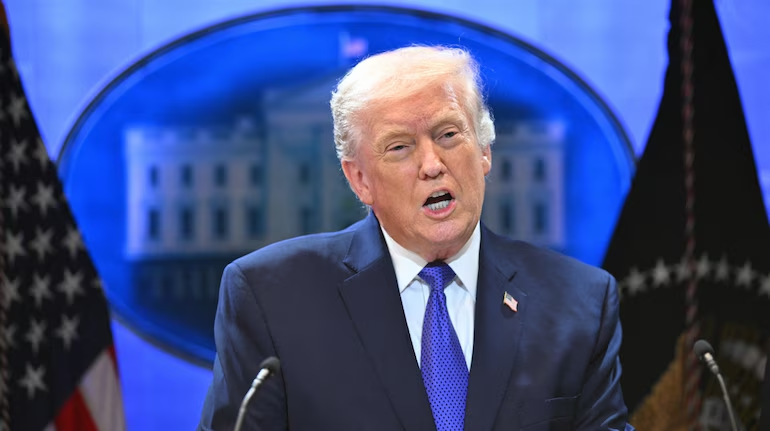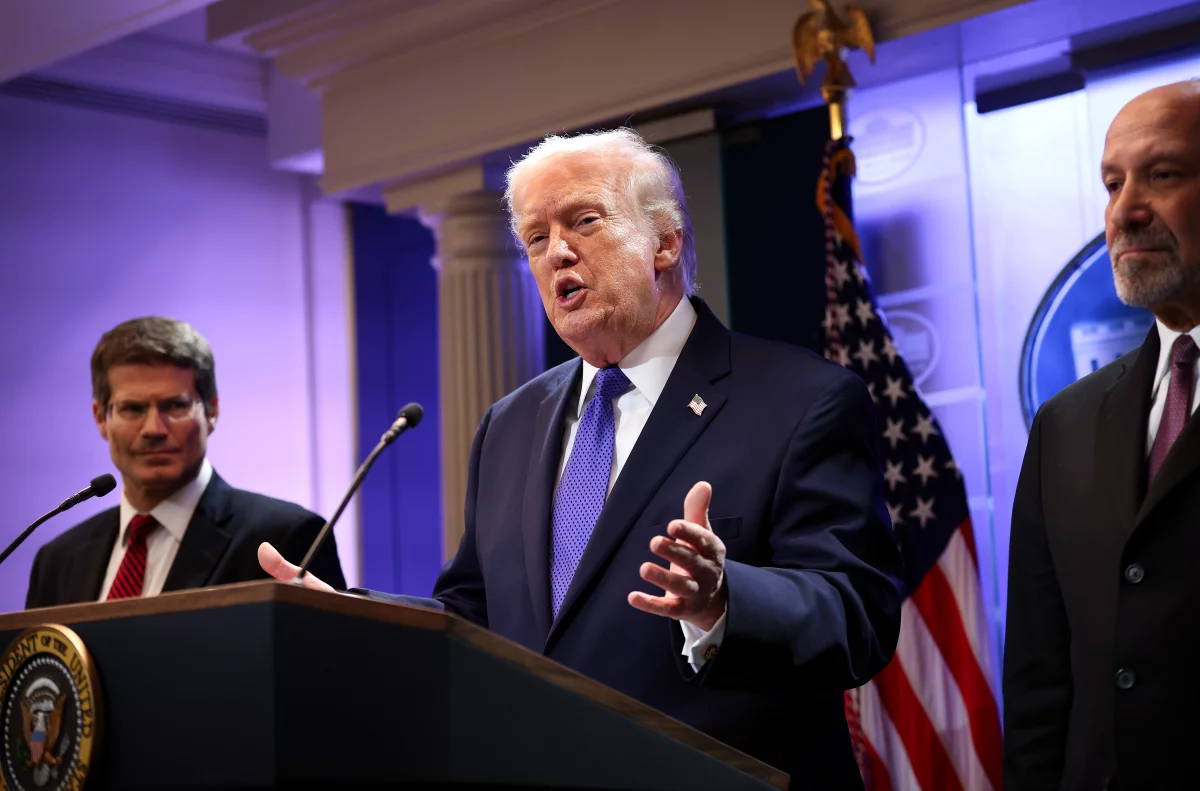
President Donald Trump sharply criticized the Supreme Court after it struck down a cornerstone of his tariff policy, marking a dramatic turn in his relationship with several conservative justices he once praised. The decision invalidated broad trade duties imposed during the early days of his second term, dealing a significant blow to the administration’s economic strategy and reigniting debate over presidential authority.
At a press conference following the ruling, Trump accused members of the Court’s conservative wing of undermining his agenda. His remarks targeted Chief Justice John Roberts as well as Justices Neil Gorsuch and Amy Coney Barrett, all part of the 6-3 majority that concluded the president had exceeded his constitutional authority in imposing sweeping tariffs without congressional approval.
The ruling, published on the Supreme Court’s official website, emphasized that the Constitution assigns taxing power — including tariffs — to Congress. Writing for the majority, Roberts pointed to the Framers’ deliberate choice to place fiscal authority in the legislative branch as a safeguard against executive overreach.
Constitutional Limits on Executive Trade Power
The legal battle began on the first day of Trump’s second term, when he signed an executive order authorizing extensive tariffs on a wide range of trading partners. The administration argued that various statutes granted the president authority to act unilaterally in response to trade imbalances and national economic concerns.
However, the Court’s opinion drew a firm line. The majority underscored that while Congress has enacted laws permitting limited executive action in specific circumstances, those statutes do not grant unlimited discretion. According to the Constitution, as interpreted by the Court, broad-based taxation measures require legislative approval.
The ruling cited the historical context in which the Constitution was drafted, referencing the Founders’ experience with taxation imposed by the British crown. By design, fiscal decisions were entrusted to elected lawmakers accountable to voters.
Despite the decision, Trump indicated he would explore alternative legal pathways to reinstate certain trade measures. Analysts note that while some trade statutes allow temporary tariff actions, they typically impose time limits or procedural requirements. Information on federal trade authorities and statutory frameworks can be found through the United States Congress legislative database, which outlines the scope and limitations of such powers.
Billions at Stake and Market Reaction
The financial implications are substantial. The federal government has been collecting approximately $30 billion per month in tariff revenue, with roughly half of that sum now jeopardized by the Court’s decision. Over the course of a year, that could amount to hundreds of billions of dollars in lost revenue projections.
Tariffs had been positioned as a mechanism to offset prior tax cuts enacted by Congress. With a significant portion of that revenue stream potentially eliminated, fiscal planners may face adjustments in budget forecasts and deficit calculations. While tariff revenue represents only about 5% of total federal receipts, the sudden reduction adds pressure to an already strained fiscal outlook.
Economic data released by the <a href=”https://www.bea.gov”>Bureau of Economic Analysis</a> shows that the U.S. economy grew 2.2% in 2025, slightly below the previous year but still reflecting steady expansion. Notably, imports did not decline significantly despite the tariff regime, raising questions about the long-term effectiveness of the policy.
Financial markets reacted with relative calm compared to the volatility seen when the tariffs were first introduced. Investors appear to be weighing the possibility that the administration could attempt narrower measures under existing statutes. Trade data and customs collections overseen by U.S. Customs and Border Protection will be central to determining how much revenue has been gathered and how potential refunds might be processed.
Refunds, Legal Uncertainty and a Divided Court
One unresolved issue is whether businesses that paid the tariffs over the past year will be entitled to refunds. The majority opinion did not address restitution directly, leaving lower courts to determine how repayment mechanisms might function. Trade attorneys suggest that electronic customs records could facilitate calculations, though the scale of reimbursements may be unprecedented.
The decision also highlighted divisions within the Court itself. Although Roberts secured a majority that included both conservative and liberal justices, several concurring and dissenting opinions stretched far beyond the main ruling in length and tone. Multiple justices authored extensive separate writings, reflecting broader philosophical disagreements about executive power and judicial interpretation.
The 6-3 outcome signals that even a conservative-leaning Court is prepared to curtail presidential authority when constitutional boundaries are at issue. For the White House, the setback complicates a signature economic policy and introduces new legal and fiscal challenges that may unfold over the coming months.