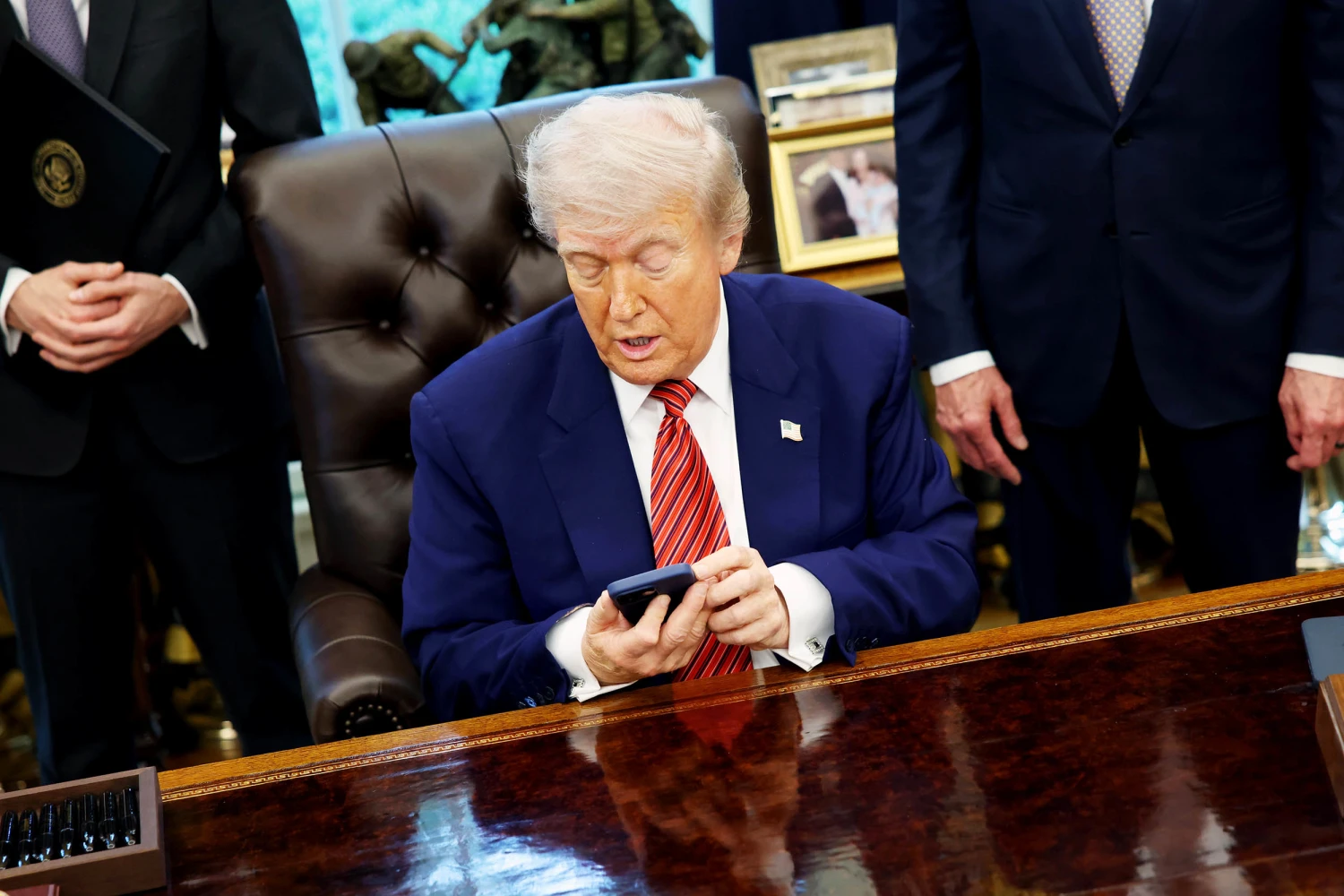
A new controversy involving a racist meme shared from an account associated with former President Donald Trump has intensified a broader national debate over extremist rhetoric in government communication. The incident, which involved an offensive image depicting former President Barack Obama and Michelle Obama, triggered widespread backlash and led to the removal of the post. Despite the deletion, the fallout has continued, with critics arguing that the episode reflects a larger pattern of messaging that pushes the boundaries of political discourse and tests public tolerance.
The controversy has drawn attention not only to the content itself but also to the broader communications ecosystem surrounding modern political leadership. Analysts say the issue is not limited to a single post, but rather part of a larger pattern in which provocative or coded messaging plays a role in shaping political narratives and mobilizing core audiences.
Escalating Concerns About Political Communication Norms
Observers across academic and civil society spaces say the latest controversy underscores growing concern about the normalization of inflammatory political rhetoric. While extreme language has long been part of political strategy in certain contexts, critics argue that its increasing visibility in mainstream communication channels signals a shift in tone and expectations around public discourse.
The digital nature of modern politics has amplified these concerns. Social media platforms allow messaging to spread rapidly, making it harder to contain or contextualize controversial content once it enters public circulation. Political strategists note that viral content, whether intentional or accidental, often reshapes narratives more quickly than traditional media cycles.
In recent years, analysts have tracked how emotionally charged language and imagery can influence public perception and polarization. Organizations studying political communication patterns point to recurring themes that frame national identity, immigration, and cultural change in stark or adversarial terms. Resources exploring political messaging trends can be found through research hubs such as https://www.brookings.edu and https://www.pewresearch.org, which analyze shifts in public opinion and media ecosystems.
The Role of Ambiguity and Plausible Deniability
A recurring theme in discussions about controversial political messaging is the concept of plausible deniability. Communication scholars argue that ambiguous language or imagery can allow public figures to send signals to specific audiences while maintaining the ability to reject negative interpretations. This strategy can create layered meaning, where supporters interpret content one way while critics see something entirely different.
The dynamics of ambiguity are amplified in highly polarized environments. When audiences are already divided, the same message can reinforce opposing narratives simultaneously. Experts note that this dynamic can contribute to ongoing disputes over intent, accountability, and the boundaries of acceptable political speech.
Studies of media framing and propaganda techniques highlight how messaging strategies evolve alongside technology. Digital communication tools have enabled faster experimentation with tone, symbolism, and delivery. Research from institutions like https://www.rand.org and https://www.cfr.org explores how political messaging strategies intersect with information warfare, influence campaigns, and democratic resilience.
Broader Implications for Democracy and Public Trust
Beyond the immediate controversy, the debate over extremist rhetoric raises deeper questions about public trust in institutions and the long-term impact on democratic norms. Critics argue that repeated exposure to inflammatory content can shift baseline expectations, gradually redefining what audiences consider acceptable in public leadership.
Political scientists often emphasize that normalization is not driven by isolated incidents but by patterns over time. When controversial messaging recurs frequently, it can reduce shock value and reshape public tolerance. This process may influence civic engagement, media literacy, and voter behavior, especially among younger demographics who consume political content primarily online.
At the same time, defenders of aggressive political rhetoric argue that modern political competition is inherently combative and that heightened language reflects broader cultural tensions rather than creating them. This divide underscores a larger national debate over free expression, accountability, and the role of digital platforms in moderating political speech.
As the political landscape continues to evolve, the controversy surrounding the racist meme has become a flashpoint in ongoing discussions about the future of political communication. Whether viewed as an isolated misstep or part of a broader pattern, the incident highlights how digital messaging can shape public debate, influence institutional credibility, and redefine the boundaries of modern political discourse.