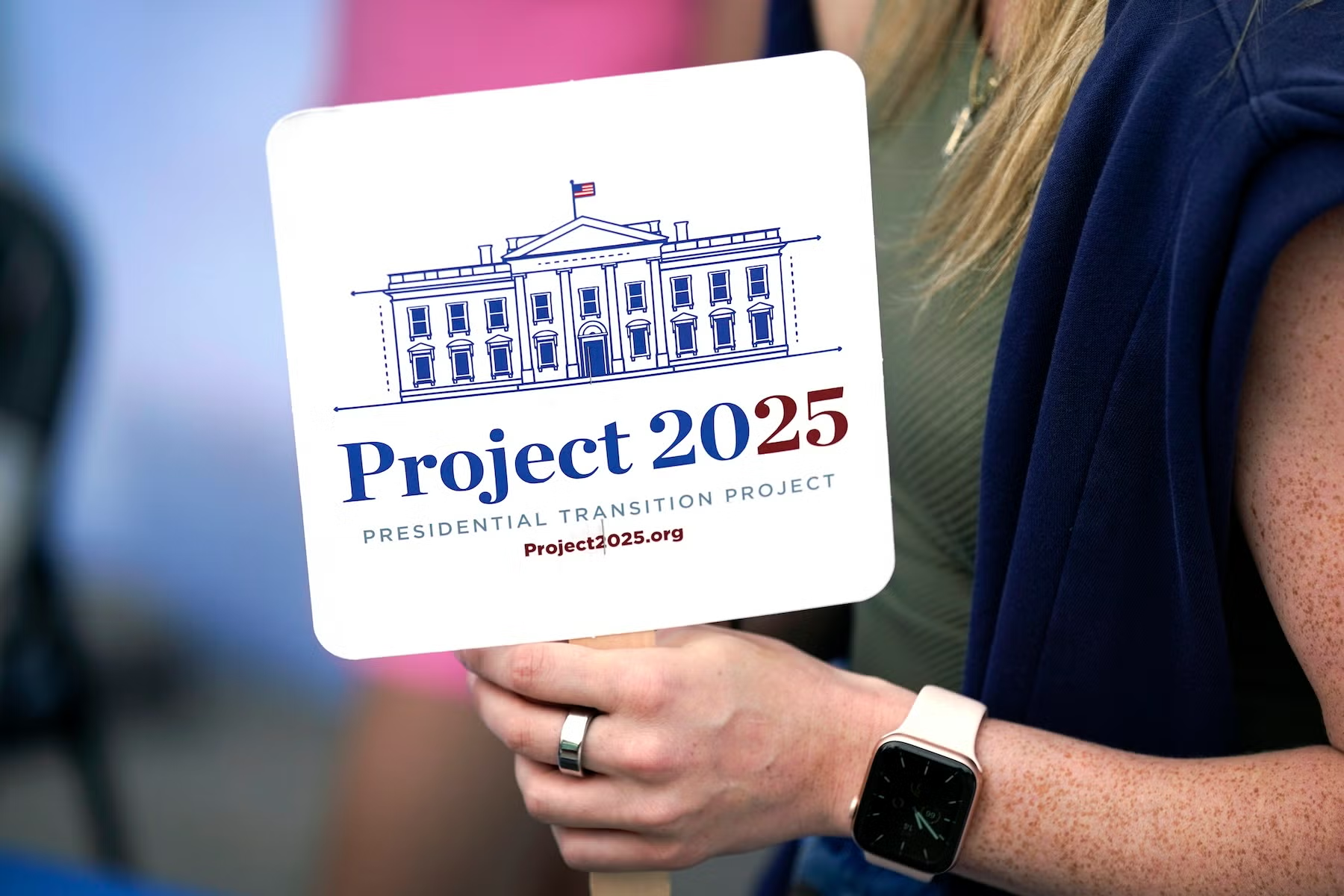
President Donald Trump has rolled out a sweeping set of government changes that closely mirror the controversial Project 2025 blueprint, despite having publicly dismissed the plan during the presidential campaign. The 900-page policy framework, led by the Heritage Foundation, was initially portrayed by Democrats as a right-wing roadmap to overhaul the federal government. Although Trump insisted he had “nothing to do with Project 2025,” many of its central proposals are now shaping the early direction of his second term.
From immigration enforcement to restructuring the federal workforce, Trump’s actions have drawn renewed attention to Project 2025 as a defining influence on his governing agenda. Legal experts, state officials, and political historians now argue that the administration’s policy trajectory reflects a coordinated effort to bring long-standing conservative priorities into direct execution, even as the White House continues to downplay the blueprint’s relevance.
Immigration, Federal Workforce, and Education Overhauls
One of the most visible alignments with Project 2025 has been Trump’s aggressive immigration policy. The administration has launched large-scale enforcement actions, pressured states to cooperate with federal crackdowns, and signaled plans to expand detention and deportation infrastructure. These moves echo proposals long advocated by conservative policy groups and detailed in Project 2025’s recommendations for border security and interior enforcement.
At the same time, Trump has taken steps to dismantle diversity, equity, and inclusion initiatives across federal agencies, a priority that aligns closely with the agenda promoted by conservative institutions such as the Heritage Foundation. The rollback of DEI programs has been paired with efforts to restructure hiring practices and reduce what the administration describes as ideological bias within the civil service.
Perhaps the most consequential shift has been the move to weaken the U.S. Department of Education. Trump has initiated layoffs and funding freezes while signaling support for policies that would decentralize federal oversight of schools. These actions mirror long-standing conservative calls for limiting the federal government’s role in education and empowering states, a position frequently outlined in policy research from organizations such as the U.S. Department of Education itself and echoed in think tank proposals.
Project 2025 Architects Enter the White House
Despite campaign-era claims of ignorance about Project 2025, Trump appointed Russell Vought, one of the blueprint’s key architects, to lead the Office of Management and Budget. The OMB is widely regarded as the nerve center of the White House, controlling budget priorities and regulatory implementation. Vought’s appointment signaled to critics that Project 2025 was not merely an external policy document but a guiding framework for internal decision-making.
Other contributors to the blueprint have also found their way into senior advisory roles, reinforcing the perception that the administration is drawing directly from the Heritage Foundation’s policy network. This pattern has intensified scrutiny from Democratic attorneys general, including California’s Rob Bonta, who has said that Project 2025 effectively served as a written preview of Trump’s governing plans.
State-level legal challenges have already blocked several initiatives tied to this agenda, including attempts to force states into federal immigration enforcement partnerships and to freeze domestic funding streams. According to Bonta, Democratic attorneys general studied Project 2025 in advance and prepared legal responses for each major policy action it outlined.
Political Fallout and Strategic Miscalculations
Trump’s handling of Project 2025 during the campaign may have amplified its political impact. Initially dismissing the blueprint as “ridiculous,” Trump claimed he did not know who was behind it, even though multiple contributors had served in his first administration. When controversy intensified, senior campaign adviser Chris LaCivita publicly criticized the organizers, calling them a liability rather than an asset.
Yet, days after winning the election, Trump’s pivot toward embracing Project 2025-aligned figures and policies made those earlier denials appear strategic rather than substantive. Presidential historian Tevi Troy has argued that think tanks on both the right and left routinely prepare policy frameworks for incoming administrations, pointing to the Hoover Institution’s role in shaping the George W. Bush presidency and the Center for American Progress’s influence during the Obama years.
Troy suggested that Trump’s decision to disavow Project 2025 during the campaign made it more controversial than it might otherwise have been. By rejecting the blueprint instead of treating it as a standard policy proposal, Trump inadvertently turned it into a political flashpoint. Later, during a government shutdown fight, Trump openly referenced Project 2025 and praised Russell Vought, boasting of the opportunity to dismantle federal agencies.
The White House has continued to dismiss concerns, insisting that the president is simply implementing the agenda voters supported, including promises to lower gas prices, boost economic growth, and secure the border. However, as Trump’s policy actions increasingly resemble the recommendations of Project 2025, the blueprint’s influence is becoming harder to ignore, reshaping debates about transparency, governance, and the future direction of the federal government.