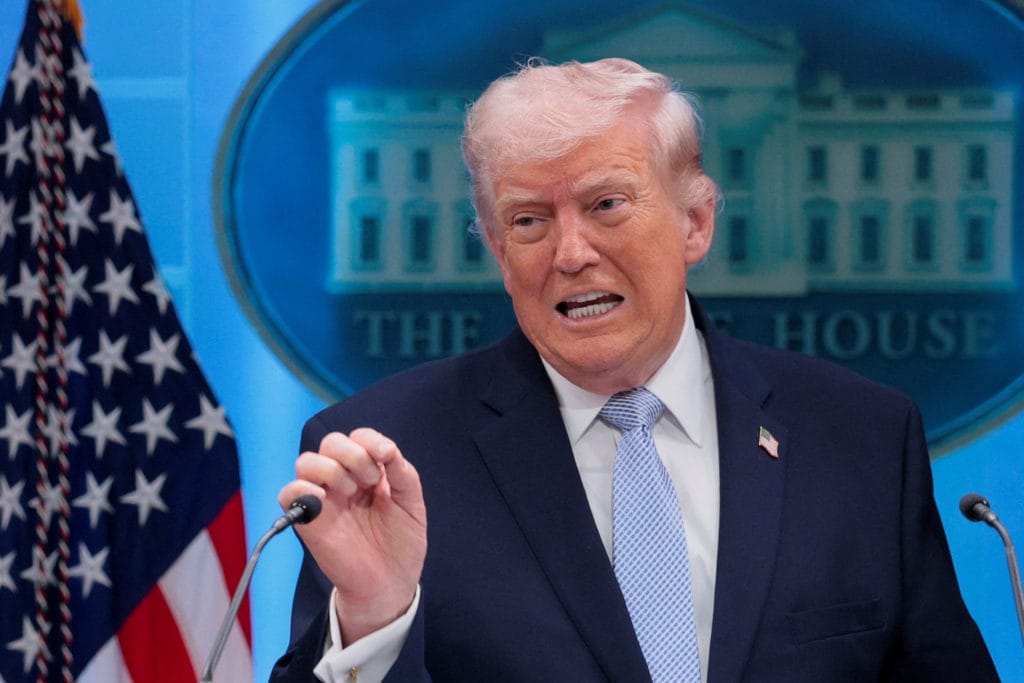
Tensions between the United States and Iran have sharply escalated after Donald Trump issued a stark warning tied to a deadline for reopening the Strait of Hormuz, one of the world’s most critical oil transit routes. The statement, delivered via social media, has intensified global concern over the possibility of a broader regional conflict with far-reaching consequences.
The warning comes amid ongoing military activity and diplomatic deadlock, as both sides appear entrenched in their positions while the international community watches closely.
Escalating rhetoric and military developments
President Donald Trump has increased pressure on Iran in recent weeks, including threats targeting key infrastructure such as bridges, power plants, and water systems. Analysts warn that attacks on civilian infrastructure could violate international law, raising legal and humanitarian concerns.
U.S. military operations have already expanded, with reported strikes on targets near Kharg Island, a vital hub for Iran’s oil exports. While officials indicated that oil infrastructure itself was not directly targeted, the strikes signal a continuation of military engagement in the region.
The strategic importance of the Persian Gulf has made the situation particularly volatile. Disruptions in this area could significantly impact global energy markets and shipping routes.
For more on global conflict and security analysis, visit https://www.cfr.org
Iran’s response and proposed conditions
Iranian leadership has rejected U.S. demands and instead proposed a multi-point plan aimed at de-escalation under specific conditions. These include guarantees against future attacks, easing of sanctions, and broader regional considerations involving allied groups.
Masoud Pezeshkian responded with strong rhetoric, emphasizing national unity and resistance. Public messaging from Iranian officials has also included calls for civilian demonstrations to highlight the potential consequences of targeting infrastructure.
Among the proposals reportedly under discussion is a controversial transit fee of $2 million per ship passing through the Strait of Hormuz, which could further complicate negotiations and increase tensions with international stakeholders.
For insights into Middle East geopolitics, visit https://www.brookings.edu and https://www.aljazeera.com
Global economic and geopolitical implications
The ongoing standoff is already influencing global markets, with concerns extending beyond energy prices to broader economic indicators. The International Monetary Fund has previously warned that instability in key shipping corridors like the Strait of Hormuz could disrupt global trade flows and increase inflationary pressures.
The region’s importance to global oil supply means that any prolonged conflict could have cascading effects on industries ranging from transportation to manufacturing. Early signals suggest volatility in commodities and financial markets as investors react to uncertainty.
Additionally, the situation underscores the interconnected nature of modern geopolitical crises, where military actions, economic consequences, and diplomatic strategies are deeply intertwined.
For more on global economic trends, visit https://www.imf.org and https://www.worldbank.org
As the deadline approaches, the potential for escalation remains high. Diplomatic efforts continue, but the outcome will likely shape not only regional stability but also the broader global order in the months ahead.