The confrontation between the United States and Iran has entered a more volatile phase after President Donald Trump warned that “time is running out” for Tehran to agree to a new nuclear deal, as American military forces continue to expand their presence across the Persian Gulf and surrounding regions. The warning underscores growing frustration in Washington over stalled negotiations and reflects a broader strategy aimed at combining diplomatic pressure with a visible display of military readiness.
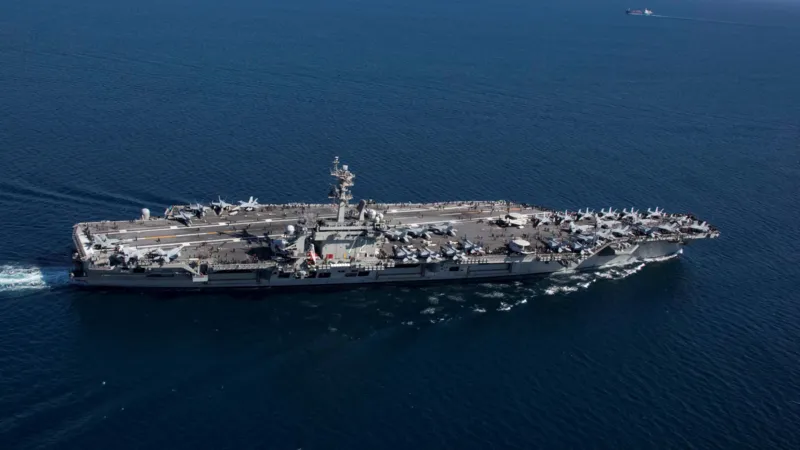
U.S. officials have framed the buildup as a deterrent rather than a prelude to conflict, but the scale and pace of deployments have amplified concerns among regional allies and global markets. The movement of naval strike groups, advanced aircraft, and surveillance assets signals a willingness to escalate if talks fail, while also reinforcing U.S. commitments to Gulf partners amid rising instability across the Middle East.
Military deployments intensify amid diplomatic pressure
The U.S. military has significantly reinforced its posture in the region, with naval and aerial assets positioned across strategic locations near Iranian airspace and maritime routes. Senior officials have pointed to the presence of aircraft carriers, guided missile destroyers, and long-range strike capabilities as evidence that Washington is prepared to respond swiftly to any perceived threat. Oversight of these deployments falls under the authority of the U.S. Department of Defense, which has emphasized readiness and deterrence as core objectives.
This buildup coincides with heightened rhetoric from the White House, including references to past strikes on Iranian nuclear facilities and warnings that future action would be more severe if Iran advances its nuclear program. While U.S. leaders maintain that diplomacy remains an option, the emphasis on military strength reflects skepticism about Tehran’s willingness to compromise under existing negotiation frameworks.
Iran, for its part, has responded by asserting its right to self-defense and signaling that any military action would trigger an unprecedented response. Iranian officials continue to insist that their nuclear activities are peaceful and compliant with international law, rejecting accusations that they are seeking nuclear weapons.
Nuclear negotiations and international oversight
At the center of the dispute lies Iran’s nuclear program and the absence of a comprehensive agreement governing enrichment levels, inspections, and sanctions relief. International monitoring bodies, including the International Atomic Energy Agency, remain critical to verifying Iran’s compliance with nuclear safeguards, yet access and transparency have become recurring points of contention.
U.S. officials argue that Iran has used negotiations to buy time while expanding technical capabilities, increasing the urgency of a new deal that imposes stricter limits and enforcement mechanisms. Iran counters that sanctions and military threats undermine trust and render meaningful diplomacy impossible. This standoff has complicated efforts within the United Nations framework to stabilize the situation, as divisions among major powers limit the effectiveness of multilateral pressure.
The lack of a binding agreement has also raised concerns among European and regional stakeholders, who fear that miscalculation or escalation could disrupt energy markets and global trade routes. With oil prices sensitive to Gulf security, any conflict would carry economic consequences measured in billions of dollars, affecting both producers and consumers worldwide.
Regional security risks and alliance implications
The escalating tension has broader implications for regional security and alliance dynamics. U.S. partners in the Middle East have increased their own defensive readiness, while coordination within transatlantic and security alliances has intensified. Institutions such as NATO continue to monitor developments closely, given the potential spillover effects on global stability and allied interests.
Iran has also moved to showcase its own military capabilities, deploying naval and drone assets near its coastline as a signal that it is prepared for confrontation if necessary. This reciprocal display of force heightens the risk of accidental encounters or misinterpretations, particularly in congested maritime corridors where U.S. and Iranian forces operate in close proximity.
As negotiations remain uncertain, the balance between deterrence and diplomacy grows increasingly fragile. Washington’s strategy appears aimed at forcing a decision point, while Tehran seeks to preserve leverage without provoking direct conflict. The outcome will shape not only the future of Iran’s nuclear program but also the credibility of U.S. power projection and the stability of a region already strained by overlapping crises.