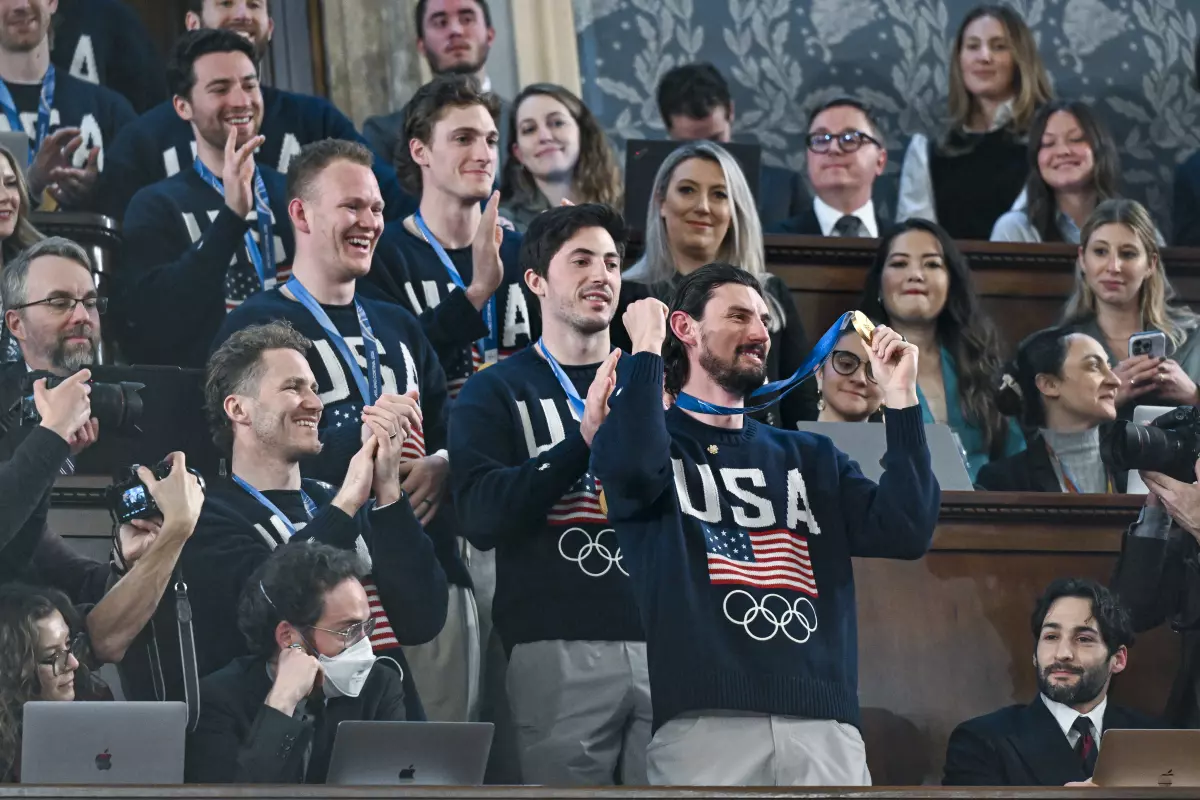
President Donald Trump honored the U.S. men’s Olympic hockey team during his State of the Union address Tuesday night, celebrating their historic gold medal victory while igniting political debate over remarks about the women’s team and controversy involving FBI Director Kash Patel. The recognition came just days after the men’s team secured a dramatic overtime win against Canada, marking the first U.S. Olympic gold in men’s hockey since the famed 1980 triumph.
The appearance injected a celebratory tone into the address, with the team receiving a prolonged standing ovation as they displayed their gold medals from the House balcony. Trump framed the victory as symbolic of broader national momentum, using the moment to underscore themes of American competitiveness and unity. The tribute, however, quickly extended beyond sports, evolving into a flashpoint for political discussion about optics, public spending, and gender dynamics in athletics.
Historic Olympic Victory Takes Center Stage
The men’s championship marked a milestone for American hockey, ending a decades-long drought and drawing comparisons to the iconic 1980 Olympic run. Goaltender Connor Hellebuyck, who delivered a standout performance with 41 saves in the final, was singled out by Trump during the address. The president announced plans to award Hellebuyck the Presidential Medal of Freedom, elevating the moment from a sports celebration to a symbolic national honor.
Trump personally invited the team to Washington shortly after their victory, reportedly offering transportation aboard a military aircraft to ensure their attendance. A recording of the invitation circulated widely online, fueling attention around the event even before the address began. The administration portrayed the recognition as a unifying moment that transcended political divides, positioning the Olympic achievement as a shared national accomplishment.
The team’s presence also reinforced the cultural significance of Olympic success in American politics. Presidential recognition of championship teams has long served as a bipartisan tradition, but in today’s polarized environment, even ceremonial gestures often carry political undertones.
Women’s Team Reaction and Gender Debate
While the men’s team embraced the spotlight, the U.S. women’s team declined an invitation to attend the address, citing prior academic and professional commitments. Trump referenced the women during both the invitation and the speech, suggesting a future White House visit. His comments, including a joking remark about facing impeachment if he did not invite them, sparked debate online and drew mixed reactions across political circles.
The decision by the women’s team not to attend added another layer of complexity to the event. Advocates for gender equity in sports highlighted the contrast between the celebratory tone for the men’s victory and ongoing conversations about recognition, funding, and representation in women’s athletics. Supporters of the administration, however, argued the scheduling conflict was being overinterpreted and emphasized that a future visit remained possible.
The episode underscores how high-profile sports moments increasingly intersect with broader cultural discussions. In an era where athletes are more visible in social discourse, ceremonial invitations can carry implications that extend well beyond the playing field.
Kash Patel Controversy Overshadows Celebration
Complicating the narrative further was scrutiny surrounding Kash Patel’s presence at postgame celebrations in Milan. Videos circulating on social media appeared to show the FBI director celebrating with players inside the locker room, prompting criticism from political opponents who questioned the appropriateness of the trip.
Administration officials stated that Patel’s travel included official duties involving meetings with international partners and security teams, with assurances that any personal expenses would be reimbursed. Nevertheless, critics argued the optics of the celebration risked blurring the line between official business and personal participation, particularly given prior scrutiny over government travel by senior officials.
Patel responded publicly to the backlash, defending his attendance as a personal moment shared with friends on a historic occasion. The controversy echoes previous debates over the use of government aircraft and travel privileges by high-ranking officials, themes that frequently resurface in Washington during election cycles.
As the 2026 midterm season begins to take shape, the intersection of sports and politics illustrated by the State of the Union moment reflects the increasingly symbolic role major cultural events play in national discourse. What began as a celebration of Olympic excellence quickly evolved into a multifaceted political story, blending patriotic pride, partisan criticism, and cultural debate in equal measure.