President Donald Trump has reshaped expectations around the next leadership of the Federal Reserve after signaling that he prefers to keep his top economic adviser, Kevin Hassett, in his current White House role. The comments, delivered during a public appearance, immediately altered market perceptions and strengthened the position of former Federal Reserve governor Kevin Warsh as the leading candidate to succeed Jerome Powell.
Trump’s remarks suggest a strategic preference for continuity inside the executive branch at a moment when monetary policy, inflation control and market stability remain central political concerns. Powell’s term as Federal Reserve chair is set to conclude in May, and Trump has repeatedly indicated his intention to appoint a successor aligned with his economic outlook.
White House Signals Reshape the Fed Race
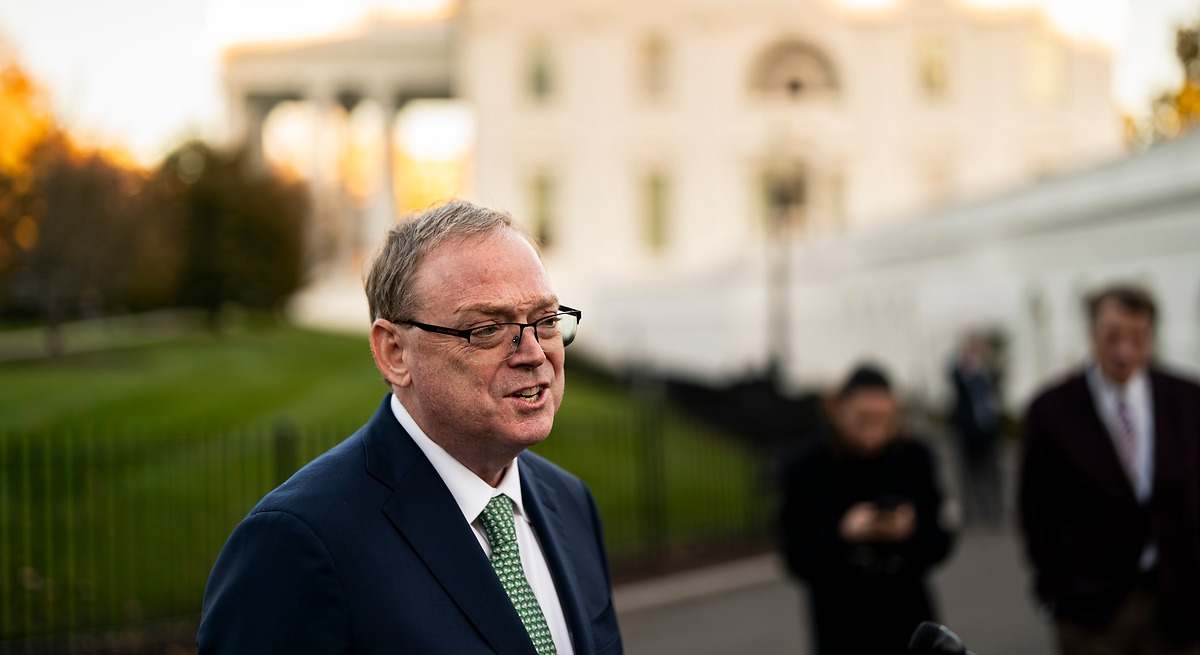
By openly expressing a desire to retain Hassett as director of the National Economic Council, Trump narrowed the field in what has become one of the most closely watched economic appointments of the year. Hassett had been widely viewed as a top contender for the central bank’s leadership, given his influence over fiscal policy and frequent public defense of the administration’s economic agenda.
With that possibility now less certain, attention has shifted decisively toward Warsh, a former Fed governor known for his hawkish views on inflation and skepticism toward prolonged accommodative monetary policy. Analysts following institutional decision-making at the Federal Reserve note that Warsh’s prior experience inside the central bank could offer Trump a combination of credibility and ideological alignment.
Other potential candidates remain in consideration, including current Fed governors, but the shift in tone from the White House has clearly altered expectations across financial markets.
Market Bets React to Political Messaging
Prediction markets reacted swiftly to Trump’s comments, sharply repricing the likelihood of a Warsh appointment. Traders interpreted the president’s remarks as an implicit signal that Hassett’s role is more valuable to the administration within the White House than at the Fed, reducing his probability of being nominated.
These market movements underscore how closely investors monitor political cues when assessing future monetary policy leadership. The Federal Reserve’s decisions influence trillions of dollars in global capital flows, U.S. Treasury yields and equity valuations, making the chairmanship a focal point for both Wall Street and international investors tracking policy direction via platforms such as the U.S. Department of the Treasury.
Warsh’s rising odds reflect expectations that a leadership change could usher in a firmer stance on inflation control, particularly if interest rate policy becomes a key issue in the next economic cycle.
Implications for Monetary Policy and Economic Strategy
The potential appointment of Warsh would likely signal a recalibration of the Fed’s approach after years of unconventional monetary policy. His past criticism of prolonged balance-sheet expansion and low-rate environments has positioned him as an advocate for restoring traditional policy tools and reinforcing central bank independence.
From the White House perspective, keeping Hassett in his current role preserves a trusted economic voice involved in shaping fiscal priorities, trade strategy and regulatory policy. The National Economic Council plays a central role in coordinating economic decision-making across agencies, working closely with institutions such as the White House and international partners.
As Trump prepares to announce his decision, markets will continue to interpret every public statement for clues. The final choice is expected to influence not only U.S. interest rates but also investor confidence, currency markets and global economic coordination through bodies like the International Monetary Fund.
With the Fed chair announcement anticipated before Powell’s term ends, the balance between political strategy and monetary independence is once again at the center of the U.S. economic landscape.