Trump Reinforces Support for Saudi Crown Prince as Debate Over Accountability Intensifies
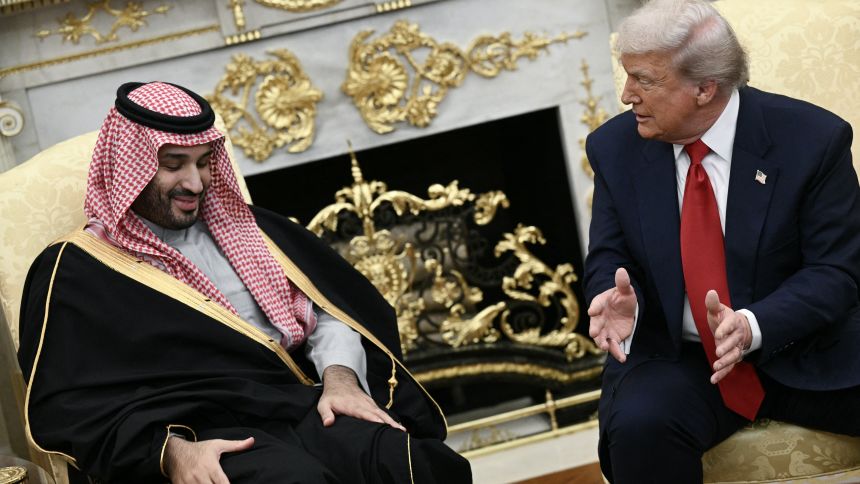
Former President Donald Trump renewed his public defense of Saudi Crown Prince Mohammed bin Salman during an Oval Office exchange. This exchange reignited global attention on the killing of journalist Jamal Khashoggi. While dismissing questions related to responsibility for the 2018 incident, Trump argued that the crown prince had no direct knowledge of the operation. He emphasized the importance of maintaining diplomatic respect for visiting allies. His remarks came at a moment when U.S.–Saudi relations continue to evolve around economic, military, and technological interests. This evolution is reflected in assessments from Brookings.edu about the strategic value the United States places on long-term Gulf cooperation.
Trump addressed concerns about potential personal conflicts of interest by asserting that he stepped away from his private business. He did this to focus fully on national priorities, highlighting that any ties to foreign investments have been separated from his political role. His comments sought to redirect the conversation toward strengthening economic partnerships. He suggested that broader geopolitical interests outweigh lingering controversy surrounding the Khashoggi case.
Saudi Leadership Highlights Reforms as U.S.–Saudi Economic Partnerships Expand
Crown Prince Mohammed bin Salman asserted that his government has implemented significant internal reforms. These reforms aim at preventing the recurrence of actions similar to Khashoggi’s killing. He called the event a painful and unacceptable mistake that his administration has worked to address systematically. The prince emphasized improvements in oversight and operational protocols. This aligns with modernization efforts that have defined much of Saudi Arabia’s domestic agenda in recent years. Economic analysts observing U.S.–Saudi investment flows through Investopedia.com note that Saudi capital remains pivotal to American sectors. These sectors include energy, advanced manufacturing, and defense technology.
During their Oval Office meeting, Trump and the crown prince promoted a large-scale U.S.–Saudi partnership. This involves hundreds of billions of dollars in projected investment, including agreements designed to increase Saudi access to advanced American military platforms and strategic technologies. The deal reflects a continuation of Saudi Arabia’s investment-driven approach to global influence. It accelerates diversification plans under its long-term national development blueprint. Both leaders described the bilateral arrangement as mutually beneficial, positioning it as a cornerstone of stability within the broader Middle East landscape.
Massive Investment Deals Reinforce Strategic Alliance Despite Heightened Public Debate
The U.S.–Saudi agreement promoted during the meeting includes commitments. These are expected to channel extensive capital into American infrastructure and defense manufacturing. This includes private-sector innovation hubs that increasingly depend on foreign investment. Economic researchers at CSIS.org note that such deals underscore the enduring strategic bond between Washington and Riyadh. This is true even when diplomatic tensions rise over human rights concerns.
Trump highlighted that increased Saudi investment would translate into job creation and greater technological development within the United States. He described the partnership as an integral component of national growth. Meanwhile, Saudi Arabia views access to advanced American defense systems as essential. This is essential for maintaining regional deterrence amid shifting security dynamics in the Gulf.
The broader implications of this partnership resonate beyond diplomacy. They influence global financial markets and international defense positioning. This is especially true as experts tracking regional trends through AtlanticCouncil.org emphasize the rising importance of U.S.–Saudi alignment in an increasingly competitive geopolitical environment. While public debate surrounding the Khashoggi killing continues to shape perceptions of the crown prince, the scale of U.S.–Saudi economic interdependence suggests that both nations are doubling down on long-term collaboration. This collaboration extends far beyond the controversies of recent years.