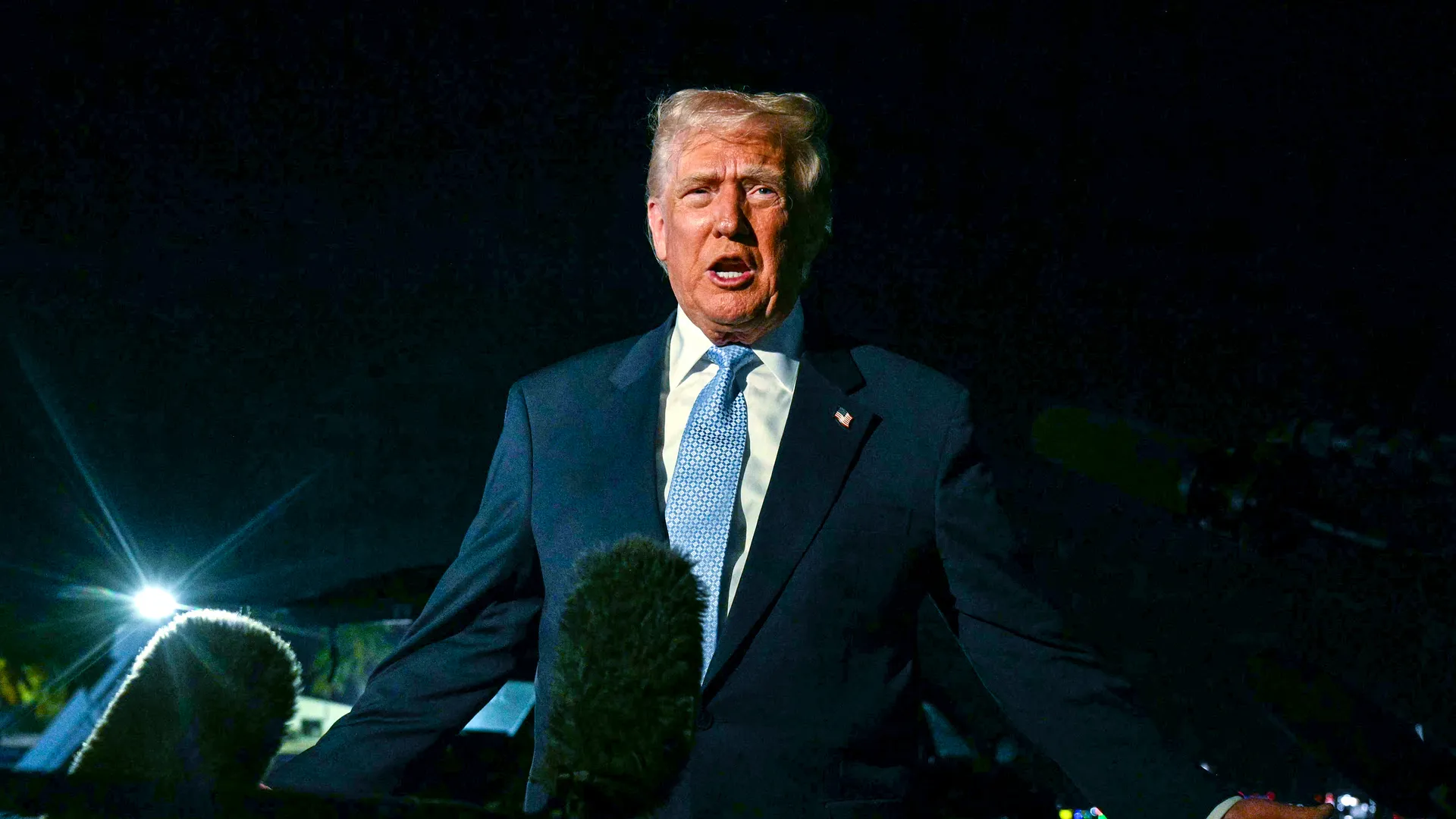
Trump $2000 tariff rebate checks have become a topic of discussion. This is because President Donald Trump has revived a bold economic proposal by declaring that Americans could receive $2,000 tariff rebate checks next year. He suggested that “hundreds of billions of dollars” collected from tariffs would be redistributed as dividends for moderate- and middle-income households. His remarks quickly fueled public expectations. This was particularly among families strained by rising prices on essentials and mounting insurance costs. Trump indicated the payments might roll out as early as mid-year. However, the proposal lacks structural clarity, financial grounding, and legislative backing. These factors make its implementation far less imminent than the announcement implies.
Understanding how the federal government manages tariffs, taxation, and direct payments typically requires reviewing official resources such as IRS.gov, Congress.gov, and economic datasets from FRED. None currently show indicators that funding mechanisms or legislative frameworks exist to support such widespread rebate checks. While the idea may appeal to millions of Americans hoping for economic relief, the feasibility of distributing thousands of dollars to each eligible person hinges on more complex dynamics than political messaging alone acknowledges.
1. Tariff Revenues Fall Short of the Trillions Needed for Rebate Checks
Despite Trump’s assertion that tariff collections create a robust surplus capable of financing substantial direct payments, the economic math is deeply misaligned with the scale of promised dividends. Independent fiscal modeling estimates new tariff revenue at $158.4 billion for 2025 and $207.5 billion for 2026. These numbers appear significant until compared to the projected cost of issuing national rebate payments. Even the narrowest distribution scenario—limited to tax filers and spouses with income capped at $100,000—would require $279.8 billion. This amount is already $121 billion above expected tariff collections. More expansive models, covering non-filers, spouses, and dependents, balloon costs to $606.8 billion, almost double projected tariff income for the next two years combined.
For context on how federal revenue streams function and how comprehensive budget assessments are performed, users can explore resources like the Congressional Budget Office. Current data illustrate a clear gap between the revenue tariffs generate and the far greater cost of nationwide rebate payments. Moreover, tariff revenue is already being allocated to offset other elements of the administration’s tax and spending plans. Repurposing the same funds for rebate checks would require significant restructuring. This would force the government to identify alternative funding sources or add hundreds of billions to the national deficit.
2. Congressional Approval Remains a Major Obstacle to Any Direct Payment Plan
Even if the administration insisted that tariff revenue alone could support rebate checks, Congress retains authority over federal appropriations. Bipartisan support is essential for any nationwide stimulus-style payment. Legislative approval is far from guaranteed. Lawmakers concerned about the national deficit—which recently exceeded $38 trillion—are unlikely to authorize new spending programs costing between $300 billion and $600 billion. This is especially true when the initiative is not tied to national emergency measures.
Members of Congress also remember the political fallout from prior stimulus packages and their connection to inflation trends. The experience from 2020 and 2021 shaped a prevailing view. Direct payments increase consumer demand quickly, but unless supply rises in tandem, prices increase. This concern is amplified by recent inflation cycles that affected both household budgets and interest rates. Extensive analysis and historical data available through Bureau of Labor Statistics reveal that sharp increases in consumer spending tend to precede inflation spikes. These aspects contribute to current congressional caution.
The combination of inflation fatigue, deficit worries, and political positioning makes it doubtful that a majority of lawmakers—especially fiscal conservatives—would agree to another round of large-scale public payments. This is true even if framed as tariff-funded rebates, rather than conventional stimulus checks.
3. Inflation Risks, Bond Market Reactions, and Legal Challenges Could Undermine the Proposal
Beyond fiscal and political barriers, the proposal faces substantial economic and legal challenges. Economists warn that distributing billions of dollars in checks during a period of already-sensitive pricing conditions could reignite inflation pressures. If millions of Americans spent their rebate checks immediately, demand for goods and services would likely increase faster than supply chains could respond. This would push prices higher in key categories. This dynamic previously strained markets such as housing, automotive insurance, and groceries.
The bond market presents additional risks. If investors perceive the government as increasing spending without reliable revenue sources, Treasury yields could rise sharply. This would raise borrowing costs for small businesses, homeowners, and consumers. Such reactions have been observed during periods of fiscal uncertainty. Experts note that financial markets can counteract policy intentions almost instantly. A sudden rise in yields could affect mortgage accessibility and the cost of credit across the economy.
Legal risks also complicate the outlook. A significant portion of the tariffs that would fund the dividend plan is currently under scrutiny before the Supreme Court. If key tariffs are deemed unlawful, as several justices have suggested, roughly 75% of expected new tariff revenue could be invalidated. This would effectively collapse the foundation of the rebate program. Without those funds, the administration would need to seek congressional approval for alternative revenue streams. However, these would face the same legislative resistance and economic concerns described earlier.
Although investors and economic analysts acknowledge the possibility that rebate checks could emerge under a severe recession scenario—a “break-the-glass” emergency measure—this would require substantial deterioration in employment, consumer activity, and financial stability. Direct payments would then be viewed as a protective intervention. Rather than a routine dividend. As such, the conditions necessary for these $2,000 checks to materialize are deeply tied to economic distress rather than policy preference. This underscores the slim likelihood that Americans will receive tariff rebate checks in the coming year.