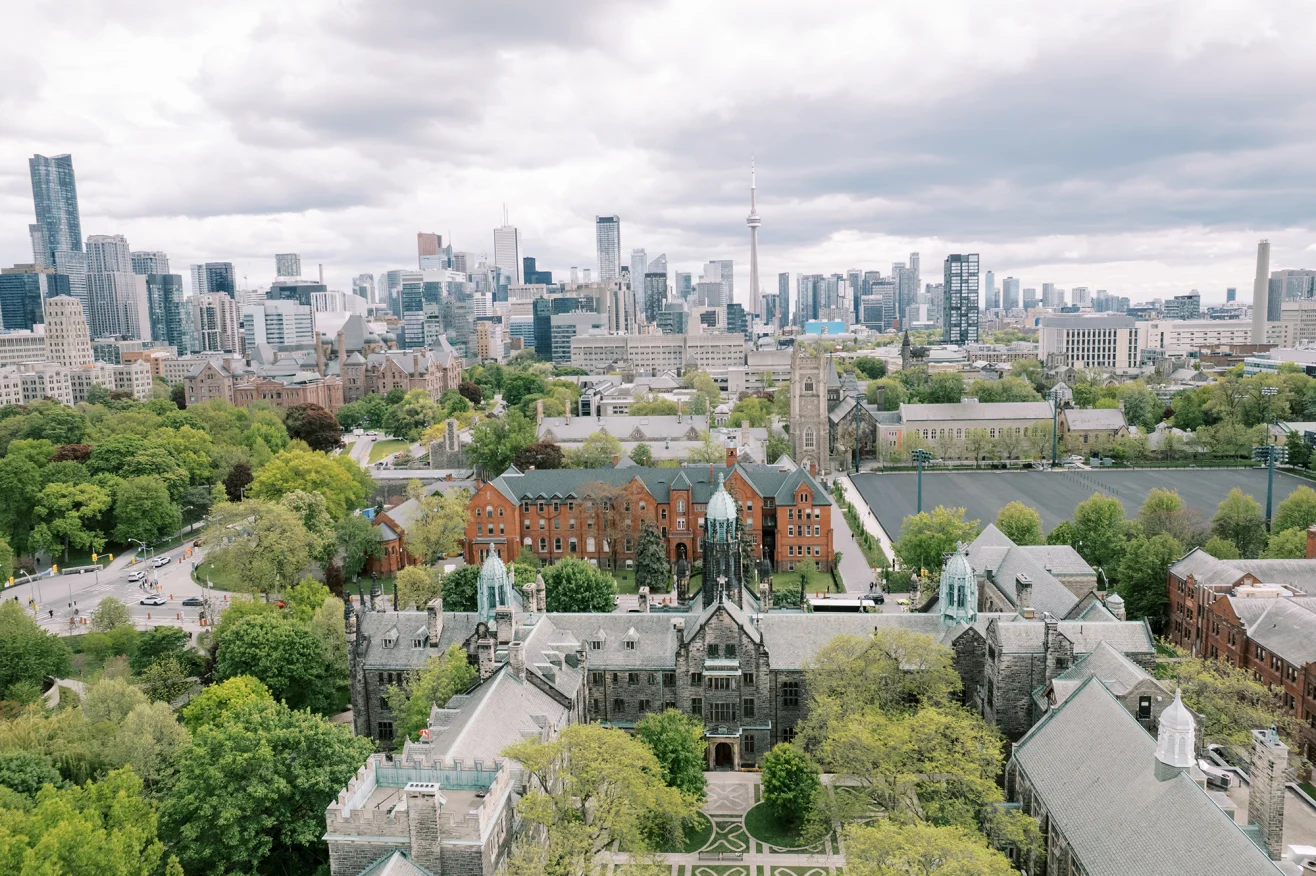
Toronto has become a major global center for artificial intelligence, driven by decades of research at the University of Toronto and the influence of Nobel Prize-winning computer scientist Geoffrey Hinton. What began as relatively obscure work on machine learning and artificial neural networks has helped create an ecosystem that now attracts major technology companies, startups, researchers and investors.
The city’s rise has taken place alongside Silicon Valley rather than in direct competition with it. Google, Nvidia, Meta and Microsoft have established offices or research operations in the Toronto area, while Canadian AI companies have built businesses that increasingly operate across North American and global markets.
The concentration of talent is now visible in industry rankings. CBRE’s 2026 Scoring Tech Talent report places Toronto third among North American tech talent markets, behind the San Francisco Bay Area and Seattle and ahead of New York. The report also found that Toronto had 33,419 AI-related workers as of June 2026, making it one of the largest AI talent clusters on the continent. CBRE’s 2026 tech talent analysis also shows that Toronto, Montreal and Vancouver together account for 60% of Canada’s AI-specialty talent.
That position has roots in research that began decades ago. Hinton arrived at the University of Toronto in 1987 after spending five years as a professor at Carnegie Mellon University. He continued working on artificial neural networks at a time when the field attracted relatively limited attention. His research and the work of students who trained in Toronto eventually became central to the development of modern deep learning.
The resulting ecosystem extends beyond universities. The Vector Institute, which Hinton co-founded, was launched in Toronto in 2017 to advance AI research and help translate breakthroughs into practical applications. Its network now connects researchers, universities, companies and public institutions across Canada.
Toronto’s AI development has also attracted investment outside the technology sector. Pharmaceutical company Sanofi announced a $294 million investment in its Toronto AI Centre of Excellence in 2026, expanding a facility that works on digital and AI solutions used across its global operations. The investment demonstrates how Toronto’s AI expertise is increasingly relevant to industries such as healthcare and pharmaceuticals, not just software.
Toronto’s AI Ecosystem Was Built Around Talent
The city’s advantage is not based on a single company or a single generation of researchers. Instead, Toronto has developed an unusually deep pipeline of people moving between universities, research institutes, startups and large technology companies.
Hinton’s former students and colleagues are an important part of that network. Nick Frosst, who studied under Hinton at the University of Toronto, became one of the first employees of Hinton’s Google AI lab in Toronto in 2017. He later co-founded Cohere, which has grown into one of Canada’s most prominent enterprise AI companies.
Frosst chose to build Cohere in Toronto rather than follow the traditional path of relocating to Silicon Valley. He has pointed to the city’s combination of technology, academia, business and culture as a reason to remain there.
That combination has become part of Toronto’s appeal to founders and employees. Gennady Pekhimenko, who sold his startup CentML to Nvidia and subsequently became a senior director of AI software at the chipmaker, has highlighted the city’s international character as an advantage when recruiting people from outside Canada.
Healthcare has also played a role. Tomi Poutanen, the founder and CEO of healthcare AI company Signal 1, has pointed to Canada’s healthcare system and Toronto’s concentration of hospitals as advantages for companies developing medical technology.
Immigration is another factor in Toronto’s ability to attract specialized workers. Canadian policies have provided an alternative for some technology professionals who face difficulties obtaining or renewing U.S. work authorization. One early CentML hire, for example, was an Amazon engineer who could not renew an H-1B visa in the United States but was able to obtain a Canadian work permit.
For investors, Toronto’s location also provides access to major North American markets. The city is within relatively short flight times of New York, Washington, D.C. and Chicago, allowing companies to operate from Canada while remaining closely connected to large U.S. commercial centers.
The ecosystem therefore operates at several levels. Universities produce researchers and graduates, institutes support advanced AI work, startups commercialize technology and multinational companies provide additional research infrastructure and employment. That cycle helps explain why Toronto’s AI presence has continued to expand rather than remaining concentrated around one institution.
Toronto Is Building an AI Alternative to Silicon Valley
Toronto does not have the scale of San Francisco’s technology sector. CBRE estimates that the San Francisco Bay Area still has roughly 20% more tech workers than Toronto. Yet Toronto’s smaller scale can also offer companies different operating conditions.
Lower costs in some areas, including housing, combined with publicly funded healthcare and strong public schools, can make the city attractive to workers and employers. Toronto-based founders also argue that the market has lower employee turnover than Silicon Valley, where highly skilled workers can face constant competition for new opportunities.
The cultural difference can be just as important. Toronto’s technology sector exists alongside large financial, healthcare, academic, cultural and creative communities. That creates an environment that is less dominated by technology companies alone.
For Frosst, that diversity encourages debate. He has described his relationship with Hinton as an example. The two continue to disagree about fundamental questions surrounding AI, including whether increasingly capable systems should be understood as a new kind of being or primarily as a tool. Despite those differences, they remain friends and regularly play chess.
The broader economic opportunity is increasingly becoming part of Canada’s national strategy. The federal government’s 2026 AI for All strategy identifies AI as a major driver of innovation and calls for stronger domestic capabilities, including more than $2 billion in existing investments in Canadian AI compute capacity. Canada’s National Artificial Intelligence Strategy also emphasizes AI safety, adoption, research, infrastructure and the development of Canadian companies.
The private sector is moving in the same direction. Sanofi’s Toronto investment is one example of a multinational company expanding its AI capabilities in the city. Sanofi’s Toronto AI Centre of Excellence now supports the development and deployment of digital and AI solutions across more than 90 countries.
Toronto-based startups are also demonstrating that Canadian companies can raise capital without relocating their headquarters to California. Autonomous-driving company Waabi, founded by former Uber autonomous-driving executive Raquel Urtasun, was established in Toronto while testing its technology primarily in the American Southwest.
In January 2026, Waabi announced a $750 million Series C round and an additional milestone-based investment from Uber. The combined financing represented more than $1 billion in new funding and, according to the company, the largest fundraise in Canadian history. Waabi’s 2026 funding announcement underscored how investors can back Canadian AI companies pursuing markets far beyond Canada.
That dynamic is central to Toronto’s position in the global AI economy. The city does not need to replicate Silicon Valley to compete. Its model is increasingly based on research institutions, specialized talent, multinational investment and companies capable of serving international markets from a Canadian base.