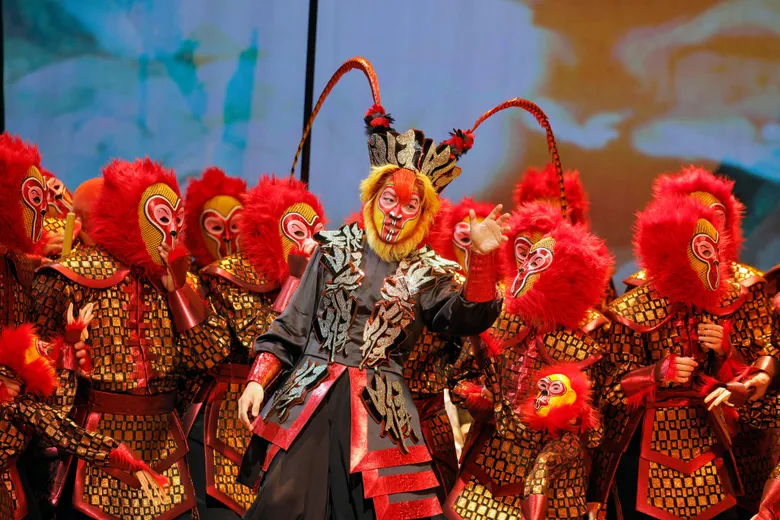
For more than four centuries, the legendary Monkey King—Sun Wukong—has been a cornerstone of Asian literature, entertainment, and spiritual symbolism. Today, this rebellious kung fu–fighting hero is experiencing an unprecedented surge of visibility in the United States. His presence in a 2023 global animated film, a bestselling 2024 video game, and a sold-out opera in San Francisco signals not only renewed interest in the character, but also a broader cultural shift in how American audiences engage with Asian mythology. As the story expands across digital media, visual arts, and live performances, the Monkey King is becoming a bridge between centuries-old tradition and modern Western entertainment.
Sun Wukong’s mythology, rooted in the Ming Dynasty classic Journey to the West, has long fascinated audiences across Asia. Yet his layered personality—rebellious, chaotic, wise, and endlessly curious—aligns remarkably well with modern Western storytelling that celebrates anti-heroes and unconventional protagonists. This evolving interest has opened the door for new adaptations that reinterpret his story for contemporary viewers, including gamers, animation fans, and opera enthusiasts.
Sun Wukong’s Origins and Transformation Through Generations
In the original 16th-century narrative, Sun Wukong bursts from a stone with fully formed ambition, determination, and magical potential. His quest for immortality, supernatural training, and relentless pursuit of personal power create a complex character who embodies courage, humor, and spiritual growth. Despite possessing extraordinary abilities such as cloud-surfing, shape-shifting, and wielding an expanding golden staff, he remains an outcast who challenges divine authority.
Throughout the 20th century, the Monkey King appeared in countless reinterpretations that positioned him as a symbol of rebellion, modernization, and cultural identity. Some works portrayed him as a proletarian champion resisting oppression, while others reimagined him as a futuristic cyborg. These shifting portrayals played an essential role in keeping the character relevant across generations and in diverse cultural contexts. Today, new fans discovering the character often begin with digital adaptations, multimedia reinterpretations, or online resources such as Wikipedia, the Smithsonian Asian Pacific American Center, and cultural archives from the Asian Art Museum, which explore the character’s historical legacy. These platforms have helped introduce the Monkey King to broader audiences seeking accessible information about traditional Asian mythology.
A New Era: Why American Audiences Are Embracing the Monkey King Now
While Sun Wukong has been a legendary icon in China, Japan, Korea, and Southeast Asia for centuries, American interest has grown rapidly only in the last decade. A combination of factors—including increased exposure to global streaming content, the popularity of anime and manga, and rising representation of Asian narratives in U.S. media—has reshaped how Americans engage with mythological figures.
This cultural shift has paved the way for ambitious reinterpretations of the Monkey King across entertainment platforms. The rise of globally distributed animation on services like Netflix has played a major role, allowing audiences to explore characters traditionally absent from Western storytelling. Additionally, award-winning graphic novels and contemporary stage adaptations have introduced the character to readers, artists, and creators who previously viewed him as too niche or culturally specific.
As Asian American creators continue integrating Sun Wukong into modern narratives that address identity, migration, and intercultural dialogue, the Monkey King is becoming an emblem of creative fusion. Younger audiences, already immersed in Japanese anime, Korean pop culture, and global streaming media, find the character’s humor, rebelliousness, and hybrid personality both entertaining and relatable. With new video games, theatrical productions, and literary reinterpretations emerging, his momentum is expected to grow, reinforcing the Monkey King’s place in the evolving landscape of American pop culture.
The Monkey King as a Cross-Cultural Symbol of Freedom and Creativity
The Monkey King’s expanding influence in the United States reflects more than just entertainment trends; it symbolizes a deeper cultural exchange between East and West. His character embodies values that resonate across borders: freedom, curiosity, resistance to authority, and the pursuit of spiritual growth. These themes have allowed creators and performers to explore innovative storytelling methods that blend ancient mythology with contemporary artistic expression.
Artists and scholars often highlight Sun Wukong’s multi-faceted personality—playful yet philosophical, rebellious yet wise—as the reason he connects so strongly with modern audiences. Whether through digital experiences, performing arts, or educational initiatives, the Monkey King’s narrative now reaches classrooms, museums, and cultural organizations throughout the country. Institutions such as the Library of Congress preserve early translations, while modern cultural hubs integrate his legacy into programming that explores global literature and mythology.
With new adaptations on the horizon, from stage projects to interactive gaming universes, the Monkey King is poised to continue expanding his influence. His growing presence in American culture marks a milestone in global storytelling, demonstrating how ancient characters can evolve, adapt, and thrive in new environments without losing their essence.