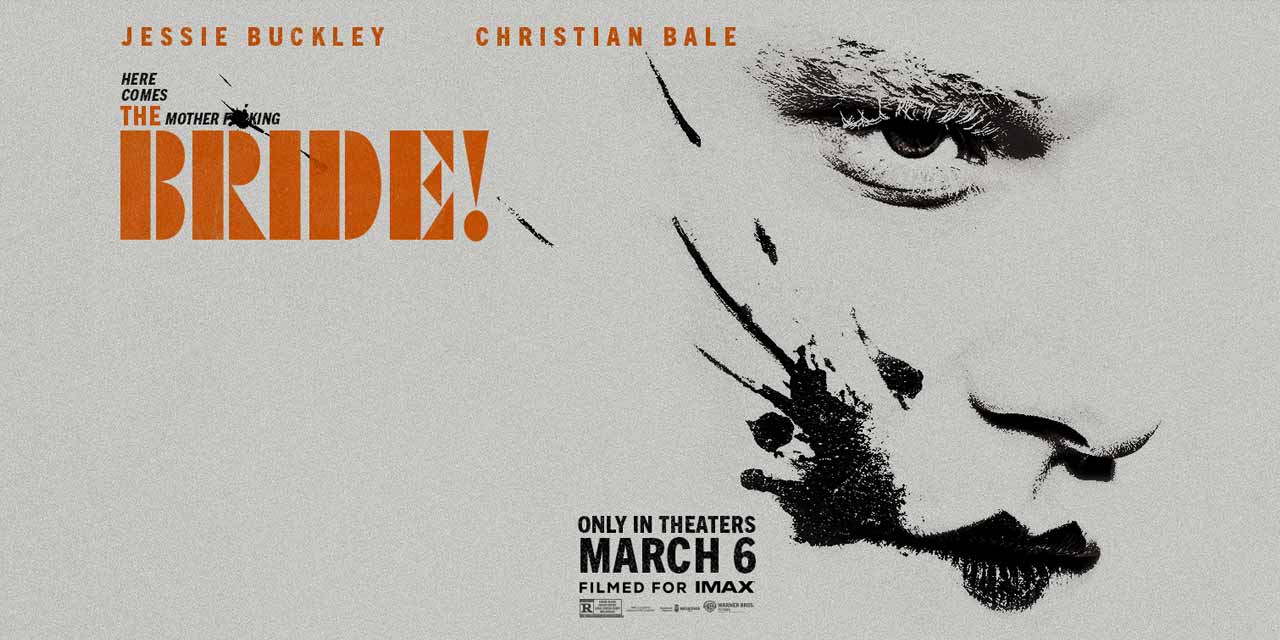
Maggie Gyllenhaal expands the mythology of Frankenstein with an ambitious cinematic experiment in The Bride!, a film that transforms the silent character from the 1935 classic into a fully realized protagonist with her own voice, identity, and agency. Starring Jessie Buckley and Christian Bale, the movie merges gothic horror, noir drama, musical fantasy, and social commentary into a single production that aims to reinvent one of cinema’s most iconic monster tales.
Set in a stylized 1930s urban landscape, the film reimagines the Bride not simply as a creation but as a woman reborn into a hostile world. Her resurrection triggers a narrative that explores power, autonomy, and companionship while revisiting the themes introduced in Mary Shelley’s original novel.
The result is a film of sweeping ambition that moves between genres and tones, reflecting the director’s willingness to experiment with narrative form and visual storytelling.
A New Voice for the Bride of Frankenstein
In the original 1935 film Bride of Frankenstein, the Bride barely speaks and exists primarily as a symbolic figure. The Bride! alters that dynamic by granting the character an independent identity and emotional arc. Jessie Buckley portrays the resurrected woman with intensity and unpredictability, presenting her as both fragile and ferocious.
The story begins when Dr. Euphronious, portrayed by Annette Bening, revives the Bride using experimental science. The character awakens disoriented and scarred by the reanimation process, her platinum hair and stitched features echoing the iconic imagery of the original monster film. Yet the narrative quickly diverges from classic horror conventions by exploring the psychological transformation of a woman reborn into an unfamiliar world.
The film draws inspiration from literary and cinematic history, particularly the legacy of <a href=”https://www.britannica.com/biography/Mary-Wollstonecraft-Shelley”>Mary Shelley</a>, whose novel Frankenstein continues to influence modern storytelling. By weaving the author herself into the narrative, the film creates a meta-layer that examines how the story has evolved across generations of adaptations.
This reinterpretation situates the Bride not as an accessory to the monster but as a central figure confronting the consequences of creation, autonomy, and survival.
Christian Bale’s Monster Brings Emotional Depth
While the Bride commands the film’s central narrative, Christian Bale’s portrayal of the creature—called Frank in this adaptation—adds a powerful emotional foundation to the story. Unlike the traditional slow-moving monster, Frank is portrayed as deeply introspective, carrying the weight of a century of isolation.
Bale’s performance blends vulnerability with restrained menace, presenting a creature who longs for connection yet remains capable of destructive rage. His loneliness becomes a central theme as he searches for companionship in a world that fears him.
In a series of imaginative sequences, Frank escapes into cinema, watching musical performances from a fictional film star played by Jake Gyllenhaal. These scenes evoke the glamour of classic Hollywood musicals and reference the legacy of performers such as <a href=”https://www.britannica.com/biography/Fred-Astaire”>Fred Astaire</a>. Through dreamlike moments, Frank imagines himself dancing across the screen, a stark contrast to his fractured physical appearance.
The character’s fascination with film reflects a broader tribute to Hollywood history, while also highlighting the emotional refuge that cinema can offer.
Genre-Blending Storytelling and Expansive Visual Design
One of the most distinctive aspects of The Bride! is its willingness to shift between genres. The movie incorporates elements of musical fantasy, noir detective stories, romantic drama, and monster horror, producing a hybrid narrative style that constantly surprises viewers.
Visually, the film embraces a large-scale production design reminiscent of classic Hollywood spectacles. From underground nightclubs to brightly lit urban streets, the story moves through elaborate sets and stylized environments. The neon glow of Times Square and the choreography of musical interludes give the film a theatrical atmosphere that contrasts with its darker themes.
The production also references cinematic history through stylistic nods to earlier films and genres. Its reinterpretation of the Frankenstein myth inevitably recalls the enduring influence of <a href=”https://www.britannica.com/topic/Frankenstein-novel-by-Shelley”>Frankenstein</a>, one of literature’s most frequently adapted stories.
At the center of the narrative is the evolving relationship between Frank and the Bride. As they confront threats from criminals and law enforcement, their connection becomes the emotional core of the film. Their bond transforms from reluctant alliance into mutual protection, reinforcing the film’s themes of companionship and equality.
Through its sweeping visual ambition and unconventional storytelling choices, The Bride! positions itself as both a tribute to classic horror and a modern reinterpretation of one of the genre’s most enduring characters.
The film ultimately highlights the continuing cultural influence of Frankenstein stories, which remain a cornerstone of the horror genre and popular culture. Resources like <a href=”https://www.imdb.com”>IMDb</a> and <a href=”https://www.rottentomatoes.com”>Rotten Tomatoes</a> already reflect the growing interest among audiences and critics eager to explore this new cinematic version of the Bride’s story.