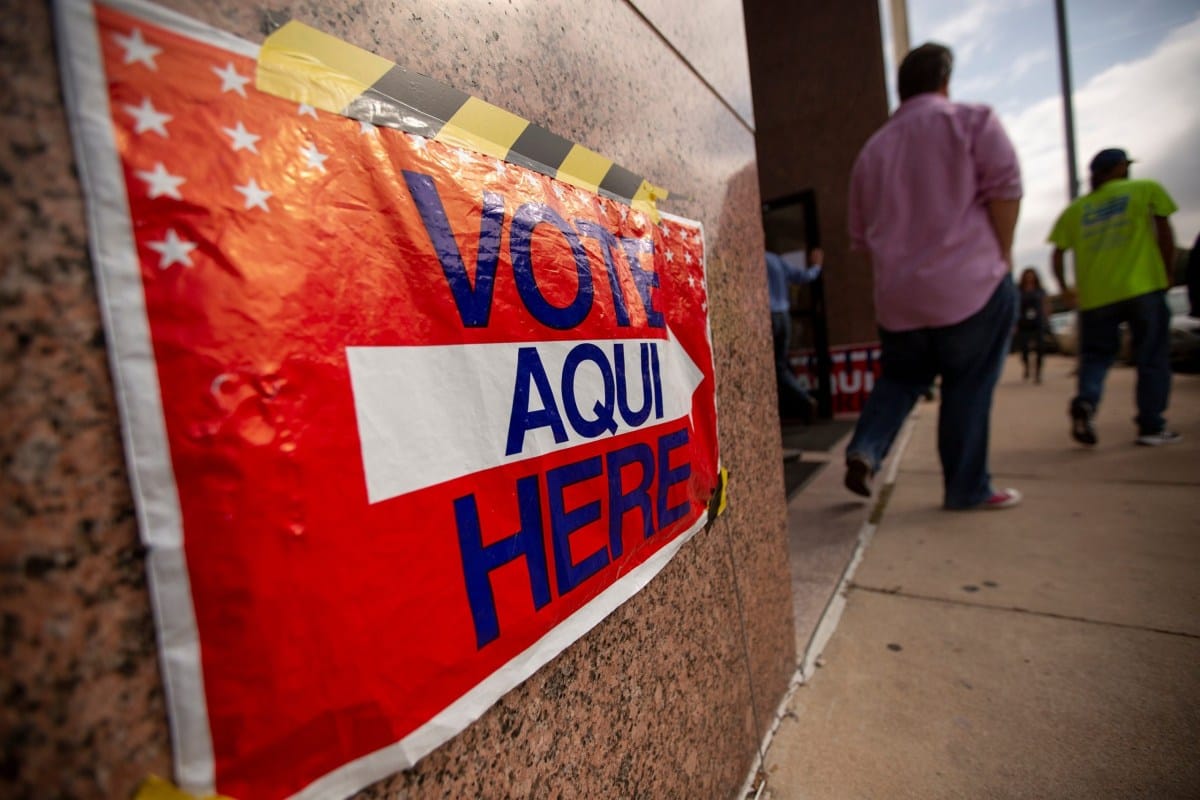
Texas primary elections are emerging as an early political barometer for one of the most closely watched shifts in American politics: whether Latino voters who moved toward Republicans in 2024 will remain aligned with the GOP. The results could shape strategies for both parties heading into the next national election cycle and determine whether recent Republican gains represent a durable realignment or a temporary swing driven by economic conditions.
The growing influence of Latino voters in the state has transformed the political landscape, particularly along Texas’ southern border. These communities played a critical role in helping Republicans win areas that had historically leaned Democratic, reshaping electoral maps and strengthening the party’s congressional prospects. Analysts now view the primaries as a real-time test of whether those gains can be sustained.
Latino voters as Texas’ decisive swing bloc
Demographic growth has made Latino voters one of the most influential constituencies in Texas politics. Many are younger and newly engaged in elections, expanding the state’s electorate and increasing unpredictability in statewide races. Unlike traditional partisan blocs, Latino voters in Texas have shown a willingness to shift based on specific policy priorities rather than longstanding party loyalty.
Political observers note that this flexibility has elevated the group into a decisive swing vote. In 2024, support for Donald Trump among segments of Latino voters helped Republicans expand their reach, especially in border counties that had long resisted GOP messaging. That momentum encouraged Republicans to redraw congressional maps in ways that rely heavily on continued Latino backing, raising the stakes of current primary contests.
At the same time, early signs suggest the electorate may not remain static. Increased engagement across both parties has created uncertainty about turnout patterns and long-term alignment, making the Texas primaries a pivotal indicator of shifting political winds.
For broader election context, readers often compare trends with national data from sources like USA Today (https://www.usatoday.com), Reuters (https://www.reuters.com), The Hill (https://thehill.com), and Politico (https://www.politico.com), where evolving demographic analyses continue to shape campaign strategies.
Economic pressures reshape voter priorities
Economic issues remain central to Latino voter sentiment in Texas. In 2024, concerns over inflation, job opportunities, and energy prices drove many voters toward Republican candidates who emphasized growth and affordability. Those same issues are now being reexamined as voters assess whether economic improvements have materialized.
While some indicators point to stabilizing inflation and easing interest rates, lingering cost-of-living concerns could erode Republican advantages. Rising housing costs and uneven wage growth have become focal points in campaign messaging, with both parties attempting to frame themselves as better stewards of economic stability.
Advocacy groups working to mobilize Latino voters argue that the economy will once again be the decisive factor in primary participation and general election outcomes. Campaign messaging increasingly highlights practical concerns such as fuel prices, job access, and small business growth, reflecting the everyday realities that shape voter behavior.
Analysts say that if economic optimism fails to translate into personal financial relief, the GOP’s recent gains could prove fragile. Conversely, measurable improvements in household finances could reinforce the Republican coalition and cement Latino support in competitive districts.
Immigration enforcement and political backlash
Immigration policy remains another defining issue, particularly following intensified enforcement efforts under the current administration. Critics argue that aggressive actions by U.S. Immigration and Customs Enforcement have sparked renewed anxiety among Latino communities, potentially reshaping political loyalties.
Polling trends suggest that concerns over civil liberties and family security may influence turnout in unexpected ways. Some observers are closely watching whether Latino-heavy counties show increased participation in Democratic primaries, which could signal dissatisfaction with hardline immigration policies.
At the same time, Republican strategists contend that Democrats still face credibility challenges among Latino voters, especially on immigration messaging. Internal debates within the Democratic Party about enforcement and border policy could complicate efforts to reclaim voters who shifted right in recent cycles.
The open primary system in Texas adds another layer of complexity, allowing voters to choose which party’s primary to participate in regardless of party affiliation. This flexibility makes turnout patterns especially revealing, as shifts in participation can offer clues about broader political realignment.
Scholars from institutions like the University of Houston emphasize that Latino voters are not monolithic and may respond differently depending on regional dynamics, generational divides, and policy priorities. That variability makes statewide conclusions difficult but increases the importance of local results.
As ballots are cast across Texas, both parties are watching closely for signals that could define the next phase of American electoral politics. Whether Latino voters remain a cornerstone of Republican momentum or begin drifting back toward Democrats may not be decided in a single election, but the Texas primaries are likely to provide the clearest early indication yet of where this crucial electorate is headed.