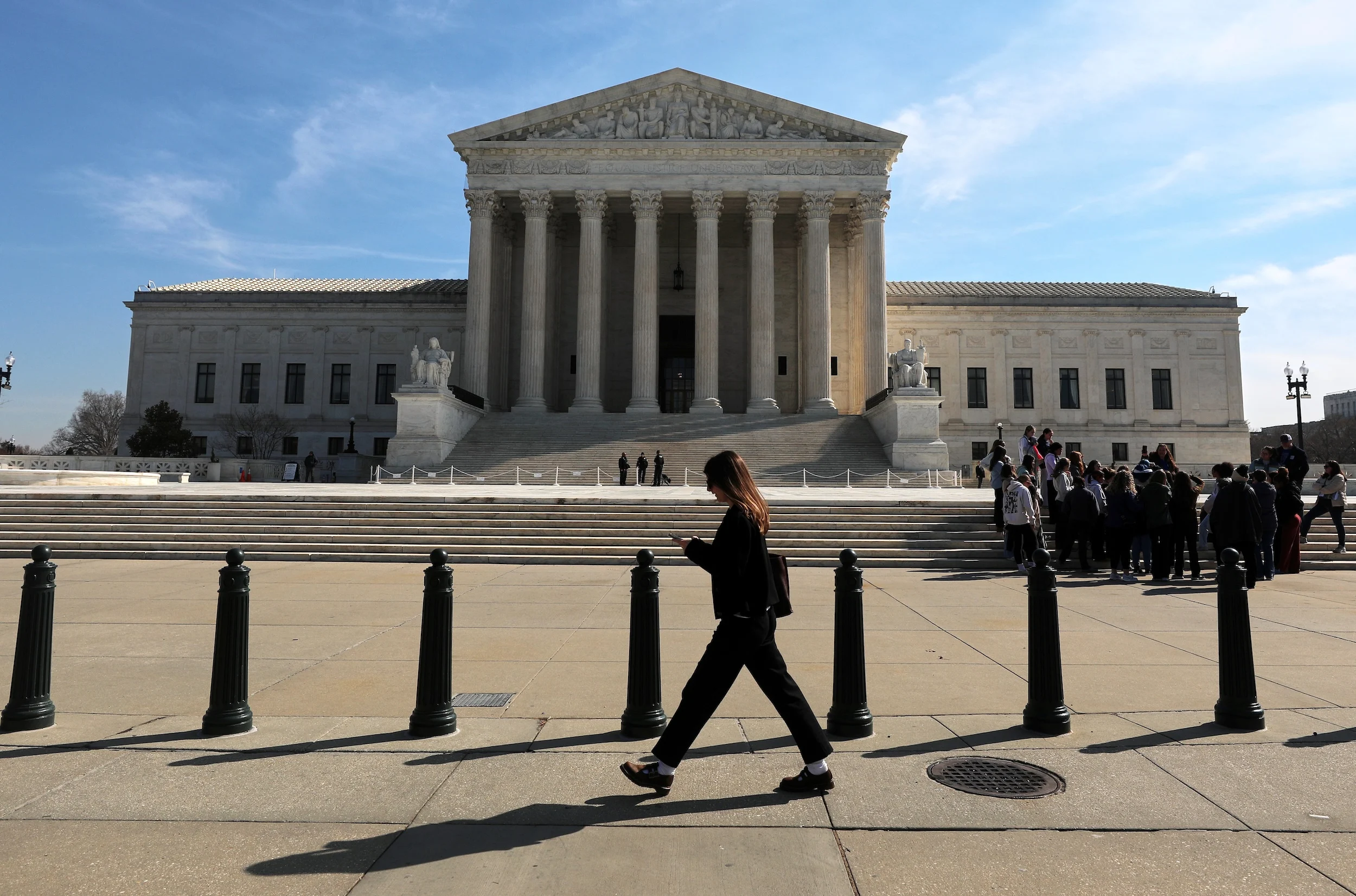
Voters in Texas and North Carolina head to the polls Tuesday in some of the earliest and most consequential statewide primaries of the 2026 election cycle. The outcomes are expected to influence the balance of power in Congress and offer insight into how voters are responding to President Donald Trump’s second term.
With control of the U.S. Senate potentially at stake, both parties are closely watching turnout patterns, ideological shifts, and the strength of establishment candidates versus challengers. The primaries also serve as a testing ground for broader national issues, including inflation, immigration enforcement, and partisan loyalty.
Texas GOP Senate Primary Tests Loyalty to Trump
In Texas, the Republican Senate primary has become a referendum on alignment with President Trump. Incumbent Senator John Cornyn, first elected in 2002, faces a competitive challenge from Texas Attorney General Ken Paxton and Congressman Wesley Hunt.
Cornyn has emphasized his long record of conservative votes and support for Trump-backed policies. However, critics argue that his tenure reflects an earlier era of Republican politics. Paxton, who has served as attorney general for more than a decade, has campaigned as a staunch Trump ally, portraying his legal controversies as politically motivated. Hunt, representing suburban Houston, has positioned himself as a next-generation conservative, potentially strong enough to push the race into a runoff if no candidate secures more than 50 percent of the vote under Texas election law.
Election procedures and voter registration information are detailed on the Texas Secretary of State’s official site at https://www.votetexas.gov, where voters can confirm polling locations and ballot requirements.
On the Democratic side, Representative Jasmine Crockett and State Representative James Talarico are competing for their party’s nomination. Democrats have not won a statewide race in Texas in more than 30 years, but party strategists believe demographic shifts and economic concerns could narrow the gap in November.
North Carolina Senate Race Draws National Attention
In North Carolina, the Republican primary centers on Michael Whatley, former chair of the Republican National Committee, who is seeking his party’s nomination for U.S. Senate with Trump’s endorsement. His campaign has focused on party unity and national conservative priorities.
Democrats are rallying behind former Governor Roy Cooper, whose decision to run cleared the primary field of other major contenders. Cooper has not only emphasized economic development and healthcare access but also framed the election as pivotal to restoring Democratic influence in the Senate.
Voting logistics, including polling place lookups and district information, are available through the North Carolina State Board of Elections at https://www.ncsbe.gov. The state’s Senate contest is viewed as one of the most competitive nationwide, particularly as North Carolina remains politically divided between urban Democratic strongholds and rural Republican bases.
Beyond the Senate race, several House primaries could indicate dissatisfaction within party ranks. Redistricting changes enacted by the Republican-controlled legislature have reshaped multiple congressional districts, increasing partisan advantages in some areas while creating new battlegrounds in others.
Latino Voters, Redistricting, and Congressional Control
Latino voters in Texas are emerging as a decisive bloc in statewide elections. Economic concerns, including rising housing costs and inflation, remain top issues. Immigration enforcement policies also continue to influence voter preferences. Analysts suggest that turnout trends in heavily Latino counties could provide early signals about general election dynamics.
Redistricting efforts in both states have reduced the number of competitive House seats compared to previous cycles. In Texas, lawmakers revised congressional maps to potentially create up to five additional Republican-leaning districts. North Carolina’s revised maps similarly strengthened Republican prospects in several regions. Details about congressional representation and district boundaries can be found at https://www.house.gov.
National implications extend beyond the two states. Control of the Senate and House in 2026 will shape legislative priorities, budget negotiations, and federal oversight. Information about Senate composition and election cycles is accessible through https://www.senate.gov, where voters can review current membership and committee assignments.
As primary voters cast ballots, party leaders are assessing whether grassroots dissatisfaction with establishment figures could reshape November’s general election contests. Texas and North Carolina, long viewed as Republican strongholds at the federal level, now stand at the center of a broader political recalibration that could determine congressional power for the remainder of the decade.