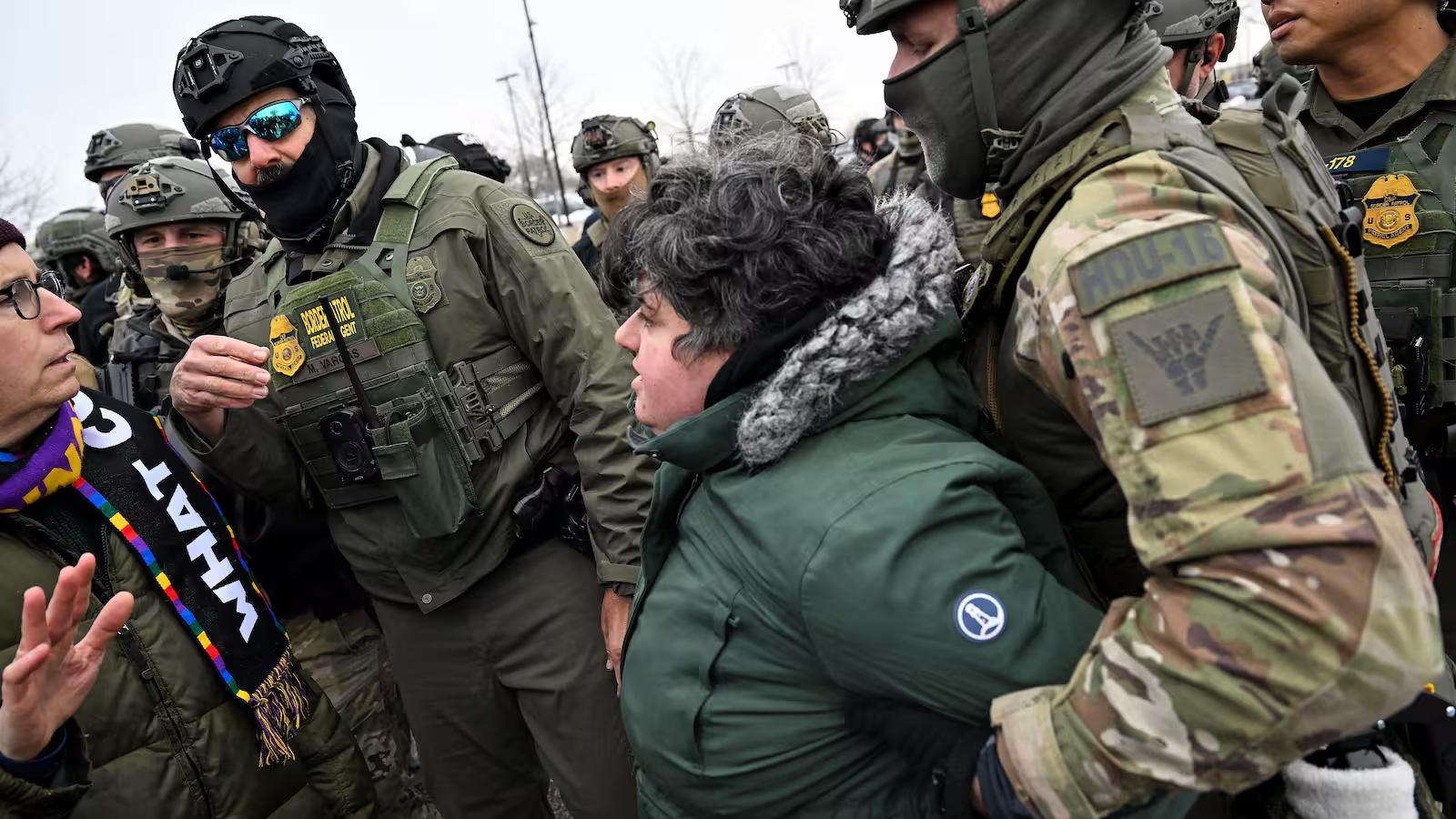
Swing voters who helped return President Donald Trump to the White House in 2024 are beginning to voice growing unease about the conduct of Immigration and Customs Enforcement, particularly following the fatal shooting of Renee Macklin Good in Minneapolis earlier this month. The incident has intensified debate over how federal immigration enforcement is being carried out, with some former Trump backers questioning whether ICE has crossed a line in its approach.
The concerns surfaced during a series of online focus groups with voters from Pennsylvania who shifted from supporting Joe Biden in 2020 to backing Trump in 2024. The discussions revealed a deeply divided outlook on immigration enforcement, accountability for the shooting, and the administration’s broader priorities at home and abroad.
Fatal Minneapolis Shooting Sparks Debate Over Enforcement Boundaries
The killing of Renee Macklin Good during an ICE operation has become a flashpoint for voters who had expected tougher immigration policies but not what some now describe as excessive force. Participants who had seen video footage of the incident expressed conflicting views about responsibility, with some blaming the ICE agent and others pointing to Macklin Good’s actions as a contributing factor.
Several voters argued that even in high-risk encounters, federal officers should prioritize de-escalation and avoid lethal force whenever possible. Others defended ICE personnel, saying enforcement officers operate in unpredictable and dangerous conditions. Still, the split reactions highlight a broader concern about how immigration policies are being executed on the ground.
The agency itself has grown dramatically in recent years, becoming one of the most heavily funded law enforcement bodies in the federal government. According to publicly available budget data, ICE funding has surpassed $9,000,000,000 annually, a figure that underscores the scale of its operations and the intensity of scrutiny it now faces. More details on the agency’s mission and structure can be found on the official ICE website, which outlines its enforcement priorities and legal authority.
Divided Accountability and Growing Frustration With ICE Operations
Among the swing voters who took part in the discussions, opinions were evenly split on whether ICE is “getting things about right” or has “gone too far.” While no one argued that the agency has not gone far enough, the fact that nearly half of the group believed ICE overstepped its bounds signals an emerging rift within a key segment of Trump’s electoral coalition.
Some participants emphasized their personal connections to law enforcement, saying they sympathize with officers tasked with carrying out deportation orders under difficult circumstances. Others countered that federal agents should be held to a higher standard, particularly when their actions result in civilian deaths.
The Minneapolis shooting has also renewed attention on the broader legal framework governing immigration enforcement. Federal statutes defining ICE’s authority, detention practices, and use of force policies are codified in U.S. law and can be reviewed through congressional records available at Congress.gov. For critics, the issue is not only about one tragic incident but about whether existing policies and oversight mechanisms are sufficient to prevent similar outcomes in the future.
Voters Urge Trump to Refocus on Economic Priorities
Beyond immigration enforcement, many of the same swing voters said they are increasingly frustrated with what they see as the administration’s lack of focus on domestic economic issues. While Trump has taken high-profile actions on the global stage, including renewed attention to Venezuela and Greenland, participants said their primary concern remains their own financial security.
Several voters expressed anxiety about rising costs of living, job stability, and wage growth, arguing that these issues should take precedence over foreign policy disputes. Official labor market data published by the U.S. Bureau of Labor Statistics shows that while employment levels remain relatively strong, inflation and housing costs continue to strain household budgets. More information on these economic trends is available at bls.gov, which tracks key indicators affecting American workers.
Some participants went further, questioning whether Trump genuinely understands the struggles of middle-class families. Others said they voted for him in 2024 because they believed he would avoid foreign entanglements and prioritize domestic prosperity. For these voters, the perception that the administration is now pursuing multiple international initiatives while economic pressures persist at home has only deepened their dissatisfaction.
The White House has defended its policies, pointing to ongoing trade negotiations, regulatory reforms, and tax measures aimed at boosting growth. Statements and policy outlines can be reviewed on the official White House website, which details the administration’s economic agenda and legislative priorities.
A Fracturing Coalition Ahead of a Contentious Political Year
The combination of concerns over ICE’s conduct and economic uncertainty has left many swing voters feeling politically homeless. While a majority of those surveyed expressed disapproval of Trump’s job performance, they were also sharply critical of Democrats, describing the opposition as disorganized and ineffective.
This uneasy balance suggests that both parties face challenges in consolidating support ahead of future elections. For Republicans, the task will be to reassure voters that immigration enforcement can be both firm and humane, while also demonstrating tangible progress on economic issues. For Democrats, the challenge lies in presenting a credible alternative that addresses voter frustration without alienating those who remain skeptical of the party’s leadership.
As the Minneapolis shooting continues to reverberate nationally, it has become a symbol of broader questions about the direction of U.S. immigration policy, the limits of federal enforcement power, and the priorities of a presidency navigating both domestic pressures and global ambitions.