US Supreme Court to Rule on Birthright Citizenship as Trump Challenges Fourteenth Amendment Interpretation
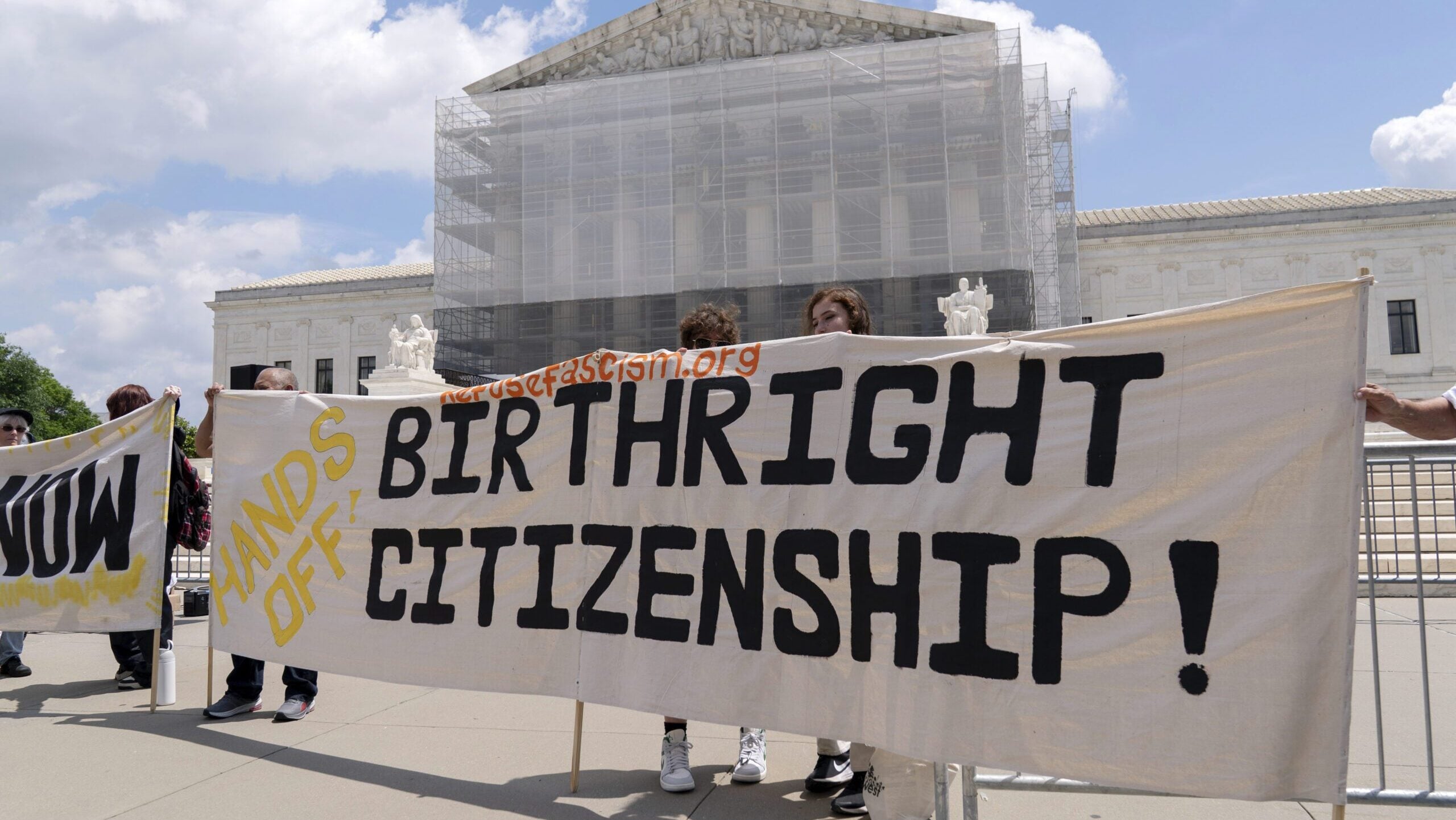
A constitutional debate with far-reaching implications for immigration policy and national identity is heading to the Supreme Court of the United States, where justices are expected to determine whether birthright citizenship is guaranteed under the Fourteenth Amendment.
The case stems from an executive action issued by Donald Trump at the beginning of his second presidential term, reigniting a long-standing legal and political debate over who qualifies as an American citizen under the Constitution.
The Fourteenth Amendment and Historical Precedent
At the center of the dispute is the Fourteenth Amendment to the United States Constitution, ratified in 1868 in the aftermath of the Civil War. The amendment was designed to overturn the effects of the Dred Scott v. Sandford decision, which denied citizenship to Black Americans, whether enslaved or free.
The amendment clearly states that all persons born or naturalized in the United States, and subject to its jurisdiction, are citizens. For more than a century, this language has been widely interpreted as guaranteeing birthright citizenship regardless of parental immigration status.
This interpretation was reinforced in 1898 when the Supreme Court decided United States v. Wong Kim Ark, affirming that a child born in the United States to foreign parents is entitled to citizenship under the Constitution.
In addition, Congress codified this principle into statutory law with the Nationality Act of 1940, further strengthening the legal foundation for birthright citizenship.
Trump’s Executive Order and Legal Challenge
Despite longstanding precedent, Trump has argued that the Constitution does not automatically grant citizenship to all individuals born on US soil. His administration maintains that the phrase “subject to the jurisdiction thereof” should exclude children born to parents without permanent legal status.
On his first day back in office, Trump issued an executive order seeking to deny automatic citizenship to children born in the United States if their parents are either undocumented immigrants or temporary visa holders.
This move immediately triggered legal challenges from multiple states, civil rights organizations, and immigration advocates, who argue that the order directly contradicts both constitutional text and Supreme Court precedent.
Legal experts note that altering the interpretation of birthright citizenship through executive action raises fundamental questions about presidential authority and constitutional limits.
A Potentially Historic Supreme Court Decision
As the case reaches the Supreme Court, its outcome could redefine the meaning of citizenship in the United States for generations. A ruling in favor of the executive order could significantly alter immigration policy, potentially affecting thousands of births each year.
Conversely, a decision reaffirming existing interpretations would reinforce over a century of legal precedent and maintain the current understanding of citizenship rights.
The case also highlights broader debates about constitutional interpretation, including whether the Court should rely on original intent, historical context, or modern legal standards when evaluating the Fourteenth Amendment.
Institutions such as American Civil Liberties Union and policy research groups like Migration Policy Institute are closely monitoring the proceedings, emphasizing the case’s potential to reshape immigration law and civil rights protections.
As arguments unfold, the nation awaits a decision that could redefine not only legal doctrine but also the fundamental question at the heart of the case: who is considered an American under the Constitution.