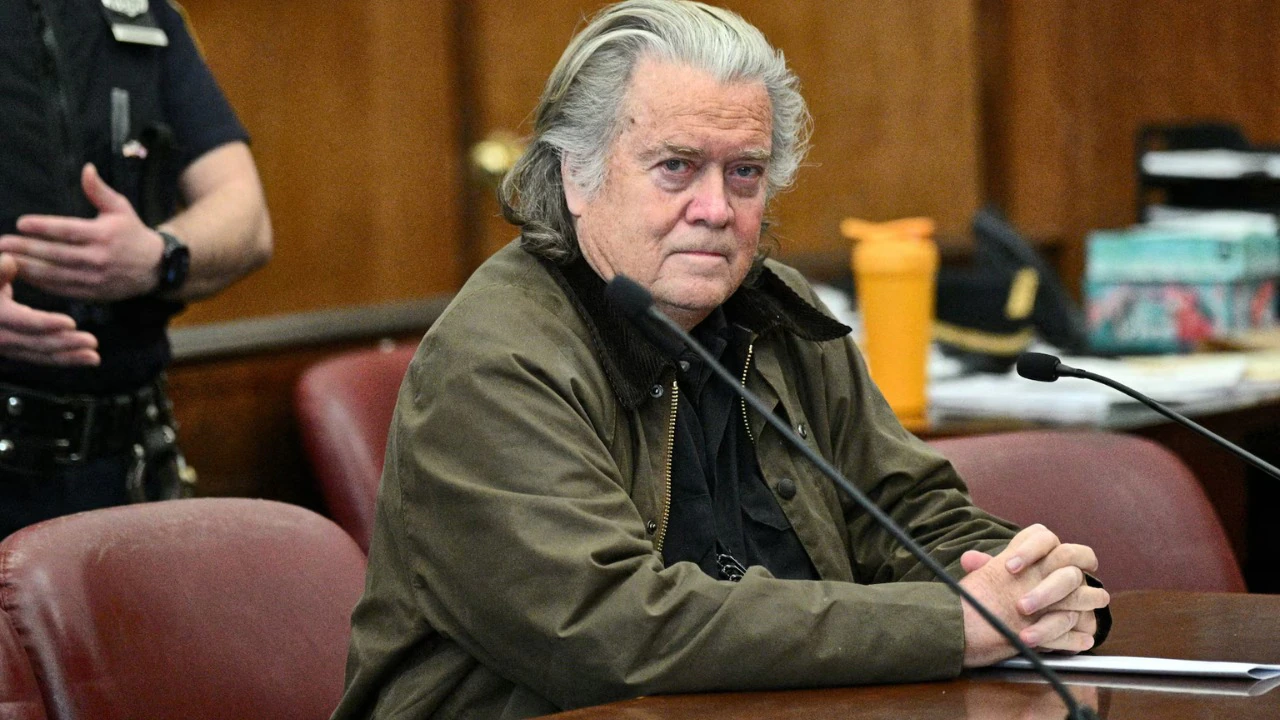
Supreme Court Decision Reshapes Bannon Legal Battle
The US Supreme Court has taken a significant step that could effectively end the criminal contempt case against Steve Bannon, a former advisor to Donald Trump. The decision allows the Trump administration to move forward with dismissing charges related to Bannon’s refusal to testify before Congress regarding the January 6, 2021 events.
By sending the case back to the US Court of Appeals for the District of Columbia Circuit and vacating the previous ruling, the court removed a major legal barrier. This procedural move does not directly declare Bannon innocent but enables lower courts to reconsider the case under new circumstances.
More details about the judicial process can be found on the official Supreme Court website: https://www.supremecourt.gov
Legal Arguments Centered on Executive Privilege
Bannon’s defense has consistently argued that his actions were not willful, a key requirement for a conviction of contempt of Congress. His legal team maintains that he relied on advice suggesting his testimony was protected under executive privilege invoked by former President Donald Trump.
The concept of executive privilege has long been debated in US legal and political systems, particularly in cases involving congressional oversight. Bannon’s position highlights ongoing tensions between the legislative and executive branches.
For further insight into executive privilege and constitutional law, readers can explore resources from Cornell Law School: https://www.law.cornell.edu
Background of the Case and Political Implications
Steve Bannon, a prominent and controversial figure during Trump’s presidency, was previously sentenced to four months in prison after defying a subpoena issued by the House Select Committee investigating the January 6 attack.
His refusal to testify placed him at the center of one of the most high-profile legal disputes stemming from the investigation. Before serving his sentence, Bannon had appealed to the Supreme Court, but the justices declined to intervene at that time.
The latest development signals a shift in how such cases may be handled, particularly when executive privilege is cited as a defense. It may also influence future interactions between congressional investigations and former executive officials.
Additional information on congressional oversight can be reviewed at the US Congress official site: https://www.congress.gov
What Comes Next for the Case
With the Supreme Court’s decision, the case now returns to a lower appellate court, where the path to dismissal is expected to be formalized. Legal experts suggest that this outcome could set a precedent for similar disputes involving contempt of Congress and claims of executive privilege.
The broader implications extend beyond Bannon himself, potentially affecting how future administrations respond to congressional subpoenas and investigations tied to major national events.
For ongoing updates on federal court proceedings, visit the US Courts official portal: https://www.uscourts.gov