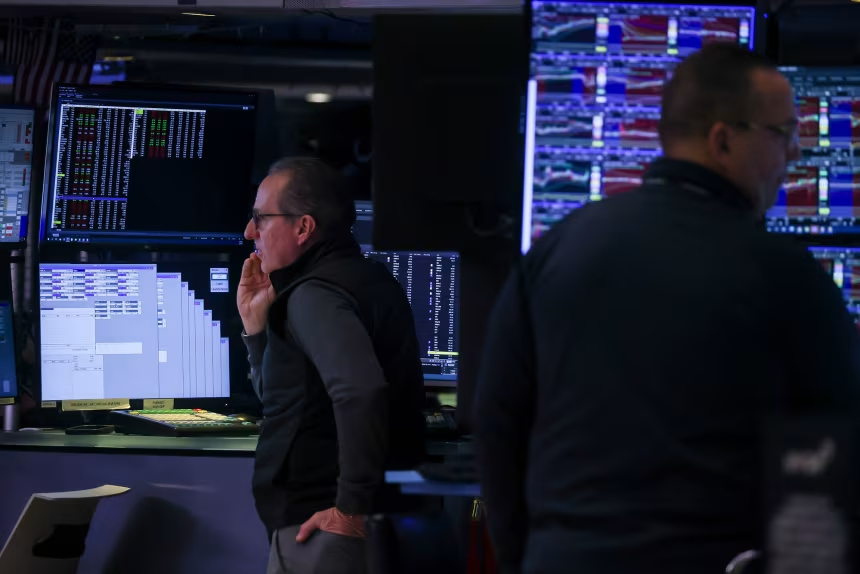
Volatility Returns to Wall Street
US stocks moved sharply lower as investors reacted to a renewed wave of uncertainty driven by artificial intelligence disruption fears and signs of a cooling labor market. Major indexes retreated as market participants reassessed risk, pushing volatility indicators sharply higher and signaling a shift toward caution. The Dow Jones Industrial Average dropped more than 600 points, while the S&P 500 and the Nasdaq Composite both posted notable losses, reflecting broad-based selling across sectors.
Market anxiety was underscored by a surge in the volatility index, often referred to as Wall Street’s fear gauge, which jumped above levels typically associated with heightened stress. Bond markets told a parallel story, with investors seeking safety in US Treasurys as yields moved lower. Expectations around future policy decisions from the Federal Reserve became more sensitive to incoming economic data, amplifying day-to-day swings in equities.
Artificial Intelligence Pressures the Tech Sector
Technology stocks bore the brunt of the selloff, particularly companies tied closely to software and artificial intelligence. Investors have grown increasingly uneasy about how rapidly evolving AI tools could disrupt traditional revenue models, reduce demand for human coding labor, and compress margins across the sector. An exchange-traded fund tracking software companies extended a prolonged losing streak, highlighting how persistent the pressure has become.
Shares of Microsoft continued to slide following its latest earnings report, as investors weighed the long-term costs of aggressive AI investment against near-term profitability. Meanwhile, Alphabet experienced a sharp decline after outlining plans to significantly increase spending on data centers and AI infrastructure. These moves reignited debate over whether the massive capital commitments fueling the AI boom will deliver returns quickly enough to justify current valuations.
Beyond equities, the risk-off mood spilled into alternative assets. Cryptocurrencies weakened as traders reduced exposure to speculative positions, while traditional safe havens such as gold and silver also experienced heavy volatility rather than providing shelter.
Labor Market Data Adds to Economic Unease
Fresh economic data added another layer of concern, suggesting that the US labor market has lost momentum over the past two months. A key report showed job openings falling to their lowest level in several years, reinforcing fears that hiring demand is softening more rapidly than expected. Additional figures on job cut announcements pointed to a notable increase in planned layoffs, particularly in sectors undergoing structural change.
These indicators, published by the Bureau of Labor Statistics, strengthened the perception that economic growth may be slowing. As investors attempt to balance weakening employment trends with persistent inflation risks and rapid technological change, markets have struggled to find stable footing. The combination of fragile labor signals and uncertainty around AI-driven transformation continues to fuel sharp price swings across global financial markets.