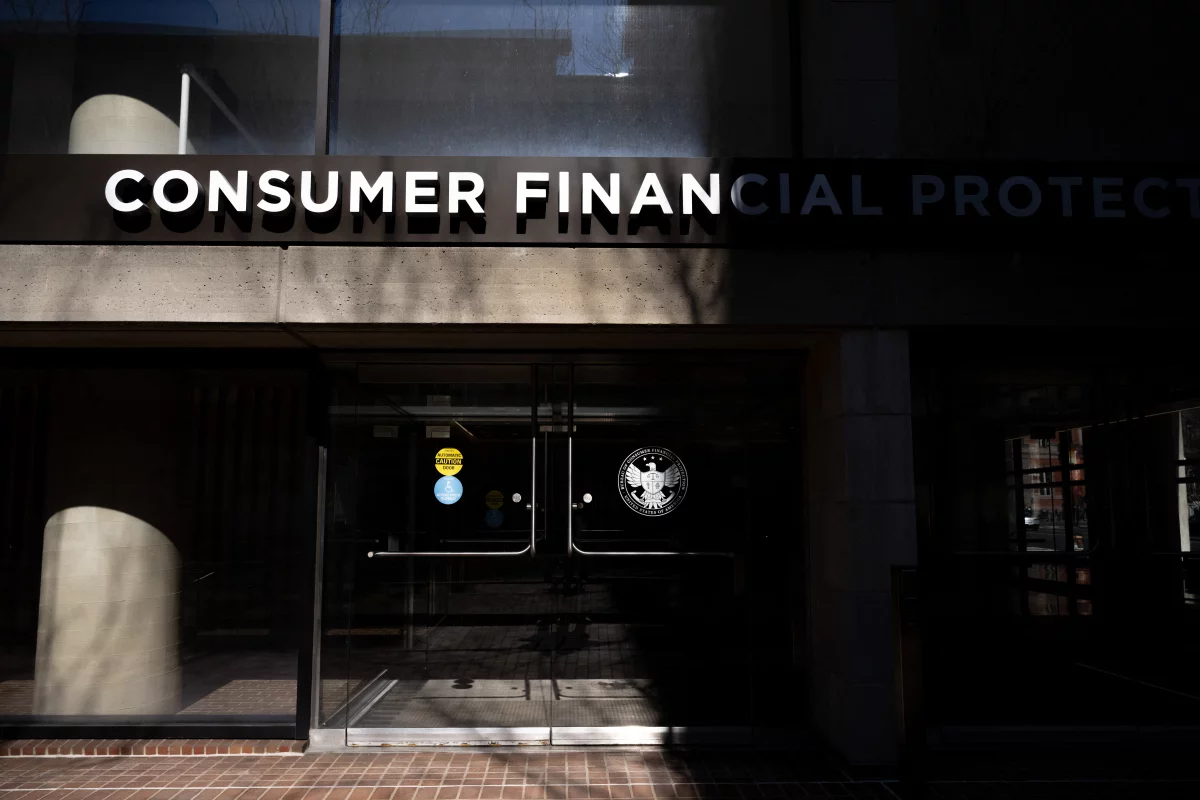
The Consumer Financial Protection Bureau has become the focal point of a major legal battle. This battle could significantly reshape consumer financial regulation in the United States. A coalition of state governments has filed a lawsuit seeking to block actions that would effectively strip the agency of its funding. They argue that the move threatens the legal foundation of consumer protections relied upon by millions of Americans.
Since its creation after the $700,000,000,000 financial crisis bailouts, the CFPB has operated under a unique funding model. This model is designed to protect it from political interference. Instead of relying on congressional appropriations, the agency draws its budget from the Federal Reserve system. This structure is meant to guarantee continuity in enforcement against abusive financial practices. According to the Consumer Financial Protection Bureau (https://www.consumerfinance.gov), the agency has helped consumers recover more than $20,000,000,000 through enforcement actions and settlements.
State officials warn that weakening this funding structure could undermine oversight of credit cards, mortgages, student loans, and digital financial products. This warning comes at a time when household debt and borrowing costs remain elevated across the country.
Legal Dispute Over Federal Reserve Funding Authority
At the center of the lawsuit is a disagreement over how federal law defines the source of CFPB funding. The statute authorizing the bureau allows it to draw from the Federal Reserve’s “combined earnings.” State attorneys general argue this term was intentionally broad. They contend that the administration’s interpretation—limiting funding only to net profits—ignores the Federal Reserve’s overall revenue-generating capacity.
The Federal Reserve (https://www.federalreserve.gov) has continued to play a central role in the U.S. financial system. This is true even during periods when it reports accounting losses tied to interest rate policy. States argue that redefining earnings in a narrow way creates an artificial funding crisis. It risks forcing the CFPB to shut down core operations as early as January 2026.
If that happens, critical functions such as consumer complaint intake, supervisory examinations, and enforcement coordination with states could be severely disrupted. Such disruption would weaken oversight across the financial sector.
Impact on Consumers and State Enforcement Efforts
State governments rely heavily on CFPB data and infrastructure to pursue enforcement actions against predatory lenders, fraudulent payment platforms, and abusive debt collectors. Through formal cooperation agreements, states access complaint databases. These databases allow them to identify systemic misconduct affecting consumers nationwide.
Organizations such as the National Association of Attorneys General (https://www.naag.org) have repeatedly emphasized the vital role of the CFPB. Without federal support, states warn they would face higher enforcement costs. They also would have reduced capacity to pursue cases involving financial harm that often reaches tens or hundreds of millions of dollars.
For consumers, the consequences could be immediate. Without CFPB oversight, complaints related to unauthorized fees, credit reporting errors, or mortgage servicing failures could go unresolved. These issues can cost families thousands of dollars, increasing financial stress for households already stretched by inflation.
Political Resistance and the Future of Financial Oversight
Opposition to the CFPB has long centered on concerns about its independence and enforcement authority. Critics argue the agency lacks sufficient accountability. Meanwhile, supporters counter that its independence is precisely what allows it to enforce consumer protection laws without political pressure.
The lawsuit reflects a broader debate over the role of independent regulators in safeguarding financial markets. Previous legal defenses by the U.S. Department of Justice (https://www.justice.gov) have affirmed that alternative funding structures can coexist with constitutional oversight. This coexistence is particularly relevant when Congress has explicitly authorized them.
As the case proceeds through federal court, its outcome could set a precedent affecting other independent agencies. This could reshape how consumer protection is enforced nationwide. State leaders argue that allowing the CFPB to be defunded would erode trust in financial institutions. This erosion would weaken market transparency and leave consumers exposed during rapid growth in fintech lending, buy-now-pay-later services, and digital banking platforms.
The legal fight underscores a fundamental question about the future of U.S. financial regulation. Can consumer protection agencies remain stable and effective amid political shifts? Or will funding disputes redefine the balance of power between regulators, states, and the financial industry?