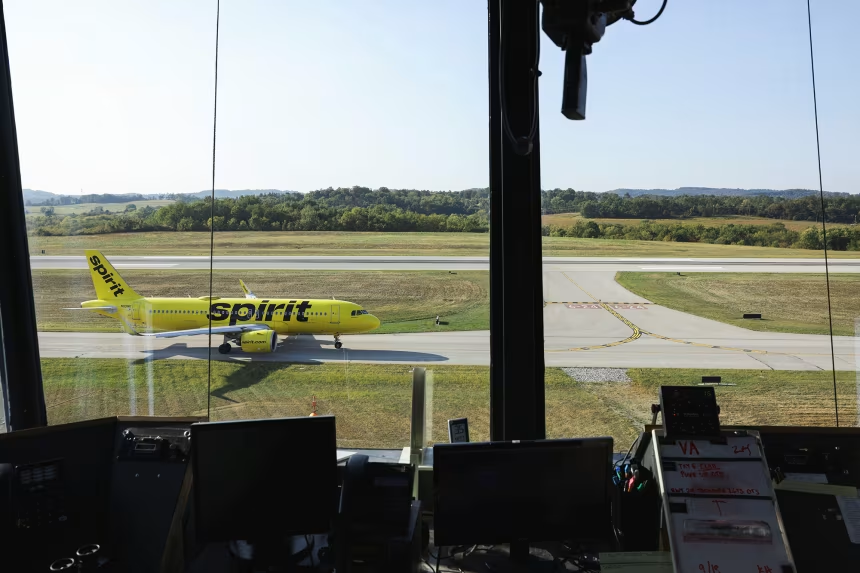
Spirit Airlines has struck a crucial agreement with creditors that will allow the ultra-low-cost carrier to emerge from bankruptcy protection and avoid liquidation, marking a pivotal moment for one of the most recognizable budget airlines in the United States.
The company confirmed that the restructuring plan is expected to take effect later this spring or early summer, positioning the airline to continue operating—albeit on a leaner scale. The deal follows prolonged financial strain that included significant operating losses and two separate bankruptcy filings within a relatively short period.
Spirit’s leadership described the agreement as a path toward stability and renewed competitiveness in a market increasingly shaped by shifting consumer preferences and heightened regulatory scrutiny.
Restructuring After Repeated Financial Strain
Like many carriers, Spirit was deeply affected by the pandemic’s disruption to travel demand. However, its recovery proved more fragile than that of full-service airlines. As travelers returned to the skies, many opted for premium seating, flexible booking policies and added amenities—features that are not central to Spirit’s bare-bones model.
According to filings made through the United States Bankruptcy Court system, companies that restructure under Chapter 11 often seek to reduce debt obligations while continuing operations. Spirit’s restructuring follows that familiar path: trimming costs, renegotiating liabilities and raising liquidity through asset sales.
The airline has sold aircraft and airport gate access in an effort to generate cash and reduce financial pressure. Staffing levels have also been cut significantly. Industry data indicates that during the upcoming summer season, Spirit plans to operate nearly 40% fewer flights compared with the same period in 2024, before its most recent bankruptcy filing.
Despite the contraction, executives argue that the airline will emerge more financially disciplined, with lower overhead and a clearer strategic focus.
Impact on the Broader Airline Market
Spirit’s survival matters beyond its own passengers. The carrier’s ultra-low-fare structure has long exerted competitive pressure on legacy airlines such as Delta Air Lines and United Airlines, compelling them to introduce basic economy fares to compete on price-sensitive routes.
A shutdown of Spirit could have reduced that competitive dynamic, potentially contributing to higher ticket prices industry-wide. Analysts have noted that even travelers who never book with Spirit benefit indirectly from its presence in the marketplace.
The airline will remain independent under the newly approved restructuring plan. In previous bankruptcy cases across the industry, distressed carriers were frequently absorbed by rivals. Spirit itself had agreed to merger deals twice in recent years, but neither transaction ultimately succeeded.
In 2022, Spirit entered into a proposed merger with Frontier Airlines. That agreement collapsed when JetBlue Airways presented a higher bid favored by Spirit shareholders. However, the JetBlue acquisition was later blocked by a federal court, which determined the combination would likely violate antitrust laws and reduce competition. The Antitrust Division of federal authorities has increasingly scrutinized consolidation in the airline sector, citing concerns over consumer pricing and market concentration.
A Smaller but Independent Future
The newly approved restructuring allows Spirit to chart its own course rather than becoming part of a larger airline group. While it will operate fewer aircraft and routes, the company aims to preserve its brand identity as a low-cost alternative in major domestic markets.
The airline’s ability to regain profitability will depend on balancing cost discipline with operational reliability. Maintaining ultra-low fares while covering rising expenses—such as fuel, labor and airport fees—remains a delicate equation. Yet Spirit’s management believes a streamlined fleet and reduced debt burden can create a more sustainable foundation.
As the carrier prepares to exit bankruptcy, it faces a competitive landscape shaped by cautious consumer spending and evolving travel expectations. The restructuring agreement gives Spirit the opportunity to redefine its position within that environment, operating as a smaller but financially restructured competitor in the US aviation market.