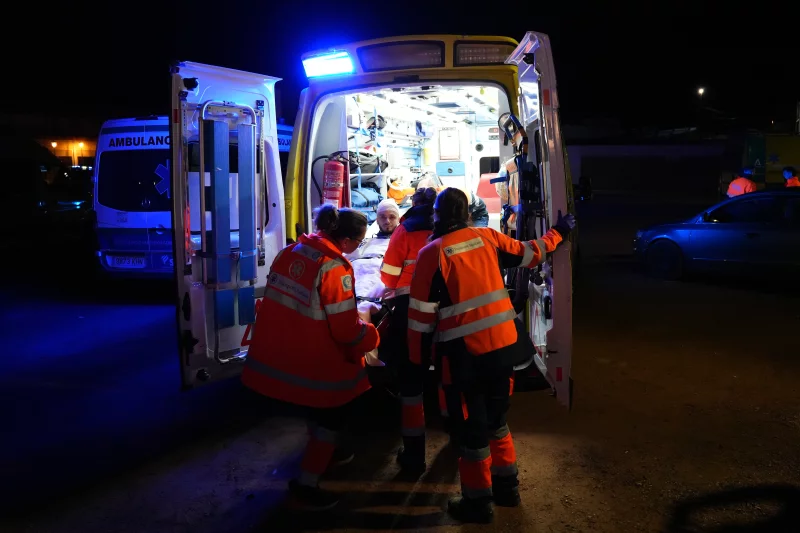
The deadly collision between two passenger trains in southern Spain has triggered an intensive national review of rail safety procedures, infrastructure oversight, and emergency response coordination. The accident occurred on a high-speed corridor linking major Andalusian cities, an area long considered among the most modern and secure segments of the country’s rail network. Authorities confirmed that dozens of passengers were killed and many others injured, making it one of the most serious rail disasters Spain has experienced in recent years.
Emergency teams worked through the night near the town of Adamuz as search operations continued along the derailed carriages and surrounding terrain. Medical services transferred injured passengers to hospitals across Córdoba province, while crisis support centers were activated to assist families seeking information. The scale of the response underscored the severity of the crash and the complexity of operating rescue efforts on active high-speed rail lines managed by Adif, Spain’s railway infrastructure administrator.
Unanswered Questions Surround a Modern Rail Segment
Investigators face growing pressure to explain how a collision of this magnitude could occur on a flat, recently upgraded stretch of track. Transport officials have acknowledged that the line underwent renovation only months ago and that one of the trains involved was part of a newer fleet operated by a private rail company. The second train belonged to the state-owned operator Renfe, whose high-speed services transport tens of millions of passengers annually across Spain.
Preliminary assessments indicate that a derailment at the rear of one train led to a direct impact with the front carriages of the oncoming service, forcing several cars off the track and down an embankment. Technical teams are examining signaling systems, track conditions, rolling stock data recorders, and real-time communications between drivers and control centers. Officials have cautioned that determining the precise cause could take weeks, as every variable must be analyzed to rule out mechanical failure, infrastructure issues, or human error.
Emergency Response and Human Impact
As rescue operations unfolded, humanitarian organizations mobilized rapidly to support both victims and first responders. The Spanish Red Cross established assistance hubs near the crash site, offering psychological support, medical aid, and logistical coordination for affected families. Civil protection units and national police forces maintained a continuous presence, securing the area and assisting forensic teams.
Residents in nearby communities described scenes of confusion and shock as emergency vehicles flooded rural roads not typically designed for large-scale disaster response. Authorities emphasized that coordination between regional and national agencies would remain active as long as recovery efforts continue, including victim identification and support for survivors facing long-term medical care.
High-Speed Rail Under Scrutiny Across Europe
Spain operates the largest high-speed rail network in Europe, with thousands of kilometers of track supporting trains traveling above 155 miles per hour. This network has long been promoted as a benchmark for efficiency, affordability, and safety within the European Union. Following the crash, transport officials confirmed that services on key routes linking Madrid with southern regions were temporarily suspended as inspections were carried out.
At a broader level, European transport regulators are monitoring the investigation closely, as safety standards for cross-border rail systems fall under shared regulatory frameworks established by the European Union. While officials stress that rail remains one of the safest forms of mass transportation, the incident has reignited debate over risk management, oversight of mixed public-private operators, and the resilience of high-speed infrastructure under extreme conditions.
As Spain continues its investigation, the findings are expected to influence future rail policy decisions, infrastructure investment priorities, and emergency preparedness protocols—not only domestically, but across Europe’s interconnected rail systems.