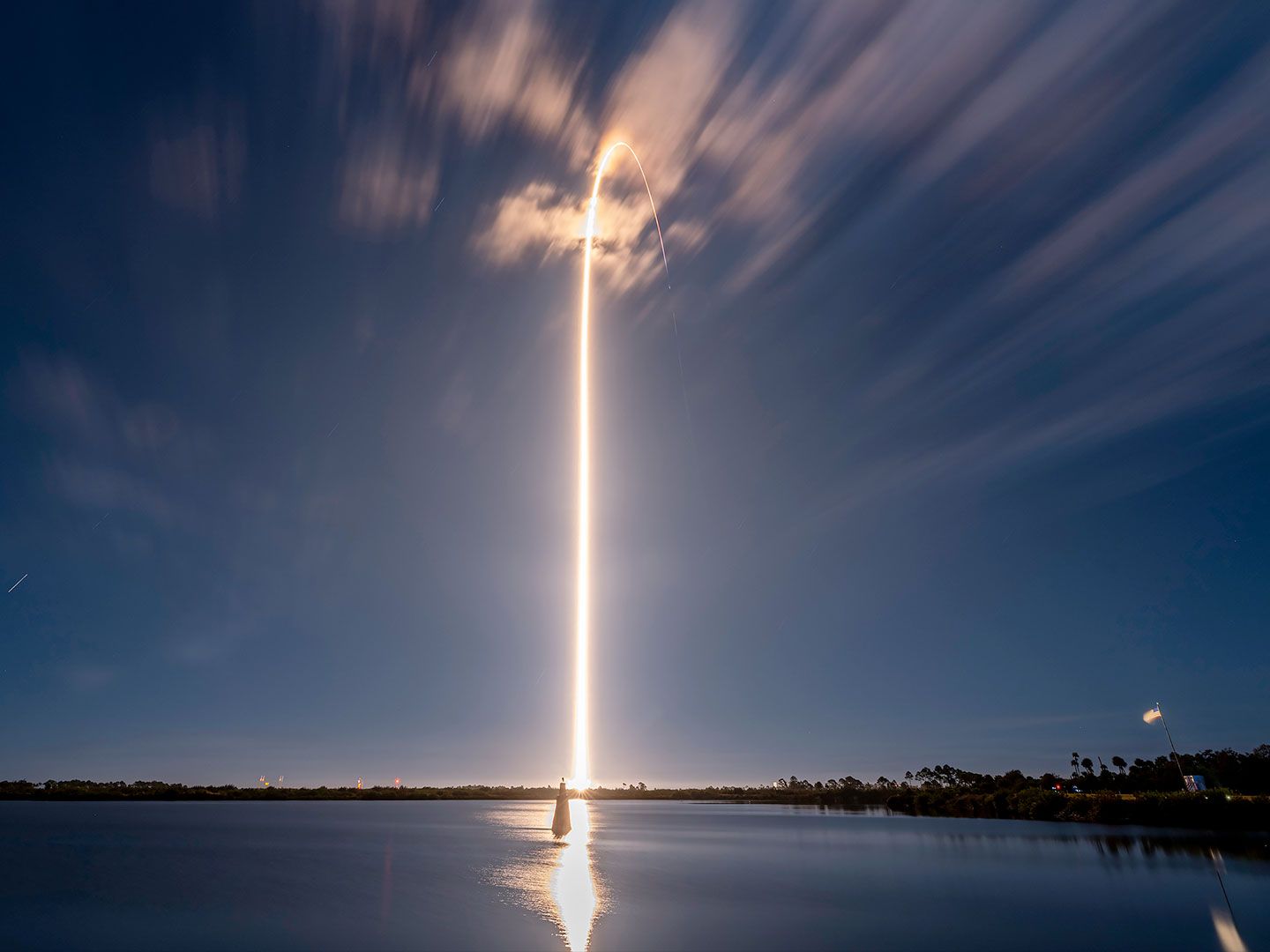
SpaceX opened 2026 with the successful deployment of 29 Starlink satellites aboard a newly built Falcon 9 rocket, reinforcing the company’s aggressive expansion of its global broadband constellation. The launch took place from Space Launch Complex 40 at Cape Canaveral Space Force Station in Florida, marking another milestone in SpaceX’s long-term strategy to dominate the low Earth orbit communications market.
The mission, identified internally as Starlink Group 6-88, highlights the company’s continued investment in new launch hardware while maintaining a rapid operational tempo. By introducing a fresh booster into its active fleet, SpaceX continues to balance reusability with the need for additional launch capacity as satellite demand accelerates worldwide.
New Falcon 9 Booster Expands SpaceX Launch Capacity
The Falcon 9 rocket used for this mission was a brand-new booster, underscoring SpaceX’s ongoing production pipeline as it scales launch operations beyond previous annual records. While reusable boosters remain central to the company’s cost-reduction strategy, new rockets are still required to support the expanding cadence of Starlink deployments and other commercial and government missions.
Falcon 9 remains the backbone of SpaceX’s orbital launch system, with its technical specifications and mission history detailed on the company’s official platform at https://www.spacex.com/vehicles/falcon-9/. The successful ascent and precise orbital insertion of the satellites once again demonstrated the vehicle’s reliability in delivering payloads to low Earth orbit.
Approximately nine minutes after liftoff, the satellites reached their target orbit, followed by a controlled deployment sequence roughly one hour later. Each satellite is designed to enhance network density, reduce latency, and improve service quality for users in remote and underserved regions.
Starlink Network Nears 9,500 Active Satellites
With this launch, SpaceX’s Starlink constellation moves closer to the 9,500 active satellite mark, making it the largest satellite network ever deployed. The scale of the constellation allows Starlink to deliver broadband internet in locations where traditional infrastructure is either limited or unavailable.
Details on service availability and technical capabilities can be found at https://www.starlink.com/, where SpaceX outlines how its satellite internet system supports residential, enterprise, maritime, and emergency connectivity. The growing constellation also plays a strategic role in disaster response and geopolitical events, providing rapid-access communications when terrestrial networks are compromised.
In recent operations, Starlink connectivity has been extended to regions experiencing infrastructure disruptions, ensuring continued internet access during periods of instability. This capability reinforces the network’s position as a critical communications asset beyond commercial use.
SpaceX Launch Cadence Sets New Industry Benchmarks
This mission represented SpaceX’s second launch of 2026 and added to a record-setting total of hundreds of launches completed since the company’s founding. The firm’s high-frequency launch model continues to reshape the economics of spaceflight, placing pressure on competitors and accelerating innovation across the aerospace sector.
Regulatory oversight and launch coordination with U.S. authorities remain essential components of this expansion, with licensing frameworks managed in coordination with agencies such as the Federal Aviation Administration, whose commercial spaceflight role is outlined at https://www.faa.gov/space. Meanwhile, collaboration with broader space research efforts aligns with national and international objectives supported by organizations like NASA, available at https://www.nasa.gov/.
As SpaceX advances further into 2026, the steady deployment of Starlink satellites signals continued momentum toward a fully global, space-based internet infrastructure.