Latest Space News 2026: Innovation, Exploration, and Science in Focus
The space sector continues to expand rapidly in 2026, blending science, technology, and entertainment in ways that capture both public imagination and industry investment. From the scientific credibility of upcoming films to groundbreaking concepts like orbital data centers and the progression of human spaceflight missions, the conversation around space is becoming more dynamic and multidimensional. This latest wave of developments highlights how space is no longer limited to exploration alone, but is increasingly tied to infrastructure, sustainability, and global technological advancement.
Project Hail Mary and the Science Behind Sci-Fi Storytelling
The upcoming film Project Hail Mary, based on the bestselling novel by Andy Weir, has sparked significant interest not only among science fiction fans but also within the scientific community. The story centers on a lone astronaut tasked with saving Earth from an astrophysical threat, raising questions about how accurately the film portrays real scientific principles.
One of the defining features of the narrative is its reliance on realistic physics, astrophysics, and problem-solving scenarios grounded in current scientific understanding. This approach mirrors the success of previous science-driven films that aim to educate while entertaining. By integrating plausible interstellar travel concepts and detailed explanations of energy, propulsion, and biology, the film positions itself as a bridge between fiction and real-world science.
For readers interested in the broader scientific themes explored in such narratives, resources like NASA’s official research portal (https://www.nasa.gov) provide deeper insights into ongoing space missions and technologies that inspire these stories. Additionally, scientific discussions around astrophysics and space exploration can be explored through platforms like the European Space Agency (https://www.esa.int), which regularly publishes research updates and mission data.
Orbital Data Centers: A New Frontier for Sustainable Technology
One of the most intriguing concepts gaining traction is the development of data centers in orbit. As global demand for data storage and processing continues to rise, traditional Earth-based data centers face increasing challenges related to energy consumption, cooling requirements, and environmental impact.
Orbital data centers present a potential solution by leveraging the natural vacuum of space for cooling and harnessing solar energy without atmospheric interference. This could significantly reduce operational costs and carbon emissions, making them an attractive option for large-scale computing infrastructure.
However, the idea also raises important logistical and economic questions. Launch costs remain high, and maintaining hardware in space introduces new complexities in repair, upgrades, and cybersecurity. Companies exploring this concept are evaluating whether long-term efficiency gains can offset the initial investment required to deploy such systems.
For more on how data infrastructure is evolving globally, organizations like the International Energy Agency (https://www.iea.org) offer detailed analysis on energy consumption trends, while technology insights can also be found through industry leaders such as Microsoft (https://www.microsoft.com) and IBM (https://www.ibm.com), both of which are actively researching sustainable computing solutions.
Artemis II Mission: The Next Step in Human Spaceflight
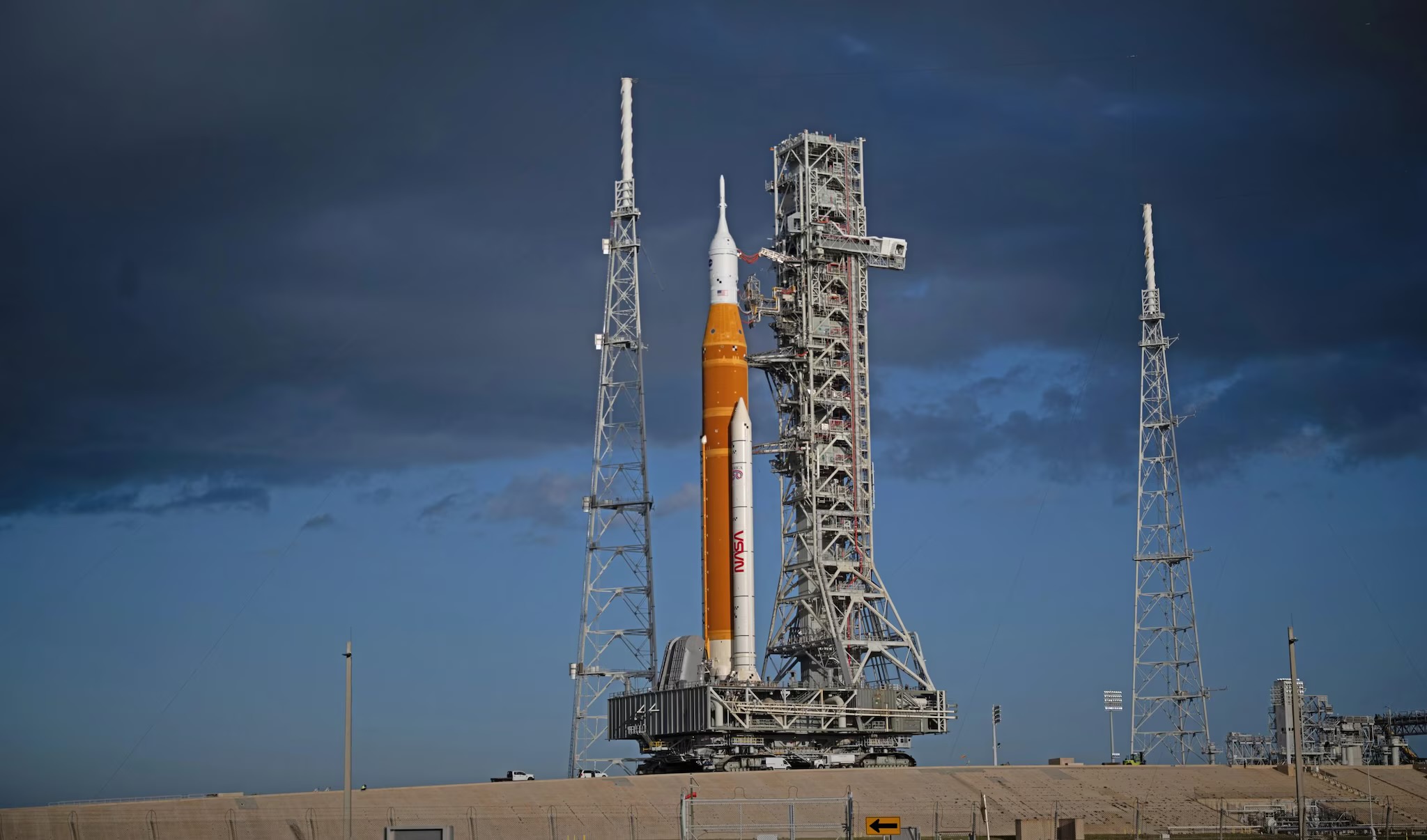
The Artemis II mission represents a critical milestone in the United States’ plan to return humans to the Moon and establish a long-term presence beyond Earth. As the first crewed mission in the Artemis program, Artemis II will test life-support systems, navigation, and spacecraft performance in deep space conditions.
This mission is designed to orbit the Moon without landing, serving as a precursor to future missions that aim to place astronauts on the lunar surface. The success of Artemis II will be essential for validating the technologies and procedures required for sustained lunar exploration and eventual missions to Mars.
Beyond its technical objectives, Artemis II also symbolizes renewed international collaboration in space exploration. Partnerships between government agencies and private companies are playing a central role in advancing capabilities and reducing costs.
More information about the Artemis program and its long-term goals can be found on NASA’s Artemis page (https://www.nasa.gov/artemis), while global space policy developments are often covered by institutions like the United Nations Office for Outer Space Affairs (https://www.unoosa.org).
A Rapidly Evolving Space Landscape
The convergence of entertainment, infrastructure innovation, and human exploration reflects a broader transformation in how space is perceived and utilized. What was once the domain of national agencies is now a shared arena involving private industry, global partnerships, and cultural influence.
As technologies mature and investment continues to grow, the space sector is expected to play an increasingly important role in addressing challenges on Earth while expanding humanity’s reach beyond it. Whether through scientifically grounded storytelling, revolutionary data solutions, or ambitious exploration missions, space remains one of the most compelling frontiers of the modern era.