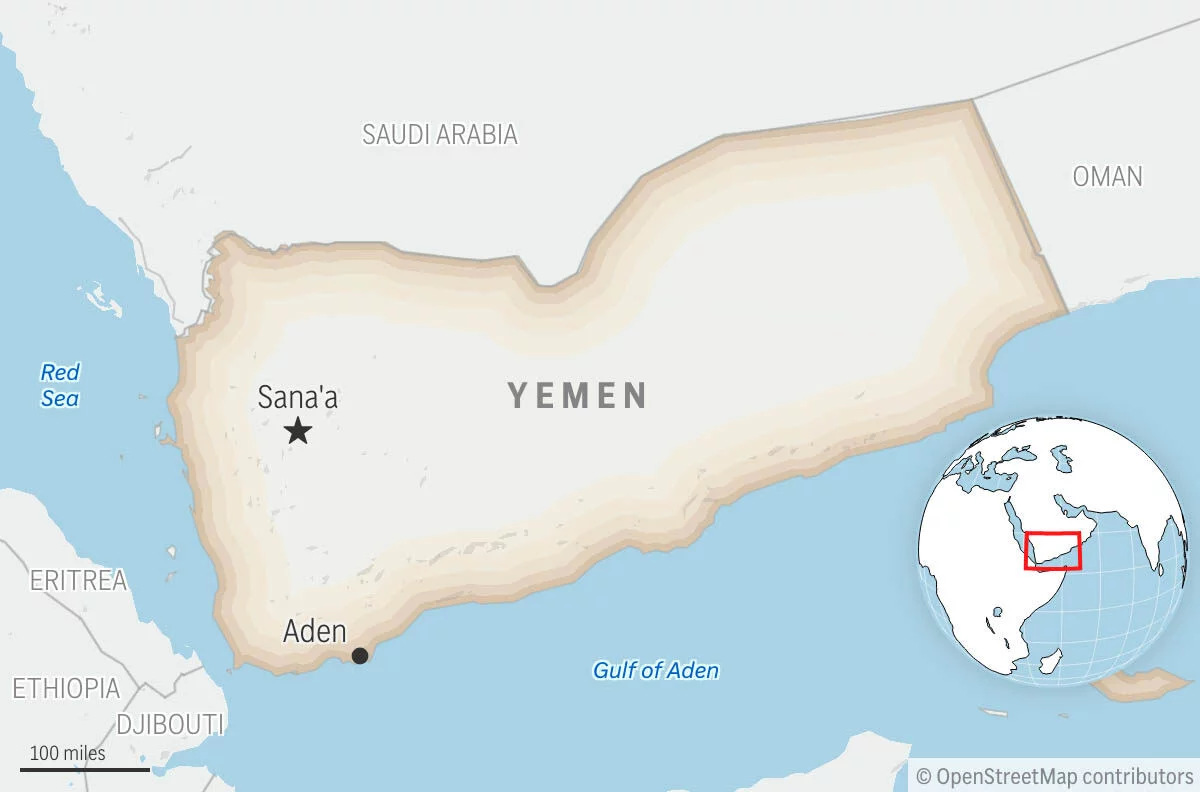
Yemen’s fragile political landscape entered a new phase. The Southern Transitional Council, the most prominent separatist force in the country’s south, moved toward dismantling its political and military structures. This followed internal rifts and intensifying regional pressure. The announcement came amid weeks of instability across southern governorates. It coincided with the sudden departure of the group’s leader to the United Arab Emirates. This deepened uncertainty over the future of southern autonomy efforts.
The decision reflects broader shifts in Yemen’s conflict, which for more than a decade has been shaped by overlapping local grievances and external influence. While northern territories remain largely under the control of Iran-aligned Houthi forces, the south has functioned as a contested arena. Here, regional allies have sought to stabilize the internationally recognized government. They also worked to prevent fragmentation that threatens maritime security routes. These are monitored by organizations such as the United Nations.
Internal fractures weaken southern separatist ambitions
The Southern Transitional Council was created in 2017. It aimed to unify political and armed groups seeking to reestablish an independent southern state, reversing Yemen’s unification in 1990. Over time, however, divergent strategies and competing leadership priorities eroded cohesion within the movement. Recent unauthorized military advances into oil-producing regions exposed those divisions. These operations clashed with Saudi-backed forces stationed to secure strategic infrastructure.
The fallout from those clashes proved costly. Control over key facilities shifted back to government-aligned units. This undercut the council’s leverage at a moment when economic pressures were mounting. Southern oil assets, long viewed as a potential source of financial autonomy, instead became a focal point of diplomatic strain. These assets are measured in hundreds of millions of dollars annually. Officials close to the recognized government emphasized that future governance arrangements must preserve national revenue streams. These streams are overseen by institutions linked to the Ministry of Oil and Minerals of Yemen.
As disagreements escalated, rival voices within the separatist camp openly challenged the authority of interim decisions. This highlighted the absence of consensus required to sustain a parallel power structure.
Saudi Arabia consolidates influence in the southern corridor
Regional dynamics played a decisive role in shaping the outcome. Saudi Arabia, which has invested billions of dollars in security operations and stabilization efforts along Yemen’s southern borders, viewed unilateral military action by separatist forces as a direct threat to its strategic interests. Riyadh’s response combined diplomatic pressure with rapid support for allied units. This reinforced its position as the primary broker of political outcomes in the south.
Saudi officials framed the unfolding developments as an opportunity to re-anchor the southern question within a negotiated political process. This process is backed by regional and international partners. Statements from institutions aligned with the Saudi Ministry of Defense underscored the kingdom’s intention to prevent further fragmentation. They aim to maintain leverage over future security arrangements.
The prospect of a Saudi-hosted conference aimed at redefining southern representation signaled a shift away from armed separatism toward managed dialogue. For Riyadh, stabilizing Yemen’s southern coastline remains essential. This is not only for border security but also for safeguarding global shipping lanes. These underpin billions of dollars in annual trade flows.
Leadership exile underscores uncertainty for the movement
The abrupt relocation of the council’s leader to the United Arab Emirates added another layer of complexity. His departure coincided with legal action initiated by Yemen’s Presidential Leadership Council. This intensified speculation about whether the separatist movement can survive in any recognizable form. Political observers note that leadership in exile often weakens command structures on the ground. This is particularly true in environments where loyalty is shaped by local alliances rather than ideology.
Despite calls for demonstrations supporting southern self-determination, security measures in key cities were adjusted. Authorities sought to prevent unrest. Officials linked to the Presidential Leadership Council of Yemen emphasized that any resolution must emerge through inclusive political mechanisms rather than force.
As Yemen’s war continues to exact a staggering human and economic toll, this is measured in lost productivity and reconstruction costs reaching into the trillions of dollars. The dissolution of the Southern Transitional Council marks a pivotal moment. Whether it leads to a more unified negotiating framework or simply reshuffles competing interests will depend on how regional powers and Yemeni factions navigate the next phase. This is an already protracted conflict.