Ant colonies as high-risk environments for epidemics
Highly social insect colonies represent some of the most vulnerable biological systems when it comes to infectious disease. Ants live in dense populations, often underground, where humidity, limited ventilation, and genetic similarity create ideal conditions for pathogens to spread rapidly. In these environments, a single infection can quickly escalate into a colony-wide crisis, threatening thousands of individuals and undermining the survival of the group as a whole.
Research into social immunity has shown that ants rely on collective defense strategies rather than individual resistance alone. These mechanisms function similarly to immune responses in complex organisms, prioritizing the health of the colony over the survival of any one member. Studies on eusocial insects hosted by institutions such as the University of California, Berkeley (https://www.berkeley.edu) have long highlighted how cooperation plays a central role in disease mitigation.
Why ant pupae pose a unique threat to colony health
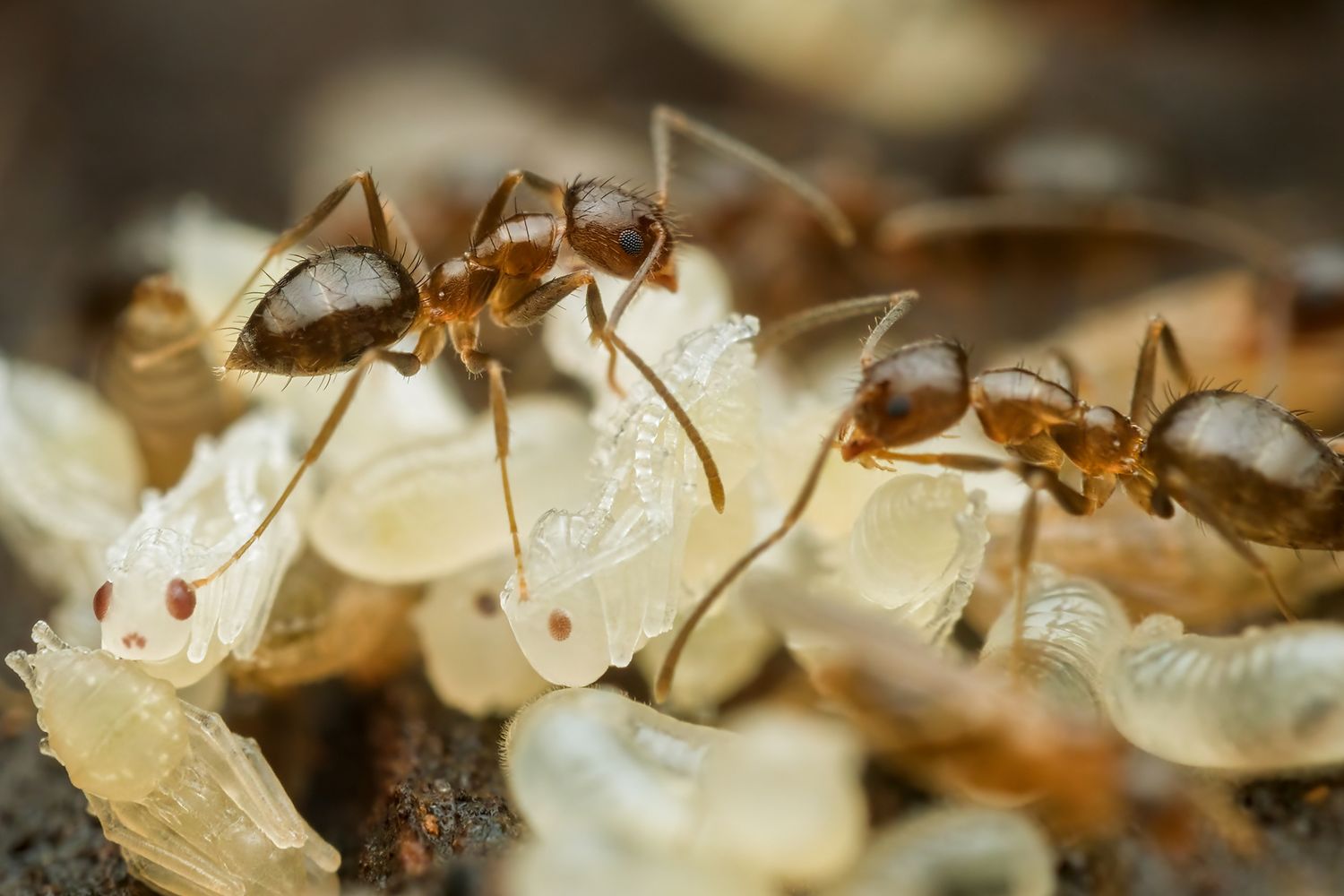
Unlike adult ants, pupae are immobile and fully dependent on worker ants for care. Encased in silk cocoons, they are unable to isolate themselves or escape when infected. This immobility makes sick pupae particularly dangerous, as they can become reservoirs of infection that expose caregivers and nearby brood to lethal pathogens.
Scientists studying the invasive garden ant species Lasius neglectus found that when pupae become terminally ill, they do not passively wait for death. Instead, they actively participate in colony defense by producing a chemical scent that alerts worker ants to their condition. This discovery expands previous research on destructive disinfection conducted at the Institute of Science and Technology Austria (https://ista.ac.at), where social immunity behaviors have been examined across multiple ant species.
The chemical signal functions as a precise biological message, only emitted when worker ants capable of responding are present. Producing this scent requires significant metabolic investment, suggesting that the behavior is carefully regulated rather than automatic.
Chemical signaling as an evolved survival strategy
Further experimentation revealed that worker ants respond directly to the chemical cue rather than to visible signs of illness. When researchers transferred the scent from a sick pupa to a healthy one, adult ants began dismantling the cocoon and applying antimicrobial substances, ultimately killing the otherwise healthy pupa. This confirmed that the scent alone serves as the trigger for the colony’s response.
Interestingly, only worker pupae emit this signal. Queen pupae, which possess stronger immune defenses and represent higher reproductive value, do not participate in this self-sacrificial behavior. This distinction reflects how ant societies allocate resources strategically to ensure long-term survival.
The findings reinforce the idea that disease prevention in social insects relies on sophisticated chemical communication systems, similar to those explored in broader biological research at institutions such as the Max Planck Society (https://www.mpg.de) and documented in entomological databases like the National Center for Biotechnology Information (https://www.ncbi.nlm.nih.gov).